The National WWII Museum
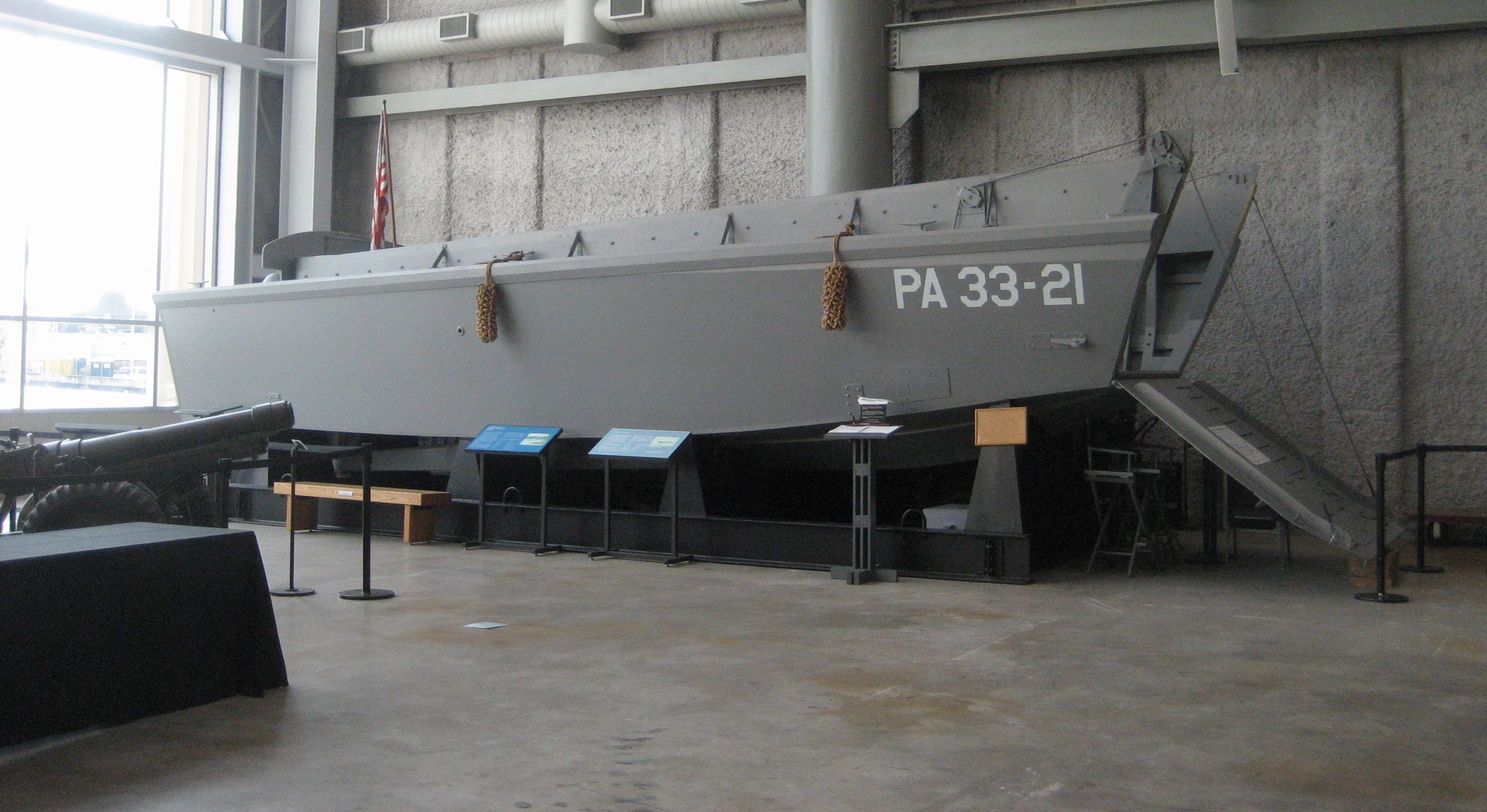
'He won the war for us.' That was Dwight Eisenhower's verdict in 1964, speaking to historian Stephen Ambrose about Andrew Higgins, the New Orleans industrialist whose flat-bottomed landing craft carried Allied troops onto the beaches of Normandy, Iwo Jima, and dozens of other hostile shores. The boat that Eisenhower credited with winning the war -- the LCVP, or Higgins boat -- was designed, tested, and built right here in New Orleans. That connection is why America's official National WWII Museum sits not in Washington, D.C., but in the Central Business District of a Louisiana port city, on a street that now bears Higgins' name. What began as a single building dedicated on the 56th anniversary of D-Day has grown into a sprawling multi-pavilion campus that draws nearly 700,000 visitors a year.
From Brewery to Battlefield
The museum's original home carries its own layer of history. The Louisiana Memorial Pavilion occupies the former Weckerling Brewery building, designed by architect William Fitzner and built in 1888. The brewery closed just two years after opening, but the sturdy structure endured. Ambrose spent decades championing the idea of a museum honoring the Higgins boat and the amphibious operations that defined the war. He secured $50,000 in startup funding from real estate developer Peter Kalikow, and Congress later appropriated $4 million. After years of delays, the National D-Day Museum was officially dedicated on June 6, 2000. In 2003, Congress designated it the nation's official World War II museum -- though Hurricane Katrina delayed the formal name change until 2006. The museum is now an affiliate of the Smithsonian Institution.
Warbirds Overhead
Step inside the Boeing Center -- the museum's largest building, formally known as the US Freedom Pavilion -- and the scale of the war becomes visceral. A B-17E Flying Fortress named My Gal Sal hangs in the cavernous space, an aircraft that was lost over Greenland and recovered 53 years later. Nearby stand a B-25J Mitchell bomber, an SBD-3 Dauntless dive bomber, a TBF Avenger torpedo bomber, a P-51D Mustang fighter, and an F4U-4 Corsair. In the original Louisiana Memorial Pavilion, a Supermarine Spitfire and a Douglas C-47 Skytrain are suspended from the ceiling above a Higgins boat on the floor below -- the very type of craft that started it all. The Boeing Center was funded by a $15 million donation from the Boeing Company and a $20 million grant from the U.S. Department of Defense.
A Dog Tag and a Story
The museum's designers understood that wars are not won by machines alone. The 'Dog Tag Experience' invites each visitor to collect a replica identification tag upon entry. At interactive screens throughout the exhibits, touching the tag to a sensor reveals the wartime experience of the real person whose name it bears. The effect is deeply personal -- a reminder that every statistic was a life. The Campaigns of Courage pavilions, opened in 2014 and 2015, trace the war's progress through Europe and across the Pacific. In the Solomon Victory Theater, the 4-D film Beyond All Boundaries uses Tom Hanks' narration alongside physical effects to immerse audiences in an overview of the conflict. The Liberation Pavilion, the museum's most recent addition, explores what victory cost and what freedom meant to those who fought for it.
A Campus Still Growing
The museum has never stopped expanding. The Solomon Victory Theater, Stage Door Canteen, and American Sector restaurant opened in 2009. The John E. Kushner Restoration Pavilion followed in 2011, giving visitors a window into the painstaking work of preserving wartime vehicles and aircraft. The Boeing Center arrived in 2013. Each new building has been funded through a combination of private donations, corporate sponsorships, and federal grants. The campus now stretches across several blocks along Andrew Higgins Drive between Camp Street and Magazine Street, transforming a quiet stretch of the Central Business District into one of the most visited museum complexes in the country. What Eisenhower set in motion with a single sentence in 1964 has become a place where the full scope of the war -- from the home front factories to the D-Day beaches to the jungles of the Pacific -- is preserved for generations who will never hear these stories firsthand.
From the Air
Located at 29.943N, 90.070W in the Central Business District of New Orleans, along Andrew Higgins Drive between Camp Street and Magazine Street. The museum campus spans several blocks and is identifiable by its distinctive modern pavilion architecture near the elevated U.S. 90 interchange. Nearest airport is Louis Armstrong New Orleans International (KMSY), approximately 11 nm west. Lakefront Airport (KNEW) is about 7 nm northeast. Best viewed at 2,000-3,000 ft AGL approaching from over the Mississippi River, which bends sharply just south of the site.