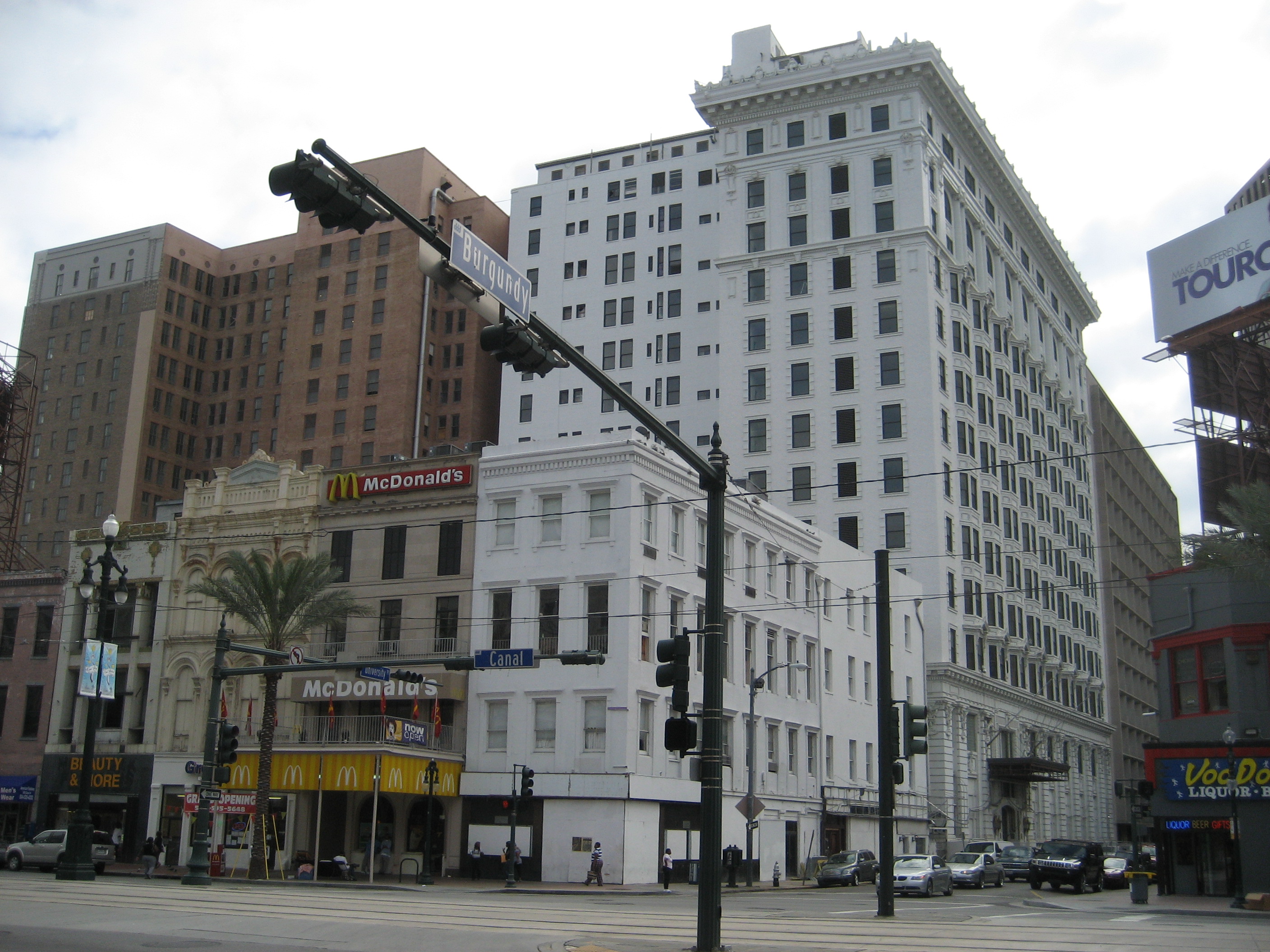
The Roosevelt New Orleans
In 1964, novelist Arthur Hailey checked into a grand New Orleans hotel and stayed for two months. What he observed there -- the politics, the personalities, the invisible machinery that keeps a great hotel running -- became the raw material for his bestselling novel Hotel. The building that inspired him had already lived several lives by then, and it would live several more. Originally opened in 1893 as the Hotel Grunewald by a German immigrant whose music hall had burned down three decades earlier, the property on Baronne Street has been renamed four times, survived two catastrophic storms, served as the unofficial Louisiana headquarters of one of America's most powerful and controversial politicians, and hosted Glenn Miller, Tommy Dorsey, and Guy Lombardo in its legendary Blue Room. Today it operates as The Roosevelt New Orleans, a Waldorf Astoria property, having come full circle to reclaim the name it carried from 1923 to 1965.
A Cavern Beneath the Chandeliers
Louis Grunewald built his 200-room hotel to be ready for the 1894 Mardi Gras season, and his timing was impeccable -- the St. Charles Hotel, the only other major hotel in the city, burned down shortly after the Grunewald opened. By 1908, Grunewald had added a 14-story Annex tower with 400 rooms, designed by the architectural firm Toledano & Wogan, at a cost of $2.5 million. The Annex's Italian marble staircase rose to an overlooking mezzanine, and the tower brought new entertainment spaces including the Forest Grill and the Fountain Grill. But the showpiece was The Cave -- a subterranean nightclub designed to mimic a natural cavern, complete with artificial waterfalls, stalactites, glass-topped tables, and statues of gnomes and nymphs. Nightly revues rivaling the Ziegfeld Follies played to packed audiences. The Cave became one of the most talked-about entertainment venues in the American South.
The Kingfish's Parlor
When the Vacarro business group bought the hotel in 1923, they renamed it The Roosevelt in honor of Theodore Roosevelt, whose Panama Canal had been an economic windfall for New Orleans. The man who truly defined the Roosevelt era, however, was Seymour Weiss -- a former barber shop manager who rose through every rank of hotel management to become general manager and eventually owner. Weiss was the confidant of Louisiana Governor and U.S. Senator Huey P. Long, who kept a 12th-floor suite as his state headquarters during the 1930s. Long was famous for his appetite for Ramos gin fizzes and once had the Roosevelt's head bartender, Sam Guarino, flown to the New Yorker Hotel in New York City to teach the staff how to make them. Long's notorious 'Deduct Box' -- the container holding political contributions from state employees -- was believed to be hidden somewhere in the hotel. It has never been found. A replica now stands in the lobby.
Storming the Sazerac
On New Year's Eve 1935, Weiss opened the Blue Room, which became the premier music venue in New Orleans for decades, hosting acts like Glenn Miller, Tommy Dorsey, Sammy Kaye, and Guy Lombardo. In 1938, the Main Bar opened with its mahogany counter, walnut-paneled walls, and murals by artist Paul Ninas -- features that remain focal points of the hotel today. But Weiss's most memorable stroke came in 1949, when he purchased the rights to the name 'Sazerac Bar' from the Sazerac Company and announced that the new bar would abolish its 'men-only' policy. Women from across the city descended on the venue in what became known as Storming the Sazerac -- an event the hotel still celebrates annually with vintage costumes and cocktails. The hotel also began its tradition of decorating its block-long lobby for Christmas, a practice that continues today and has become an iconic fixture of the New Orleans holiday season.
Drowned and Reborn
The Swig family purchased the hotel in 1965 and rechristened it the Fairmont, modernizing the property over the following decades. Then Hurricane Katrina struck in August 2005. The Fairmont New Orleans closed indefinitely, and repair work stalled in 2007 when damage estimates proved far worse than expected. The building sat wounded and empty until 2007, when Sam Friedman of Dimension Development announced a $100 million renovation to convert the property into a Waldorf Astoria hotel and restore the Roosevelt name. The renovation was a deliberate act of return -- the lobby was stripped of carpet to reveal and repair the original floors, the Sazerac Bar was restored to its 1940s appearance, and the rooftop tennis courts gave way to a modern pool deck. On July 1, 2009, The Roosevelt Hotel reopened its doors. The 504-room hotel now holds 125 suites, 23 ballrooms, and more than a century of stories embedded in its walnut-paneled walls.
From the Air
Located at 29.954N, 90.072W on Baronne Street in downtown New Orleans, between the French Quarter and the Superdome. The hotel occupies a full city block and its multi-tower profile is visible among the downtown high-rises. Nearest airport is Louis Armstrong New Orleans International (KMSY), approximately 11 nm west. Lakefront Airport (KNEW) is about 7 nm northeast. Best viewed at 2,000-3,000 ft AGL approaching from over the Mississippi River or Lake Pontchartrain.