The Rumble in the Jungle
"That all you got, George?" Muhammad Ali whispered it into George Foreman's ear during a clinch in the seventh round, deep into a fight almost everyone expected Ali to lose. It was four o'clock in the morning in Kinshasa, Zaire, October 30, 1974. Sixty thousand people packed the 20th of May Stadium. An estimated one billion more watched on television worldwide. The 32-year-old former champion, stripped of his title seven years earlier for refusing the draft, was leaning against the ropes while the most devastating puncher in heavyweight history threw everything he had. Ali was not running. He was waiting.
From Slaveship to Championship
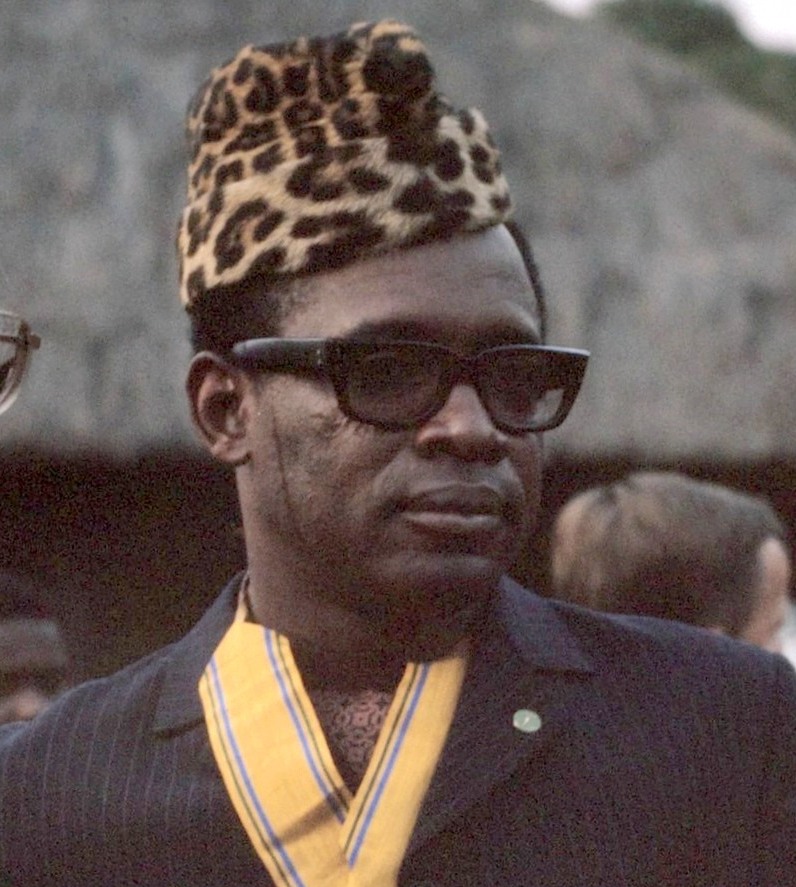
The fight almost did not happen in Africa at all. Promoter Don King needed $10 million in purse money, $5 million for each fighter, sums enormous enough to keep rival promoters from arranging the bout themselves. King could not raise the money in the United States, so he went looking for a government willing to sponsor a spectacle. Fred Weymar, an American advisor to President Mobutu Sese Seko of Zaire, convinced Mobutu that the global publicity would burnish his regime's image. The deal was struck. King assembled a consortium including Risnelia Investment from Panama and the British Hemdale Film Corporation as co-sponsors. The fight's original name, "From Slaveship to Championship," was Don King's idea, pitched to draw Black American audiences for travel packages to Zaire. Ali coined the replacement at a press conference. "Rumble in the Jungle" stuck.
Five Weeks of Waiting
Both fighters arrived in Zaire months before the bout, training in the tropical heat and acclimating to the climate. The fight was set for September 25, 1974. Then, eight days before, Foreman's sparring partner Bill McMurray accidentally elbowed him above the right eye. The cut required eleven stitches and pushed the fight back five weeks, to October 30. The delay stranded both camps in Kinshasa but gave Zaire its own cultural event: a three-night music festival called Zaire 74, held September 22 through 24 as originally scheduled. James Brown, B.B. King, Miriam Makeba, Celia Cruz and the Fania All-Stars, the Pointer Sisters, Bill Withers, the Spinners, the Crusaders, and Manu Dibango all performed. The crowds chanted "Ali boma ye" -- Ali, kill him -- a phrase that became the fight's unofficial anthem. In a country just twelve years removed from Belgian colonial rule, Ali represented something beyond boxing.
The Rope-a-Dope
Foreman was 25, undefeated, and feared for his punching power. He had demolished Joe Frazier in two rounds and destroyed Ken Norton in two more -- the only two men who had beaten Ali. Almost no one gave Ali a chance. The fight was scheduled for 4 a.m. local time so American viewers could watch at 10 p.m. Eastern. Ali opened aggressively, throwing disorienting right-hand leads that caught Foreman off guard but failed to hurt him. Then, in the second round, Ali unveiled what he would later call the rope-a-dope. He leaned back on the ropes, covered up, and let Foreman punch. Round after round, Foreman threw thunderous shots at Ali's arms, body, and occasionally his head. Ali absorbed them, deflected them, and waited. Between the fury, Ali fired straight punches into Foreman's face, which grew visibly puffy. In clinches, Ali leaned his weight on Foreman and taunted him: "They told me you could punch, George!" By the fifth round, Foreman's energy was draining. By the eighth, he was spent.
Eight Rounds to Eternity
In the eighth round, Ali pounced. As Foreman lunged forward, Ali landed several right hooks over Foreman's jab, then unleashed a five-punch combination. A left hook snapped Foreman's head up, and a hard right straight sent him stumbling to the canvas. Foreman rose to one knee, but referee Zack Clayton counted him out before he could stand. At the stoppage, Ali led on all three scorecards. The upset was total. Ali had reclaimed the heavyweight championship of the world at 32, seven years after being stripped of his title. The fight grossed an estimated $100 million in revenue. Twenty-six million people watched on BBC One alone, nearly half the United Kingdom's population. Ali and Foreman were each paid a record $5 million.
Enemies to Brothers
For years, Foreman could not accept the loss. He harbored revenge and resentment until 1981, when a reporter asked him plainly what had happened in Africa. "I had to look him in the eye and say, 'I lost. He beat me,'" Foreman later recalled. "Before that I had nothing but revenge and hate on my mind, but from then on it was clear." The two men became close friends. At the 1996 Academy Awards ceremony, when Ali struggled to climb the stage steps to accept the Oscar for the documentary When We Were Kings, it was Foreman who helped him up. "By 1984, we loved each other," Foreman told the Daily Telegraph in 2012. "I am not closer to anyone else in this life than I am to Muhammad Ali." The Rumble in the Jungle had produced not only one of the greatest fights in boxing history but, eventually, one of sport's most unlikely friendships.
From the Air
The fight took place at the 20th of May Stadium (Stade du 20 Mai) in Kinshasa, located at approximately 4.34S, 15.32E in the Lingwala district. The stadium area is visible from moderate altitude in central Kinshasa along the south bank of the Congo River. Nearest major airport is N'djili International Airport (FZAA), about 18 km east. Best viewed at 3,000-5,000 feet AGL approaching from over the Congo River.