The Tank Museum
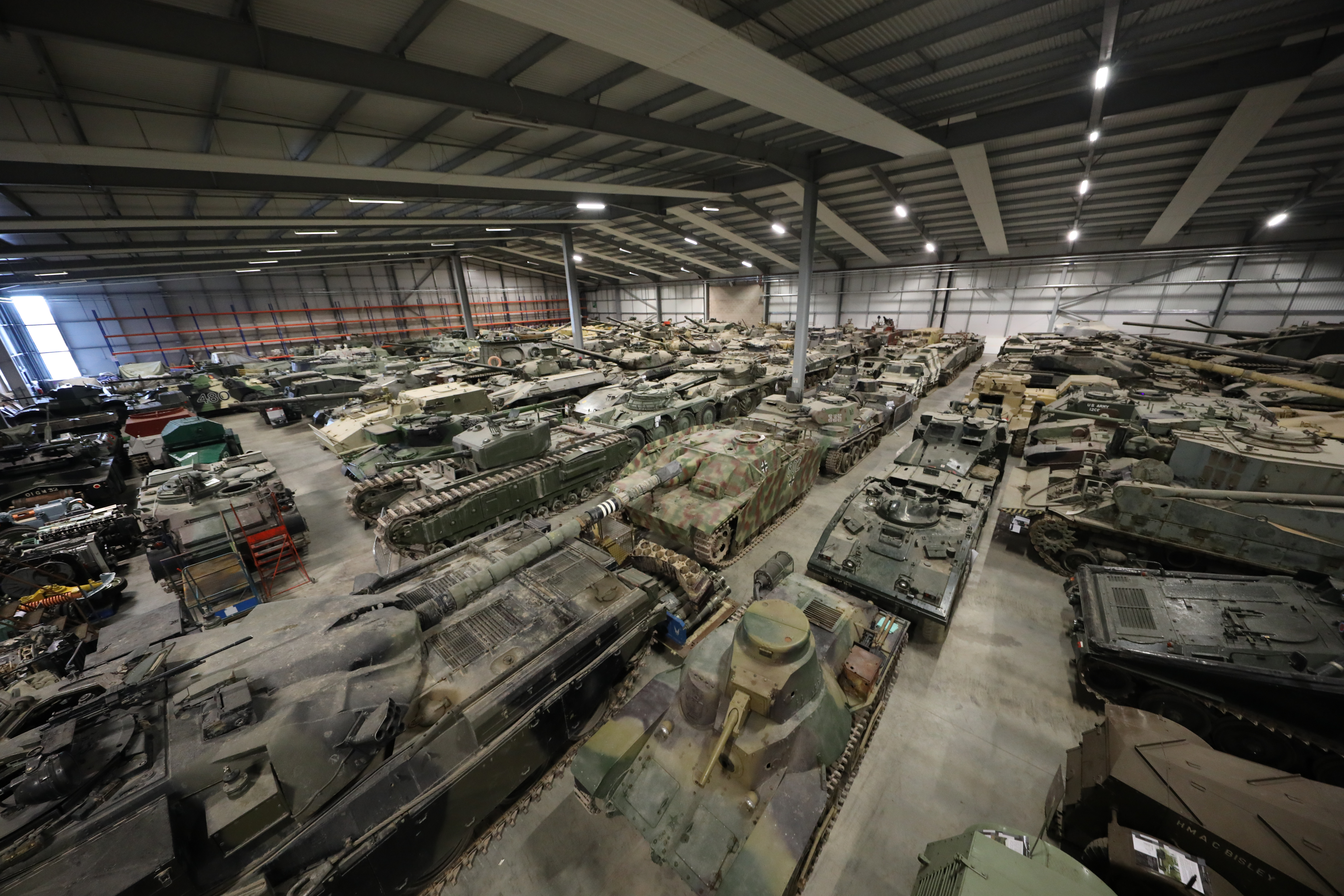
It started with Rudyard Kipling and a pile of damaged tanks. In 1923, the author visited Bovington Camp in Dorset and saw the battered vehicles that had been salvaged from the Western Front. He recommended that someone set up a museum. A shed was found. The collection grew. It was not opened to the public until 1947, by which point a second world war had contributed substantially more material. Today the Tank Museum at Bovington holds nearly three hundred armoured vehicles, making it the largest collection of its kind on earth.
From Shed to Shrine
The museum's collection spans the entire history of mechanised armoured warfare, beginning with its very origins. Little Willie, the ungainly prototype that preceded the first operational tanks, sits alongside the Mark I, the world's oldest surviving combat tank. The progression from those lumbering First World War machines through the increasingly lethal designs of the Second World War and into the Cold War era tells a story of relentless engineering refinement driven by the grim logic of battlefield survival. The World War I Hall focuses not just on the machines but on the men who crewed them between 1916 and 1918, operating in conditions of extraordinary heat, noise, and danger inside what were essentially mobile metal boxes.
Tiger 131
The museum's most famous resident is Tiger 131, a German Tiger I captured in Tunisia in April 1943. It is the only Tiger I in the world still capable of running under its own power, fully restored to operational condition by the workshops at Bovington. The Tiger was the most feared tank of the Second World War, its 88mm gun and heavy armour making it nearly impervious to most Allied weapons at normal combat ranges. Seeing it run -- and the museum periodically fires up its Maybach engine for demonstrations -- is to understand viscerally why Allied tank crews dreaded encountering one. Tiger 131 also appeared in the 2014 film Fury, the first time a real Tiger had been used in a feature film.
A Museum That Conquered YouTube
In January 2010, the museum launched a YouTube channel with modest ambitions: staff members talking to camera about specific tanks, often in single takes. The series "Tank Chats," led by historian David Fletcher, became unexpectedly popular. By April 2023, the channel had surpassed 100 million views, the first museum channel to reach that milestone, with more subscribers than the Metropolitan Museum of Art or the Louvre. Fletcher, who had worked at the museum since 1982, was appointed an MBE for his services to the history of armoured warfare. The channel's success demonstrated that passionate, knowledgeable people talking about things they love will always find an audience, regardless of production values.
Beyond the Museum Walls
The Tank Museum has found relevance far beyond historical preservation. During the Russo-Ukrainian War, the museum provided blueprints and track samples of Soviet-era equipment to Cook Defence Systems, enabling the manufacture of replacement tracks for Ukrainian forces. The Royal Armoured Corps Memorial Room commemorates nearly 13,000 soldiers who died in service since the Corps was founded in 1939, with Books of Remembrance and a searchable digital Roll of Honour. These are not abstract numbers. Each name represents someone who climbed into one of these machines and did not come home. The museum holds both the machines and the memory, ensuring that the story of armoured warfare is told not just as engineering achievement but as human sacrifice.
From the Air
Located at 50.695N, 2.244W at Bovington Camp, approximately 1 mile north of the village of Wool in Dorset. The military camp and museum complex are visible amid the heath. Nearest airports: Bournemouth (EGHH) approximately 16nm east. Best viewed from 2,000-3,000ft to see the camp in context with the surrounding Dorset heathland.