The Transgender District
Three years before Stonewall, a cafeteria in San Francisco's Tenderloin became the site of the first documented uprising of transgender and queer people in United States history. In August 1966, trans women and drag queens at Compton's Cafeteria fought back against police harassment, throwing coffee cups and smashing windows in a spontaneous act of resistance. The neighborhood where it happened -- a six-block stretch of the Tenderloin around the intersection of Turk and Taylor Streets -- is now the Transgender District, the first legally recognized transgender cultural district in the world.
Before Stonewall, There Was Compton's
The Compton's Cafeteria riot of August 1966 preceded the more famous Stonewall uprising in New York by three years, but received far less attention at the time and in subsequent decades. Trans women, drag queens, and other gender-nonconforming people had gathered at the all-night cafeteria as one of the few public spaces where they could exist without being immediately ejected. When police arrived to conduct a routine harassment sweep, patrons resisted. The uprising was brief but significant: it represented the first time this community had collectively fought back against institutional persecution. The neighborhood's designation as a cultural district honors that history.
Legal Recognition
The district was formally established by San Francisco's Board of Supervisors, originally as the Compton's Transgender Cultural District before being renamed simply the Transgender District. The legal recognition is more than symbolic. It provides a framework for preserving the neighborhood's history, supporting trans-owned businesses, and ensuring that the community has a voice in development decisions that affect the area. The Tenderloin, one of San Francisco's most economically challenged neighborhoods, has faced intense gentrification pressure from the surrounding tech-driven real estate market. The district designation serves as a tool for cultural preservation in a city where neighborhoods can transform -- or be erased -- in a decade.
A Living District
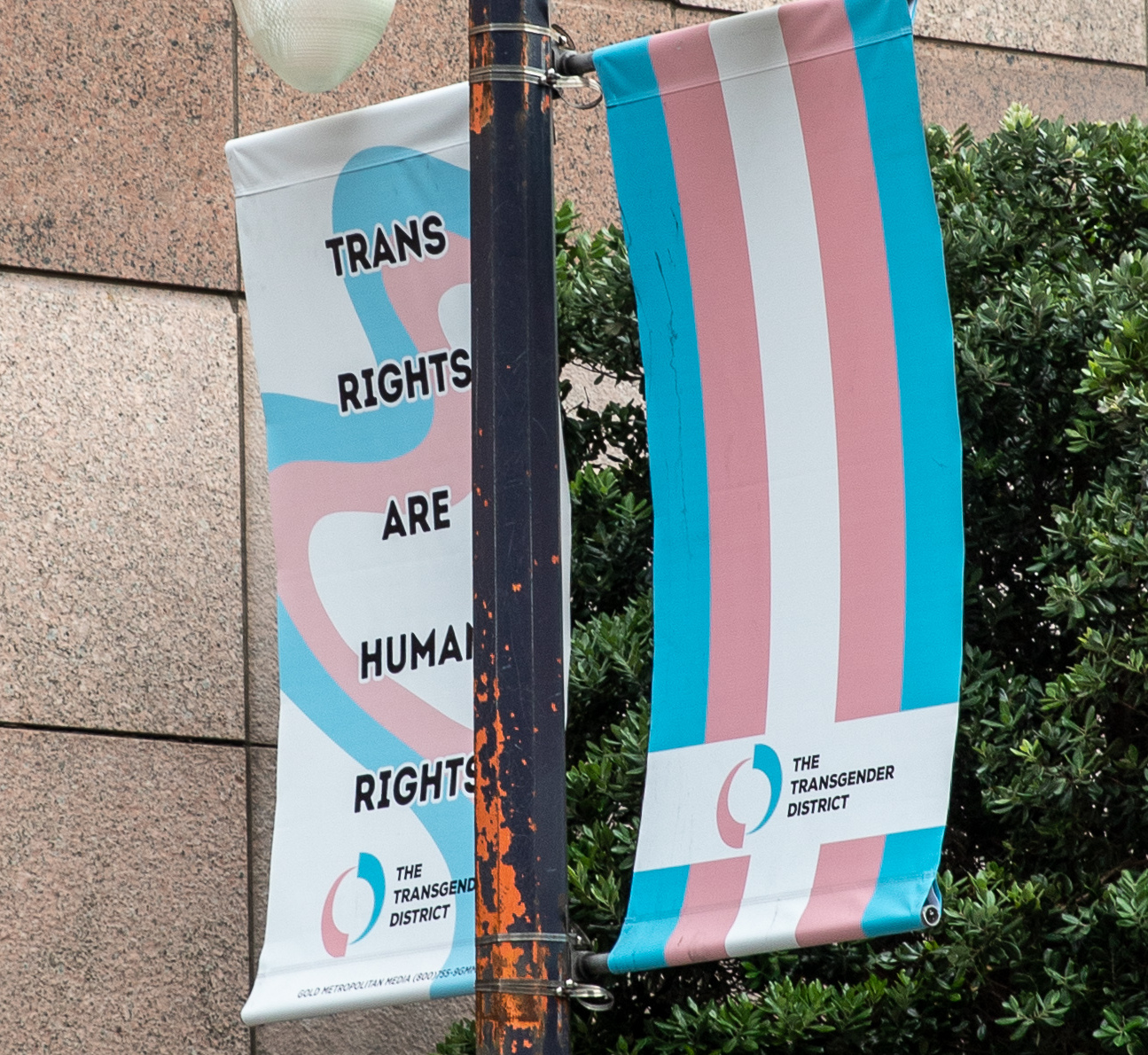
The Transgender District is not a museum or a memorial walk. It is a living neighborhood where transgender and gender-nonconforming people continue to live, work, and build community. The district provides social services, advocates for affordable housing, and supports cultural programming that centers trans voices. Public art installations, including murals and banners in the colors of the transgender pride flag, mark the district's boundaries. The message is explicit: this is our neighborhood, named for our history, and maintained for our future. In a city that has celebrated LGBTQ culture for decades, the Transgender District represents a specific and overdue recognition that the 'T' in that acronym has its own history, its own heroes, and its own geography.
From the Air
The Transgender District is at 37.78N, -122.41W, in San Francisco's Tenderloin neighborhood, centered around Turk and Taylor Streets. The Tenderloin is identifiable from the air as the dense residential grid between Union Square and the Civic Center. Nearest airports: KSFO 11nm south, KOAK 9nm east.