The Who Concert Disaster
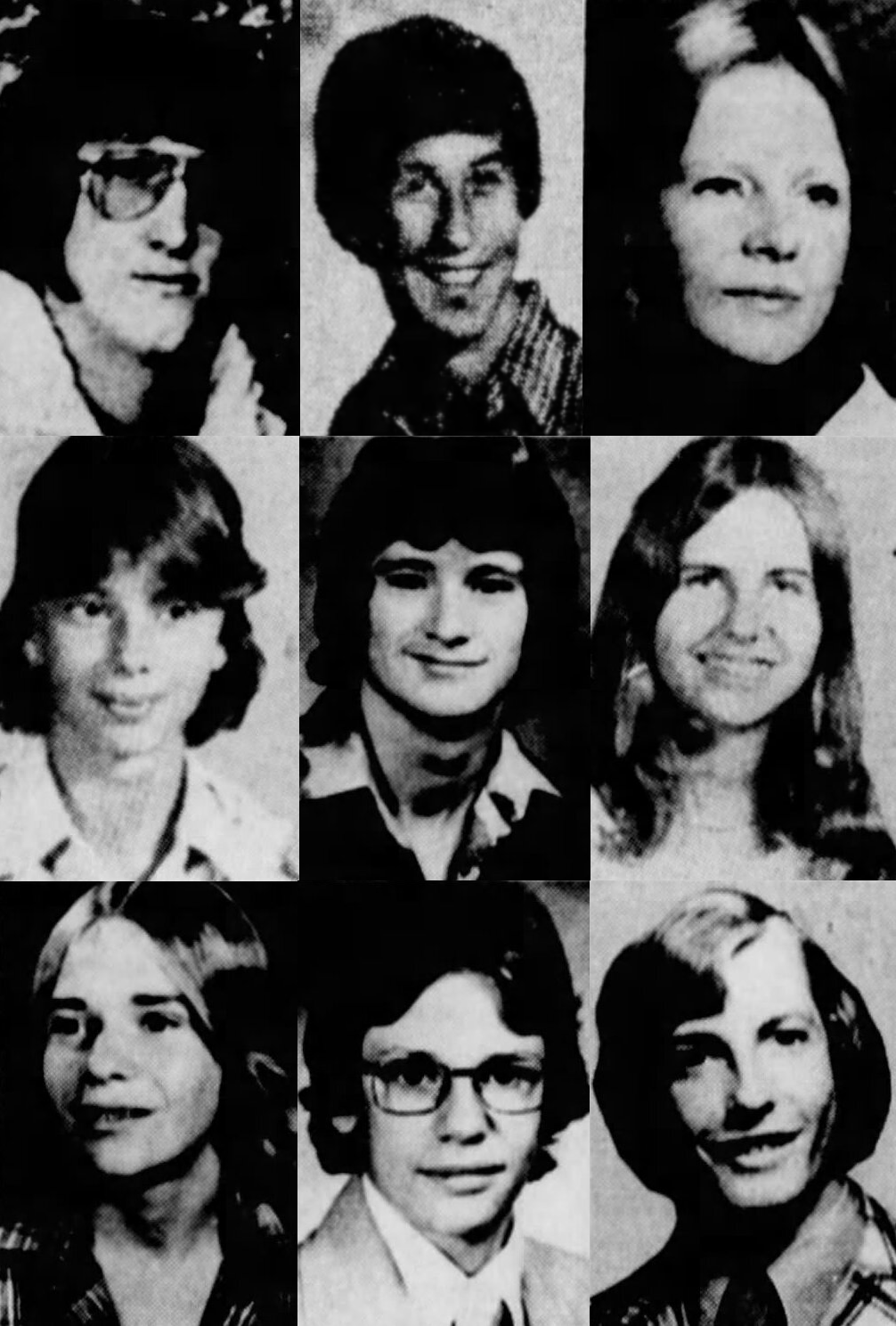
Eleven names. Eleven faces. They scroll across the video screens at TQL Stadium on a May evening in 2022, forty-three years after the night everything went wrong at Riverfront Coliseum. The youngest was fifteen. The oldest was twenty-seven. They had come to see the Who, one of the greatest rock bands on earth, on a cold Monday night in December 1979. None of them made it through the doors.
A Sold-Out Monday in December
The Who were three shows into the second leg of their 1979 world tour, their first without the late Keith Moon, who had died the year before. Kenney Jones, formerly of the Small Faces, now sat behind the drums. The Cincinnati concert on December 3 was a sellout: 18,348 tickets, all general admission. Fans had been told through a local radio station that doors would open at 3:00 p.m., and by late afternoon a massive crowd had gathered outside the coliseum's entrance. The problem was simple and catastrophic: when the time came to let people in, only two doors on the far right side of the main entrance opened. The rest stayed shut.
Seven-Fifteen
By 7:15 p.m., the situation had become desperate. Thousands of fans pressed toward those two open doors while knocking on the sealed ones, hoping more would open. Then sound leaked from inside the arena. Some heard what they believed was a late soundcheck; others thought the band's film Quadrophenia was playing. Either way, the crowd surged forward, convinced the Who had taken the stage early. In the crush, eleven people lost their lives. Walter Adams Jr., 22. Peter Bowes, 18. Connie Sue Burns, 21. Jacqueline Eckerle, 15. David Heck, 19. Teva Rae Inlow Ladd, 27. Karen Morrison, 15. Stephan Preston, 19. Philip Snyder, 20. Bryan Wagner, 17. James Theodore Warmoth, 21. Three of them attended the same school: Finneytown High.
The City That Banned Festival Seating
The aftermath was swift. Providence, Rhode Island canceled a scheduled Who performance that same month, even though its venue had assigned seats. Cincinnati imposed a ban on unassigned festival seating on December 27, 1979, a prohibition that would stand for twenty-five years. The tragedy reverberated through popular culture: it inspired a powerful episode of WKRP in Cincinnati called "In Concert" and influenced scenes in Pink Floyd's The Wall. Paul Wertheimer, the city's Public Information Officer during the disaster, went on to found Crowd Management Strategies in 1992, dedicating his career to preventing future tragedies. When Cincinnati finally repealed the seating ban in 2004, it replaced it with a mandate requiring nine square feet of space per person at any venue.
Finneytown Remembers
The P.E.M. Memorial, created in August 2010, honors the eleven who died. The initials stand for Preston, Eckerle, and Morrison, the three Finneytown High School students who perished. Every first Saturday in December, local musicians perform a free concert at the memorial site, raising awareness for scholarships awarded annually to Finneytown seniors pursuing arts or music education. In 2018, Roger Daltrey visited the school and met with victims' families and survivors. Both sides said the meeting brought a measure of peace that decades had not. A historical marker was dedicated at the arena site on December 3, 2015, the thirty-sixth anniversary, after a committee of survivors and a family member of victim Teva Ladd campaigned for its placement.
The Long Way Back
Pete Townshend carried the weight for decades. He regretted leaving Cincinnati that night, regretted not staying to mourn. "I'm not forgiving us. We should have stayed," he said in a 2019 documentary. After forty-three years, the Who finally returned to Cincinnati on May 15, 2022, playing TQL Stadium as part of their "Hits Back" tour. The opening act was a local band called Safe Passage, featuring members of the Finneytown High School Class of 1979. Two of its members had been at Riverfront Coliseum that night. Before the Who took the stage, a video message from Eddie Vedder played, recalling how Daltrey and Townshend had comforted him after nine people died during Pearl Jam's set at Roskilde Festival in 2000. Keyboardist Loren Gold performed an eleven-minute instrumental introduction to "Love, Reign o'er Me" as photographs of all eleven victims filled the screens. The concert ended with "Baba O'Riley," the band joined onstage by ten current Finneytown High students.
From the Air
The former Riverfront Coliseum, now Heritage Bank Center, sits at 39.0975N, 84.505W on Cincinnati's riverfront along the Ohio River. From the air, the arena is visible adjacent to the Great American Ball Park and Paul Brown Stadium along the river's north bank. Nearest airports: Cincinnati/Northern Kentucky International (KCVG) 13 miles south, Lunken Airport (KLUK) 6 miles east. Best viewed at 3,000-5,000 feet AGL, where the entire riverfront entertainment district is clearly visible.