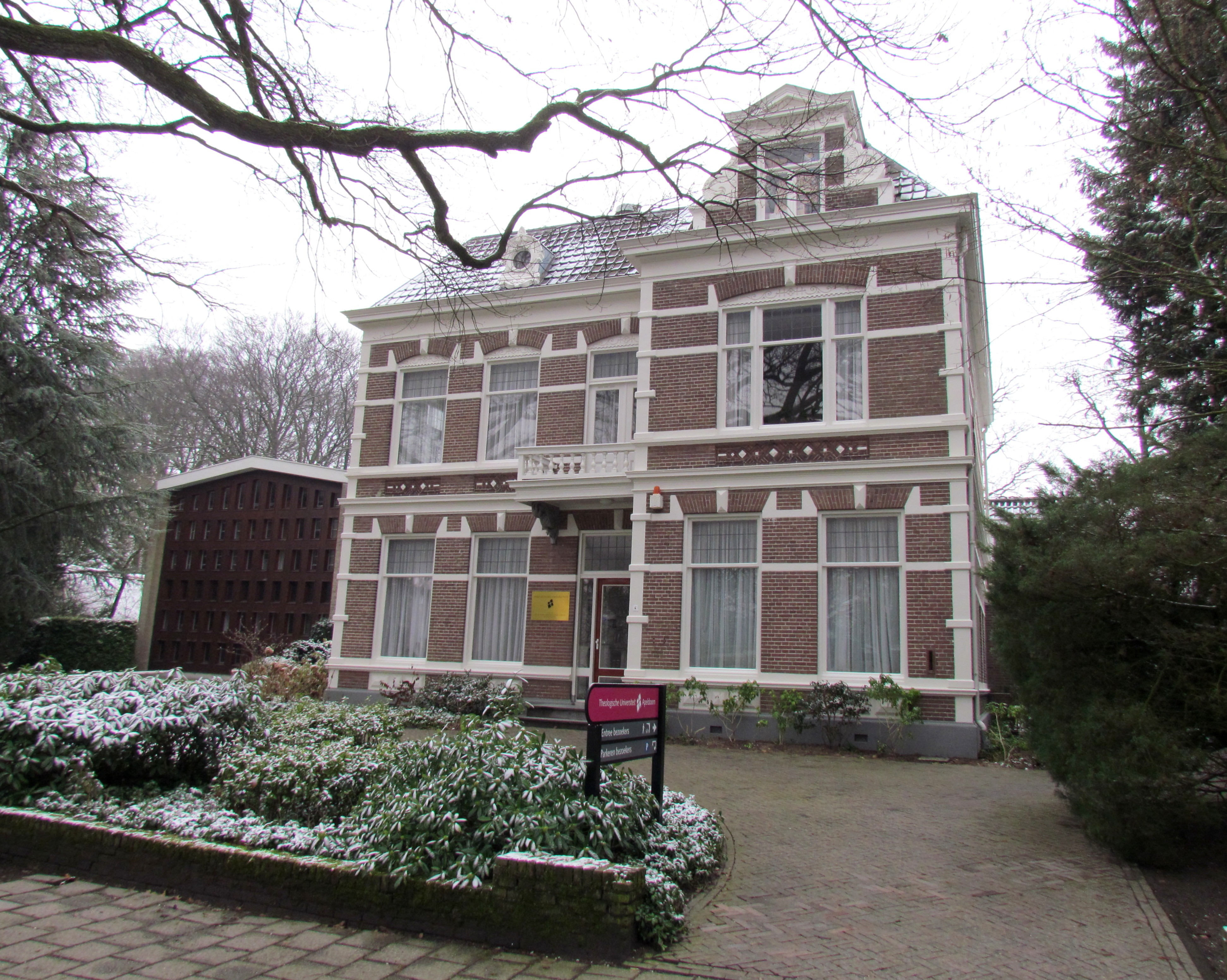
Theological University of Apeldoorn
It takes six years to become a pastor in the Christelijke Gereformeerde Kerken, and most of the first three are spent learning languages that no one speaks anymore. Classical Greek for the philosophers. Koine Greek for the New Testament. Latin for the reformers. Biblical Hebrew for everything older than that. The Theological University of Apeldoorn - TUA, to its students - is a small institution by any measure: about 130 enrolled, one main building in a quiet corner of Apeldoorn, a single confessional tradition to serve. But it has been quietly turning out scholars and ministers for the orthodox-Reformed wing of Dutch Protestantism since the Victorian era, and student surveys regularly rank it among the best universities in the country.
Born from a Split
The university traces its origin to 1894, when eight congregations of the Christelijke Gereformeerde Kerken gathered for their first national synod and resolved to train their own pastors. The Christian Reformed Churches had broken from the Dutch state church a generation earlier in the Afscheiding of 1834, a small revolt of conservative believers who felt the established church had drifted from its confessions. The new federation needed its own seminary, and in 1894 it opened one in The Hague. In 1919 the school moved east, to Apeldoorn - a quieter Reformed stronghold on the Veluwe - where it has remained ever since. The campus is modest and unmarked. The library, however, is serious.
What the Curriculum Asks
The TUA program is structured as a three-year bachelor followed by a three-year master, with biblical languages front-loaded and dogmatics, church history, ethics, apologetics, and church law layered on top. The school is also licensed to grant a doctorate in theology, a right it has held since 1980. The intent is unapologetically vocational: most students arrive expecting to be ordained. Yet since 1968 the doors have opened to anyone wanting serious theological training, and the student body now includes Koreans, Indonesians, and other international students drawn to the school's reputation for rigorous Reformed scholarship. A minority of graduates actually end up in CGK pulpits - the federation is small, and pulpits are few - so the training has had to prepare ministers for export as well.
Partnerships and the BEST Project
TUA partners with the Theological University of the Reformed Churches in Utrecht on a combined research program called BEST - Biblical Exegesis and Systematic Theology - which deliberately bridges two disciplines that often grow apart. Old Testament scholars and dogmaticians rarely share a corridor; the BEST program puts them in the same room. Across the Atlantic, the university teamed up with the Puritan Reformed Theological Seminary in Grand Rapids, Michigan in 2017 to launch a joint Puritan research center and a combined doctoral track. A more ambitious 2017 plan would have merged TUA with the Reformed seminary in Kampen and the Netherlands Reformed ministerial program into a single national Reformed university; the Christelijke Gereformeerde synod rejected it, preferring the independence the small school has always defended.
Living Reformed Theology
In September 2021 the university launched a new master's program called Living Reformed Theology, a 60 EC degree designed to be taken part-time or on a faster track. The interdisciplinary framing pushes Old Testament study into conversation with practical theology, dogmatics into conversation with church polity. The program reflects what TUA has been doing on a smaller scale for decades: training pastors who can read Hebrew and Greek but also stand in a Dutch pulpit on a Sunday morning and explain why any of it matters in the present tense. The institution remains tiny by global university standards. By the standards of its own tradition, it is the central place where that tradition thinks.
From the Air
Located at 52.22 N, 5.96 E in Apeldoorn, on the eastern flank of the Veluwe. Recommended viewing altitude 1,500-2,500 feet AGL for urban detail; the city's grid sits in a clear pocket between the Veluwe forest to the west and the IJssel valley farmland to the east. Nearest airports: Teuge (EHTE) 8 km southeast (active GA and skydiving), Lelystad (EHLE) 35 km northwest, Niederrhein (EDLV) 50 km east, Amsterdam Schiphol (EHAM) 80 km west. Apeldoorn lies under the Schiphol arrival routing for traffic from the east, so expect overflying airliners at FL200 and above.