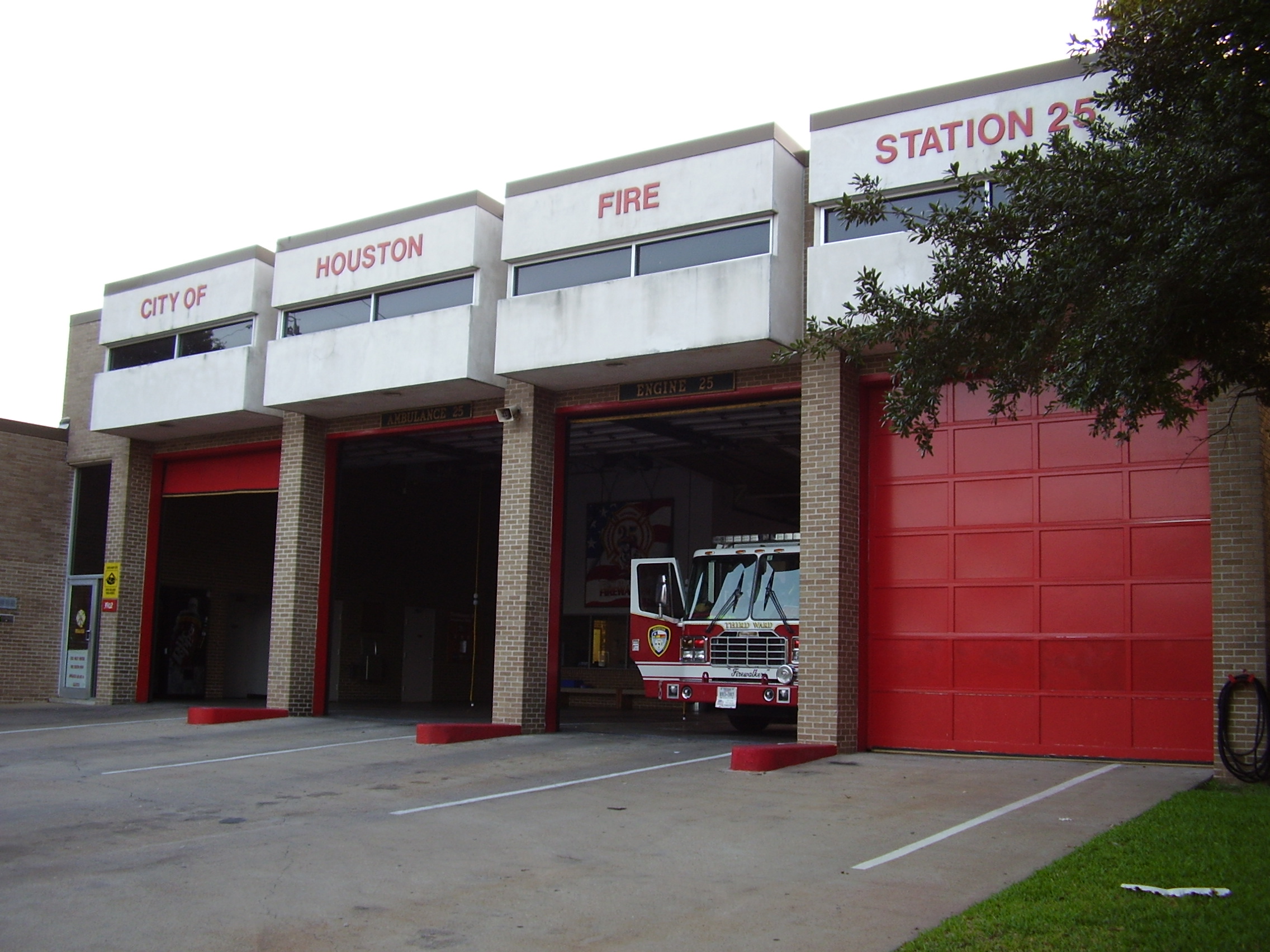
Third Ward, Houston
In 1987, Dr. Joyce Williams declared the word 'ward' stagnant and unsophisticated, and her civic group officially stopped using it. The neighborhood refused to comply. Nearly four decades later, Third Ward -- 'The Tre' to those who know it -- remains defiantly itself, a place where shotgun shacks stand beside new townhomes, where 80-year-old meat markets share walls with vegan coffee shops, and where the oldest African-American church congregation in Houston still holds services just blocks from the university that produced Beyonce. Located inside Houston's 610 Loop, immediately southeast of downtown and east of the Texas Medical Center, this is the neighborhood that sociologist Robert D. Bullard called 'the city's most diverse black neighborhood and a microcosm of the larger black Houston community.'
From Silk Stockings to Shotgun Shacks
Third Ward's story begins almost at the beginning of Houston itself. Soon after the city's 1836 founding, the City Council carved the town into four wards as political subdivisions. Through the late 1800s, what is now the east side of downtown Houston was, according to Rice University architectural historian Stephen Fox, 'the elite neighborhood of late 19th-century Houston' -- a silk-stocking district of Victorian homes. The construction of Union Station around 1910 began to erode the residential character, and hotels sprang up to serve travelers. When passenger trains stopped running, those hotels devolved into flophouses. The City of Houston abolished the ward system in the early 1900s, but the name stuck. After World War II, waves of Black migrants from Louisiana, East Texas, and the Deep South settled in Third Ward, and during the era of racial segregation, Almeda Road became a busy commercial corridor connecting the neighborhood to downtown. Then Interstate 45 arrived in the 1950s, physically severing portions of historic Third Ward from the rest of the community.
The Spirit of Dowling Street
Third Ward's cultural heartbeat has long pulsed along its central artery, the street that intersects Elgin, Holman, Southmore, and Wheeler. Roger Wood, author of Down in Houston: Bayou City Blues, called it the center of Houston's blues music culture, and the sounds of Sam 'Lightnin'' Hopkins once drifted from its doorways. In 1970, Carl Hampton organized the People's Party II at 2800 Dowling Street to confront police brutality, building a Rainbow Coalition that united Black, Mexican-American, and white working-class activists. Their survival programs offered free childcare, food, fumigation for the poor, and sickle cell anemia testing. Hampton was shot and killed by police on July 26, 1970, but the coalition's legacy endures. The Community Artists' Collective, founded in 1985, has spent decades supporting African-American artists. Project Row Houses turned vernacular architecture into a living gallery. Trinity United Methodist Church, established in 1848, remains the oldest African-American congregation in Houston.
Emancipation and Education
Around 1870, the original owners of Emancipation Park purchased the land to commemorate the end of slavery in the United States, making it one of the oldest public parks in Texas. It anchors a neighborhood whose educational institutions have shaped generations. Texas Southern University serves as both the cultural and community center of Third Ward, while the University of Houston shares three main streets with the neighborhood, including Scott Street -- the heart of the Tre. Yates High School, whose former building Allan Turner of the Houston Chronicle called an 'educational anchor,' produced educators, ministers, and lawyers who built the professional class of Black Houston. By 1870, 29 percent of African Americans in Houston lived in Third Ward; by 1910, that number had grown to 32 percent, making it the plurality home of the city's Black population.
A Neighborhood Under Pressure
The transformation has been swift and stark. In 2000, a Third Ward attorney noticed the first sign of gentrification: a crack house converted into a high-end residence. By 2006, townhouses were springing up across the freeway, attracting childless couples, empty nesters, and young professionals. State Representative Garnet Coleman fought back, using the Midtown Tax Increment Financing District to buy land and restrict its use to low-income housing. But the tide proved relentless. Between 2010 and 2020, Third Ward's Black population dropped from 71 percent to 45 percent, while the white population surged 170 percent. The historic Sears building was reimagined as The Ion, a $100 million innovation hub. Median home prices and average rents climbed sharply. As Houston Chronicle columnist Joy Sewing wrote in 2020, 'The Tre is also home to some of the city's most noted and greatest African-American artists, activists, educators and leaders' -- a legacy that residents are determined to protect even as the neighborhood's face changes around them.
Beyonce's Backyard
Third Ward's cultural footprint extends far beyond Houston's city limits. Beyonce grew up in the adjacent Riverside Terrace area and wove the neighborhood into her music video for 'No Angel' from her 2013 self-titled album. Her company, Parkwood Entertainment, takes its name from Parkwood Park, where she played as a child. Debbie Allen and her sister Phylicia Rashad, jazz saxophonist Arnett Cobb, poet Pat Parker, and George Floyd all called Third Ward home. The Blaffer Art Museum at the University of Houston showcases national and international contemporary art, while the University Museum at Texas Southern University celebrates creators of the African Diaspora. From the original Frenchy's Chicken to the METRORail Purple Line stations that now connect the neighborhood to downtown, Third Ward remains what it has always been: a place that refuses to be defined by anyone but itself.
From the Air
Third Ward sits at 29.73N, 95.36W, immediately southeast of downtown Houston's skyline cluster and east of the Texas Medical Center complex. From the air, look for the distinctive campus of Texas Southern University and the University of Houston as landmarks. The 610 Loop freeway forms a clear boundary. Nearby airports include William P. Hobby Airport (KHOU, 5nm south) and George Bush Intercontinental (KIAH, 18nm north). Ellington Field (KEFD) is 12nm southeast. Best viewed at 2,000-3,000 feet AGL for neighborhood detail.