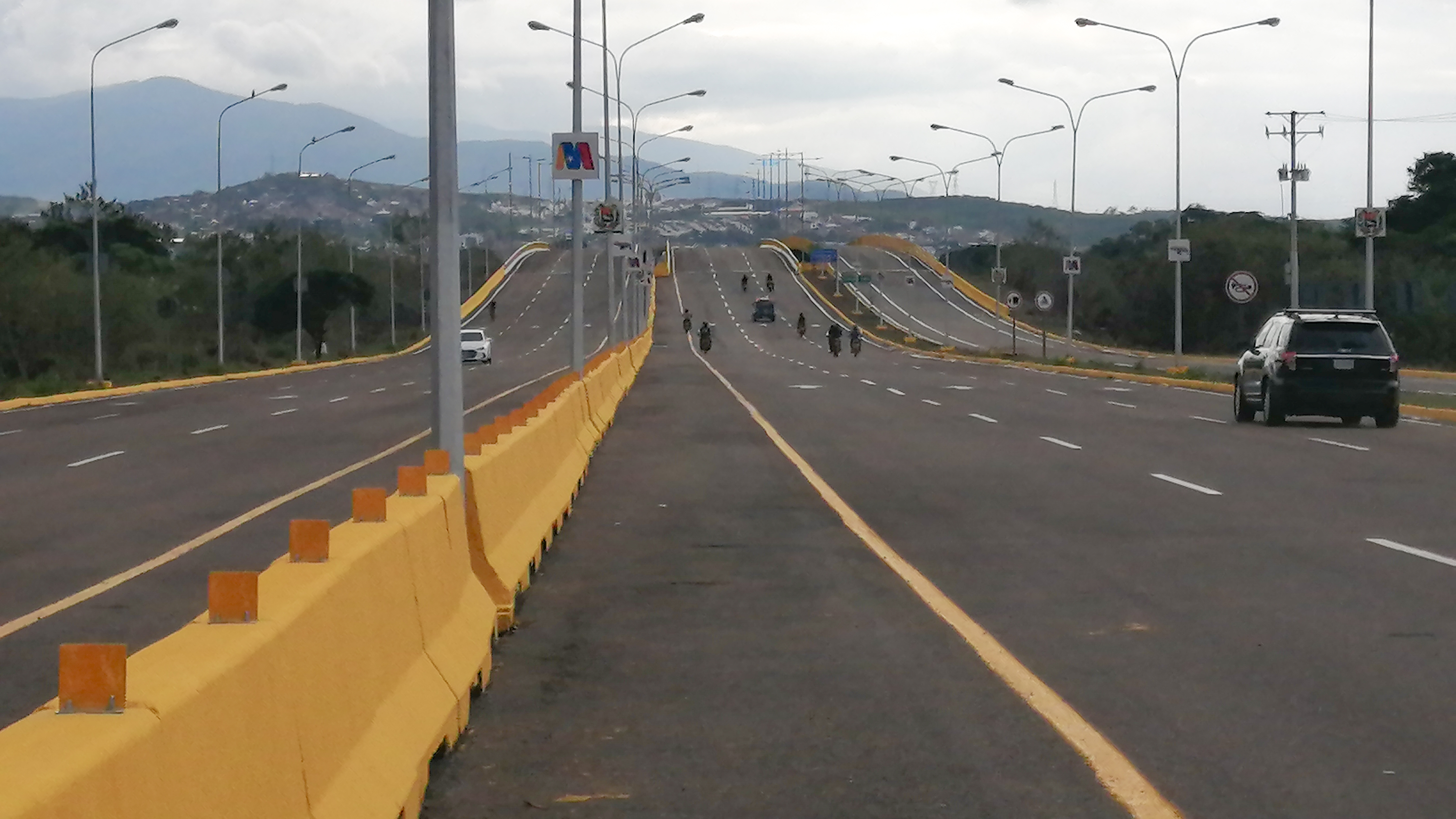
Tienditas Bridge
Three bridges, side by side, span the Tachira River between Colombia and Venezuela. Two carry three lanes of traffic each. The third is for pedestrians. Together they form the Tienditas International Bridge, the fifth crossing between the two nations, completed in February 2016 at a cost of $32 million split equally between the two governments. For seven years after its completion, not a single vehicle legally crossed it. The bridge that was supposed to strengthen a border instead became the most visible symbol of its collapse.
Built for a Future That Stalled
Construction began on January 24, 2014, with a planned timeline of twenty months. The design was ambitious: three parallel structures stretching approximately 280 meters each across the Tachira River, connecting Tachira state in Venezuela with Norte de Santander in Colombia. Immigration and customs facilities were built on both sides. The infrastructure was meant to ease congestion at existing border crossings and accommodate the enormous volume of trade and human movement between the two countries. By the time the bridge was structurally complete in 2016, however, the political relationship between Caracas and Bogota had deteriorated sharply. Tensions over smuggling, migration, and diplomatic disagreements kept the crossing closed. A finished bridge with no one on it.
Containers on the Span
In February 2019, the bridge became the focal point of an international standoff. Opposition leader Juan Guaido, recognized as interim president by dozens of countries, organized shipments of humanitarian aid to be delivered through the Tienditas crossing from Colombia. President Nicolas Maduro, who had denied the existence of a humanitarian crisis since taking power in 2013, ordered the Venezuelan military to block the bridge. Soldiers positioned an oil tanker and cargo containers across the span. The images traveled worldwide: a pristine, unused bridge physically barricaded to prevent food and medicine from crossing a river. On February 22, the Venezuela Aid Live benefit concert drew tens of thousands to the Colombian side of the bridge, with performers calling for the border to open.
The Aid Push and Its Fallout
On February 23, 2019, a coalition of countries attempted to deliver humanitarian aid to Venezuela by land and sea. At the Colombia-Venezuela border, the caravans were met with tear gas and rubber bullets from Venezuelan security forces. The aid did not get through. The confrontation at Tienditas crystallized the broader crisis: a country with the world's largest proven oil reserves unable or unwilling to feed its people, and a bridge that existed as infrastructure but not as a crossing. The United States pledged $20 million in aid. Canada committed $53 million Canadian. Germany, Sweden, Argentina, Chile, and the European Commission added their own contributions. Yet the bridge remained sealed.
Seven Years to a First Crossing
The political landscape shifted when Colombian president Gustavo Petro took office in August 2022 and moved to normalize relations with Venezuela. On January 1, 2023, the Tienditas Bridge, now officially named the Atanasio Girardot International Bridge, was finally inaugurated. Vehicles and pedestrians crossed for the first time since construction had ended nearly seven years earlier. The opening marked the most tangible step in restoring economic and diplomatic ties between the neighbors. Today, the bridge carries the cross-border traffic it was always designed to handle, its cargo containers and barricades removed, its lanes open. Whether it will remain so depends on a relationship between two countries that has proven as unpredictable as the politics that kept it closed.
From the Air
Coordinates: 7.877N, 72.452W, spanning the Tachira River at the Colombia-Venezuela border. The three parallel bridge structures are clearly visible from low to moderate altitude as bright spans over the narrow river valley. Located approximately 15 km southwest of Cucuta. Nearest major airport is Camilo Daza International (SKCC/CUC) in Cucuta. On the Venezuelan side, San Antonio del Tachira (SVZ) is a smaller regional airport. The border zone features flat river plains flanked by foothills of the Eastern Cordillera.