Tightwad Hill
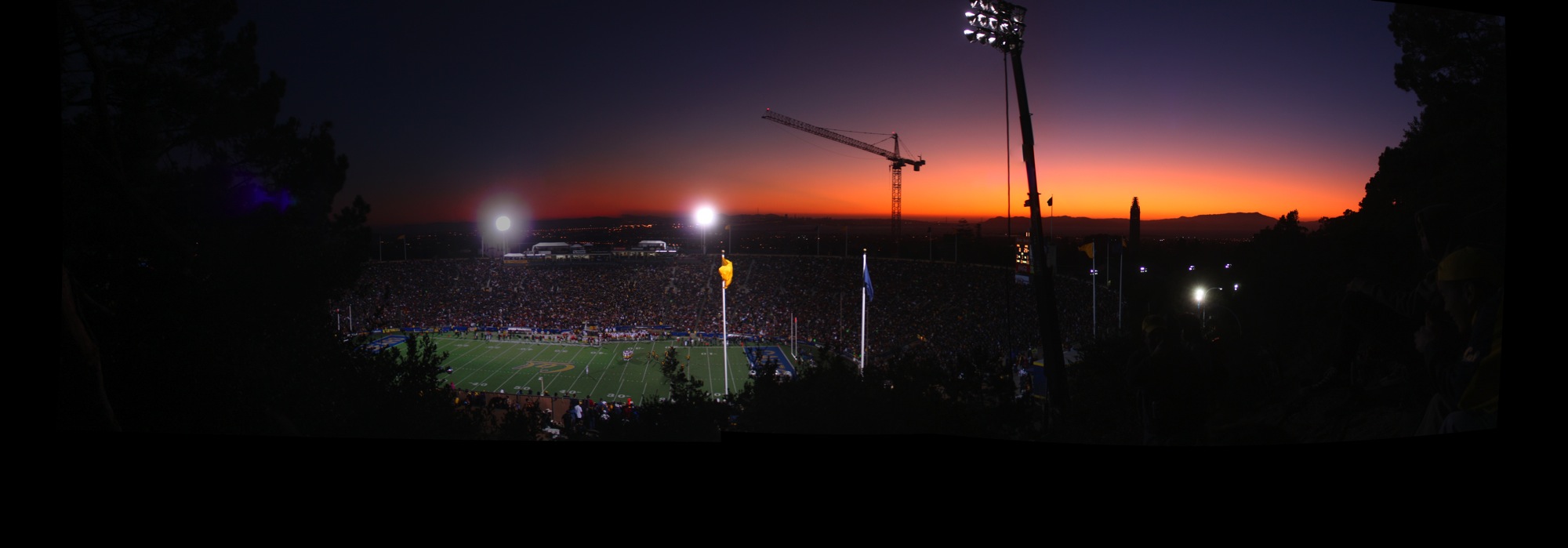
The cannon only ran out of ammunition once. It was 1991, a home game against Pacific, and Cal scored twelve touchdowns. The Victory Cannon, perched on a concrete platform just east of California Memorial Stadium, had to fire for every single one, and the Cannoneers simply could not keep up. That kind of excess is fitting for Tightwad Hill, a place built on the principle that the best seat in the house is the one you never paid for. The hill - formally Charter Hill - rises about a hundred feet above the east rim of Memorial Stadium in Berkeley, and since 1923 it has offered anyone willing to climb a free, unobstructed view of Cal Bears football. Students, alumni, families, and strangers spread across its terraced slopes every fall Saturday, watching touchdowns and sunsets over the San Francisco Bay with equal enthusiasm.
Born from Excavation Dirt
Tightwad Hill exists because someone had to put the dirt somewhere. When California Memorial Stadium was built in 1923, workers excavated lower Strawberry Canyon and piled the displaced earth along the stadium's eastern rim. The inaugural game came on November 24, 1923 - a sold-out contest in which Cal beat Stanford 9-0 for their fifth consecutive victory in the rivalry and their fourth straight undefeated season. Fans who could not get tickets simply walked up the fresh mound of dirt and watched from above. No one planned it. No one stopped it. The tradition was born that afternoon, and a century later it persists in essentially the same form: climb the hill, find a patch of grass, and watch the game. Over the decades, regulars carved terraces into the steep slope to create informal seating areas. A bench was built into a tree and lasted over twenty years before a falling tree destroyed it in the winter of 2013-2014. The hill has its own social hierarchy, including 'The Tightwad 50 Club,' named for the seating area near the former midfield sign, and self-appointed 'Governors of Tightwad' who help maintain order and spirit.
Oski's Mighty Thunder
The California Victory Cannon has been part of game day since the Big Game of 1963, when members of the UC Rally Committee first brought it into the stadium to fire after touchdowns and at the final whistle. Everything changed in 1972, when the Pac-8 Conference banned cannons from stadiums. Every other school abandoned theirs. Cal kept firing. The hill behind the stadium was ruled to be outside the zone governed by the ban - technically not inside the stadium at all - so the cannon simply moved uphill. A wooden platform gave way in 2004 to a permanent concrete and stone structure, funded by a donation campaign organized by current and former UC Cannoneers. The boom, heard throughout the stadium and the surrounding Berkeley Hills, earned the nickname 'Oski's Mighty Thunder.' The cannon fires at every team run-out, every Cal touchdown, and every Cal victory. It has traveled to bowl games - the Holiday Bowl, the Copper Bowl - and even to away games against Washington and Indiana. For the 2016 College Football Sydney Cup in Australia, a stand-in cannon was sourced from the town of Wagga Wagga.
Save Tightwad Hill
In 2006, the Regents of the University of California proposed a major renovation of Memorial Stadium that included a new 'Eastside Seating Structure' on the promenade along the stadium's eastern edge. The structure would have blocked the view from Tightwad Hill - effectively ending a tradition that was by then eighty-three years old. An organization called Save Tightwad Hill sued the university, arguing that the Environmental Impact Report for the stadium project failed to analyze the impacts on historic resources and scenic views. The legal fight drew media attention and alumni support. The San Francisco Chronicle ran a story headlined 'Cal Alum's Goal-line Stand for View from Tightwad Hill.' Eventually, the two sides settled. Under the agreement, the university committed to preserving Tightwad Hill as an important Cal football tradition and to including representatives from the hill's community in the design process for any east-side improvements. The view survived. The tradition continued.
The View Beyond the Game
What makes Tightwad Hill endure is not just the free football. From its perch above the east rim, the hill offers a panorama that sweeps from the UC Berkeley campus across downtown Berkeley to the central San Francisco Bay. On clear autumn afternoons, the Golden Gate Bridge is visible to the northwest and Alcatraz Island sits in the middle distance. The hill's community has grown its own culture - a podcast called The Bear Raid, debuted on November 15, 2020, is hosted by members of the hill, including current and former Governors of Tightwad, and covers all Cal athletic programs. During the COVID-19 pandemic, when stadiums were empty and the future of live sports felt uncertain, a Bay Area News Group writer described Tightwad Hill as 'a refuge of normalcy.' People gathered on the hillside for the Big Game, spread apart but together, watching Cal and Stanford play in an empty stadium below. It was the same view fans had been watching since 1923 - free, unobstructed, and stubbornly persistent.
From the Air
Tightwad Hill (Charter Hill) is at 37.872N, 122.250W, rising immediately east of California Memorial Stadium on the UC Berkeley campus. From the air, look for the distinctive horseshoe shape of Memorial Stadium nestled against the western slope of the Berkeley Hills; the hill is the grassy rise along the stadium's eastern rim. The large concrete 'C' (the Big C) is visible on the hillside above. Nearest airports: Oakland International (KOAK) approximately 8 nm south, Buchanan Field (KCCR) approximately 15 nm northeast. Best viewed at 2,000-3,000 feet AGL on clear fall days when the terraced hillside and stadium are both visible.