Tiguex War
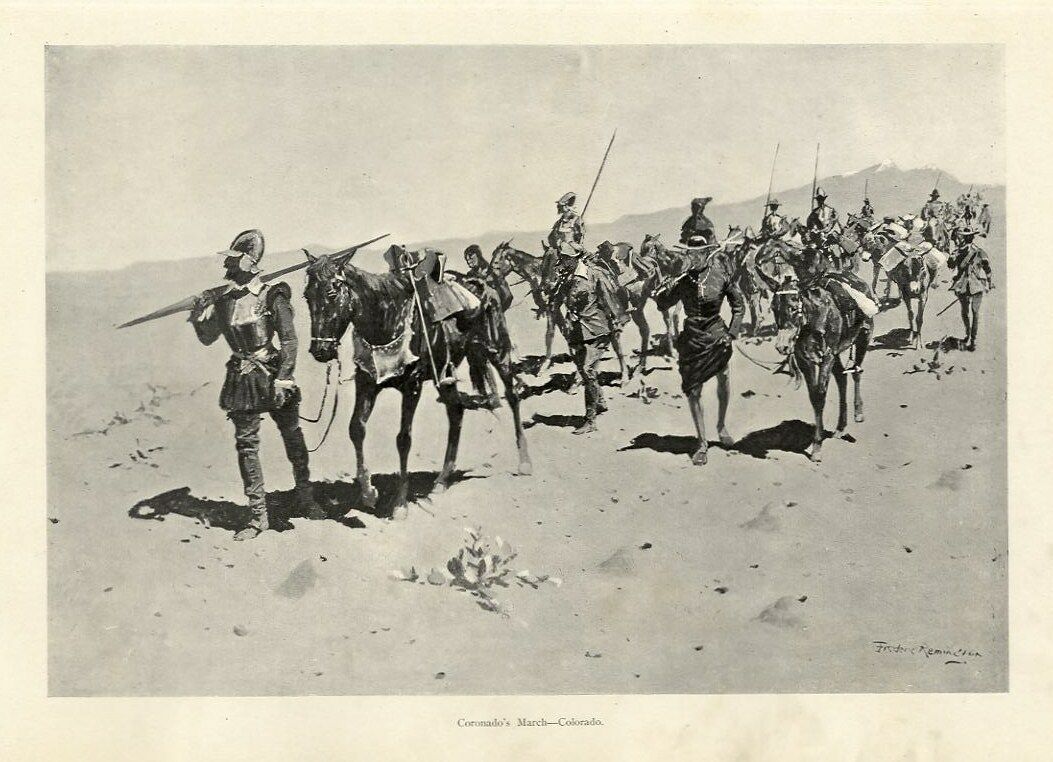
It began with a demand for blankets. In the winter of 1540, Spanish conquistador Francisco Vasquez de Coronado and his expedition arrived in the Tiguex Province along the Rio Grande, cold, hungry, and desperate. The Tiwa Pueblo people had lived here for thousands of years, farming the river valley and building twelve thriving villages home to an estimated ten to twenty thousand people. Coronado's men did not ask politely for supplies - they seized clothing and food with little regard for the people who owned them. What followed would become the first named war between Europeans and Native Americans on what is now United States soil, a violent precedent for the centuries of dispossession to come.
Gold That Never Existed
The chain of events leading to the Tiguex War began with a lie - or at least a spectacular misunderstanding. In 1539, Viceroy Antonio de Mendoza of New Spain sent Fray Marcos de Niza north to find the legendary Seven Cities of Cibola, rumored to overflow with gold. De Niza was accompanied by Estevanico, an enslaved African who had crossed the continent years earlier and knew the territory. When they reached a Zuni settlement, de Niza convinced himself he had found Cibola. He returned south with tales of wealth that launched Coronado's full-scale expedition the following year. Coronado arrived to find no gold - just adobe pueblos, their residents bewildered by the armed strangers demanding treasure that did not exist.
A Winter of Escalation
Coronado chose the Tiguex Province as his winter camp, a fateful decision for the Tiwa people. His soldiers, unprepared for the harsh New Mexico winter, began requisitioning food and clothing from the pueblos by force. Tensions escalated rapidly. The Spanish responded to any resistance with overwhelming violence - their tactical doctrine demanded swift, brutal retaliation against perceived aggression. Coronado dispatched Garcia Lopez de Cardenas with a large force of Mexican Indian allies to attack a pueblo the Spanish called Arenal. The Tiwas defended their homes with rocks hurled from rooftops and arrows fired through windows, but they were outmatched. The siege of Arenal was followed by an assault on the pueblo of Moho, where the fighting was equally fierce.
Empty Pueblos
The aftermath reshaped the entire region. Coronado, still chasing the phantom wealth of Quivira, set off across the Great Plains in 1541, marching all the way to central Kansas before finally accepting that the golden cities were a myth. When he returned, the political landscape had shifted - the Towa people of Jemez Pueblo had turned hostile, and the Tiwas had abandoned every one of their twelve villages. The Tiwa people eventually reoccupied some pueblos but consolidated into fewer, larger settlements, a survival strategy born from the trauma of invasion. Coronado withdrew to Mexico in April 1542, his expedition a military and financial failure. The Spanish would not return for thirty-nine years.
The Ground Remembers
Today, the Rio Grande flows through the Albuquerque metropolitan area much as it did in 1540, though the landscape is now interstate highways and subdivisions rather than pueblo villages. The site of the Tiguex War sits near modern-day Bernalillo, New Mexico, where the Coronado Historic Site preserves the ruins of Kuaua Pueblo, one of the twelve Tiguex villages. The Tiwa people endure - their descendants live at Sandia Pueblo and Isleta Pueblo, communities that have maintained their culture and sovereignty through nearly five centuries of colonization. The Tiguex War was the opening act of a long, painful story, but it was not the final chapter.
From the Air
Located at 35.31N, 106.55W along the Rio Grande valley near Bernalillo, New Mexico, approximately 15 miles north of downtown Albuquerque. The Rio Grande corridor is clearly visible from altitude running north-south through the valley. The Sandia Mountains rise dramatically to the east. Nearest major airport is Albuquerque International Sunport (KABQ). Double Eagle II Airport (KAEG) sits on Albuquerque west mesa.