Timken Museum of Art
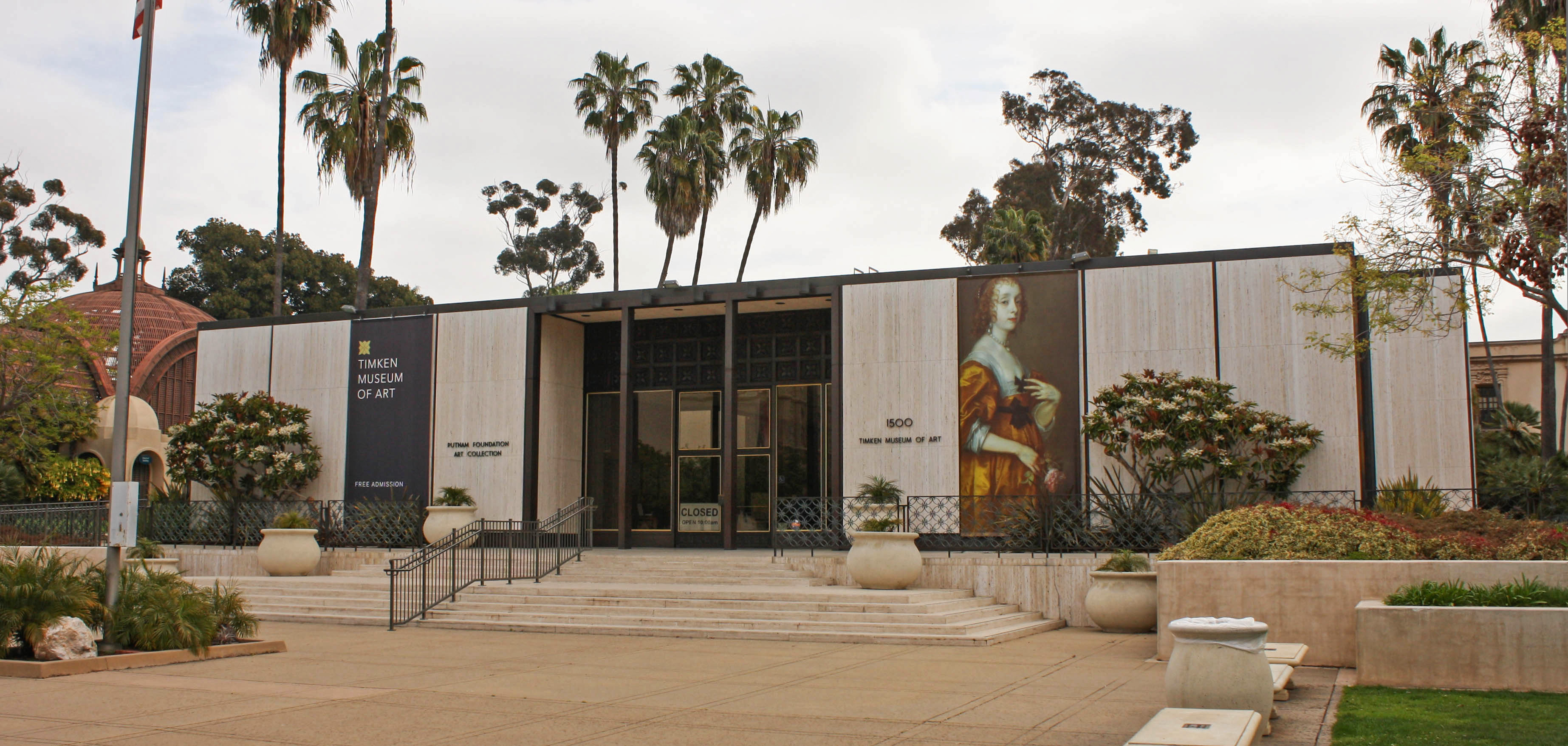
Inside a white marble-and-bronze building that deliberately does not match its Spanish Colonial neighbors, the Timken Museum of Art charges nothing to enter. This has been true since 1965, when the museum opened with a collection assembled by sisters Amy and Anne Putnam, nieces and heirs of Henry W. Putnam, who had settled in San Diego in the early twentieth century and quietly become among its most consequential art patrons. John Walker of the National Gallery of Art praised the collection shortly after opening day. Some of its works had been on loan to his institution until the Timken was ready to receive them.
The Putnam Foundation
The groundwork was laid in 1951, when Walter Ames helped Amy and Anne Putnam establish the nonprofit Putnam Foundation to own and manage their art collection. In their early years in San Diego, the sisters had donated works to the San Diego Museum of Art; by mid-century, the collection had grown beyond what the existing institution could properly display. The foundation loaned works to notable museums across the United States while the permanent home took shape. Ames became the Timken's first director when it opened in 1965 — a building designed in a deliberately modern idiom, marble and bronze, that held five gallery rooms and made a clear visual argument that it was not trying to be the Spanish baroque buildings around it in Balboa Park.
What Hangs on the Walls
The Timken's collection ranges from the sixteenth century to the nineteenth, with a focus on European and American masters. Pieter Bruegel the Elder's Parable of the Sower, dated 1557, is among the collection's older works. Guercino's The Return of the Prodigal Son, painted in 1654-55, hangs alongside Dutch Golden Age paintings by Gabriel Metsu and Jacob van Ruisdael. The collection's American holdings include Albert Bierstadt's Cho-looke, the Yosemite Fall and Eastman Johnson's The Cranberry Harvest, Island of Nantucket. The museum is the only institution in San Diego with a Rembrandt in its permanent collection. Russian icons add an unusual dimension to a collection more commonly associated with Western European traditions.
Free Admission, Always
The Timken's founding commitment to free admission has never wavered. In a city where Balboa Park's cultural institutions generally charge entry fees, the Timken stands apart. The building itself — understated, functional, modernist in a park built around ornamented revival styles — reflects the Putnams' approach to collecting: serious, unpretentious, focused on the quality of individual works rather than institutional grandeur. The museum has expanded its collection from the original forty works to around sixty major pieces. Small enough to see in an afternoon, significant enough to reward sustained attention. The Putnam sisters arrived in San Diego in the early twentieth century. The collection they built is still there.
From the Air
Located at 32.732°N, 117.150°W in Balboa Park, adjacent to the San Diego Museum of Art and the Spreckels Organ Pavilion. The park's cultural cluster is clearly visible from the air — the long colonnaded facade of the Museum of Art and the open oval of the Organ Pavilion mark the heart of the central mesa. San Diego International Airport (KSAN) lies approximately 2 miles to the northwest.