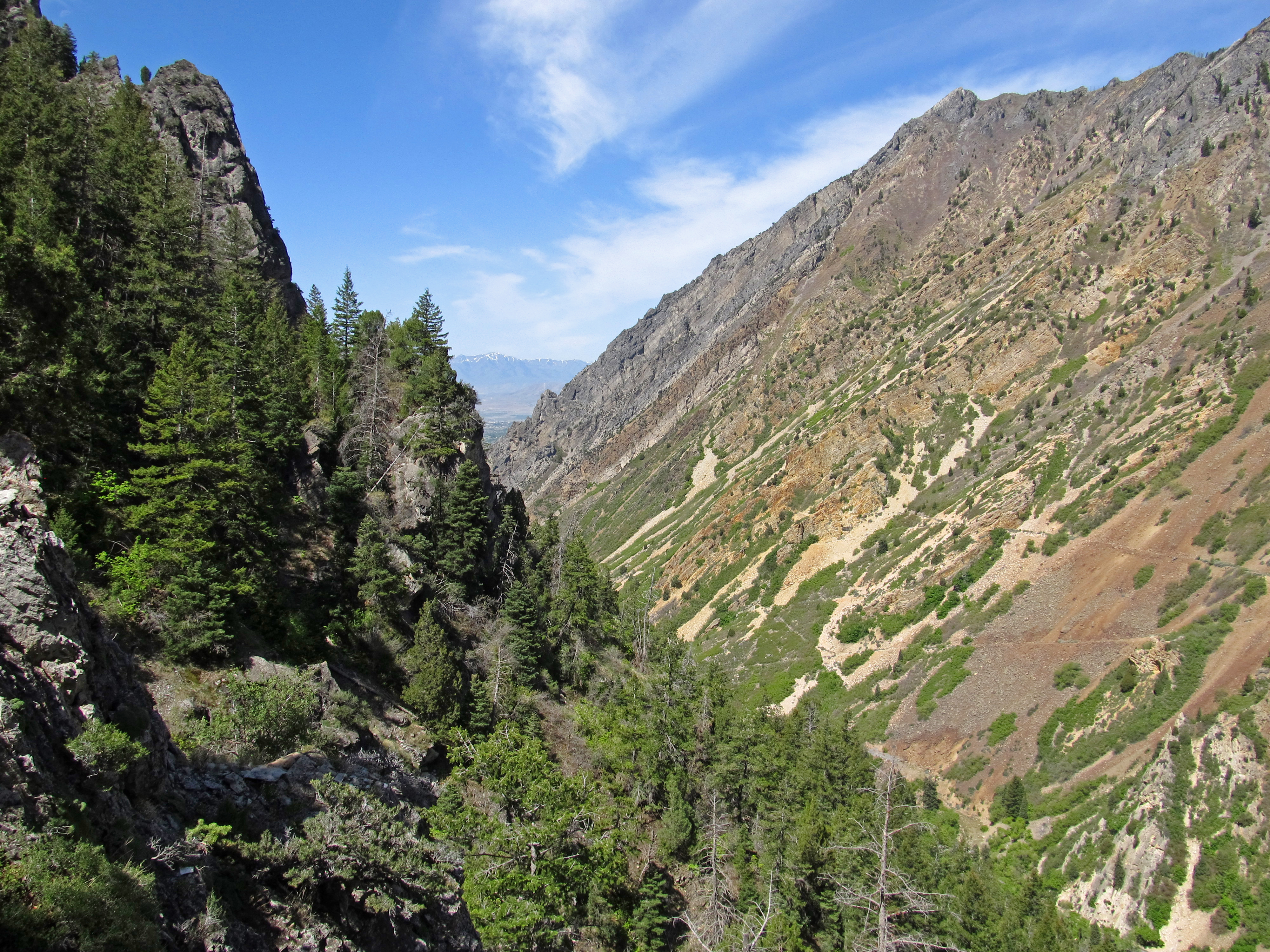
Timpanogos Cave National Monument
Martin Hansen was tracking a cougar in October 1887 when the animal's footprints led him to a dark opening in the canyon wall. Armed with only an ax, he decided the cat could wait until morning. He returned the next day with a torch and became the first person to explore what would become one of Utah's most remarkable underground treasures. That single act of curiosity, sparked by a predator's trail, would eventually reveal not one cave but three, connected by man-made tunnels blasted through the mountain in the 1930s.
Formations That Defy Gravity
Inside the caves, the laws of physics seem negotiable. The Chimes Chamber holds hundreds of helictites, spiral formations between six and ten inches long that twist and curl in directions that gravity would never permit. These impossible shapes form when water pushes through microscopic channels, driven by capillarity and hydrostatic pressure rather than falling downward. The cave's abundance of these formations stems from its geology: fault movements created countless tiny openings perfect for helictite growth. But the colors are even stranger. Green and yellow formations, rare in any cave system, glow along the walls. X-ray analysis revealed the secret: nickel atoms incorporated into the crystal structure of calcite and aragonite, painting the stone in hues found almost nowhere else underground.
Lost and Found Again
The cave system revealed itself in pieces across three decades. After Hansen's 1887 discovery, teenagers James Williams Gough and Frank Johnson stumbled upon a second entrance in 1913 while exploring with their families. They found the Great Heart of Timpanogos, a massive heart-shaped formation that would become the cave system's icon. Then the entrance vanished, lost to either landslide or the extreme secrecy of its finders. Rumors of a hidden cave persisted until August 14, 1921, when Vearl James Manwill rediscovered it. That very night, haunted by the vandalism that had scarred Hansen Cave, his group pledged to preserve its beauty for posterity. Two months later, Hansen's own grandson spotted yet another opening while hunting deer through binoculars. The 74-year-old Martin Hansen himself led the first exploration of this Middle Cave, connecting the final piece of the puzzle.
The Climb to Darkness
Reaching the cave entrance demands effort. A paved trail rises 1,065 feet over one and a half miles, switchbacking up the steep walls of American Fork Canyon. Summer temperatures on the exposed path can exceed 100 degrees Fahrenheit. Then you step through the entrance and the world changes. The cave maintains a constant 45 degrees with 100 percent humidity, a climate so stable and so isolated that it remains one of the cleanest cave environments in the tourist cave world. The alpine surroundings protect it from polluted air and contaminated watersheds that plague lower-elevation caverns. Heavy snowfall closes the monument for six months each year, further shielding it from human impact.
An Ecosystem in 250 Acres
The monument's quarter-square-mile footprint supports unexpected diversity. Fifty-five mammal species have been recorded here, from mountain goats navigating the canyon walls to ringtail cats hunting in the darkness. Moose, mule deer, and black bears move through the terrain. The American Fork River, flowing through the monument's center, supports introduced brown and rainbow trout. Overhead, golden eagles and peregrine falcons patrol the canyon, while canyon wrens and violet-green swallows nest in the cliffs. Great Basin rattlesnakes sun themselves on the trail during summer months, a reminder that this small protected area holds concentrated life at every elevation between 5,000 and 9,500 feet.
From the Air
Located at 40.44N, 111.71W in American Fork Canyon within the Wasatch Range. The monument covers 250 acres in steeply-walled terrain, elevation ranging 5,000-9,500 feet. Best viewed from 8,000-10,000 feet AGL for canyon perspective. Approximately 40 miles south of Salt Lake City. Nearest major airport: Salt Lake City International (KSLC). The canyon runs east-west with the cave entrances visible on the steep northern wall. The Alpine Scenic Loop (Highway 92) winds through the canyon below.