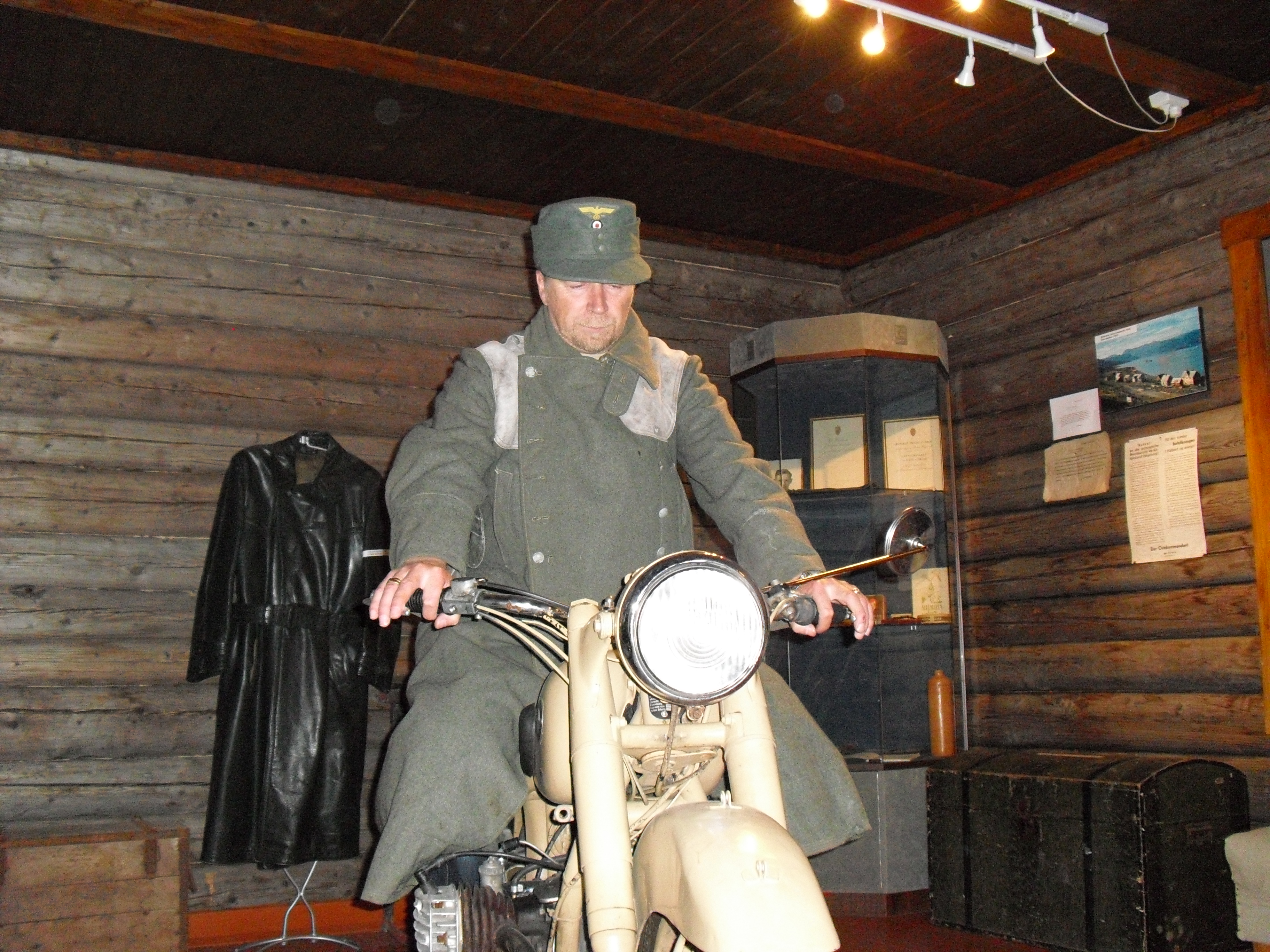
Tirpitz Museum (Norway)
The building arrived in pieces. Constructed around 1880 in Lillehammer, hundreds of kilometers to the south, the timber structure was dismantled and shipped to Alta in 1946 as part of the effort to rebuild a region the retreating German army had deliberately destroyed. It first served as Finnmark's first nursing home, tending to survivors of the scorched-earth withdrawal. Today it holds photographs, artifacts, and memories of the warship that once made this remote fjord one of the most heavily defended anchorages in occupied Europe.
Germany's Arctic Fortress
During the German occupation of Norway, the Altafjord complex became one of Germany's largest naval bases. Its purpose was strategic denial: to prevent Allied convoys from delivering critical supplies through the Norwegian Sea to the Soviet Union. The fjord's narrow approaches and mountainous walls made it a natural fortress, and the Germans improved upon nature with batteries of anti-aircraft guns, radar stations, smoke generators, and a flotilla of warships. At the center of this defensive web sat Tirpitz, the Kriegsmarine's largest and most powerful battleship. She anchored in Kaafjord, a branch of Altafjord, for nearly two years. Alongside her at various times were the battleship Scharnhorst, heavy cruisers, and dozens of destroyers and supply ships. The supplies these ships threatened were deemed critical to the outcome of the war on the Eastern Front, and the Allies committed enormous resources to neutralize the threat.
The Hunted Ship
Tirpitz drew attacks the way a magnet draws iron. Midget submarines, carrier aircraft, and heavy bombers all tried to destroy her in Kaafjord. The Fleet Air Arm's Operation Tungsten on 3 April 1944 was the most successful carrier strike, landing fifteen bombs and killing 122 crew members, but the battleship survived and was repaired by July. Operation Goodwood in August 1944 was the Fleet Air Arm's largest operation of the war, and it failed entirely. RAF Lancasters finally inflicted fatal damage during Operation Paravane on 15 September 1944, when a single 12,000-pound Tallboy bomb ripped through the foredeck and flooded the bow with 2,000 tons of water. Deemed beyond repair at Kaafjord, Tirpitz was towed to Tromso to serve as a stationary coastal battery. On 12 November 1944, more Tallboys capsized and sank her, killing roughly 1,000 of the crew still aboard.
From Nursing Home to War Museum
The timber building that houses the Tirpitz Museum had its own journey of reinvention. After arriving from Lillehammer in 1946, it became Finnmark's first nursing home, a desperately needed facility in a county where the retreating German forces had burned virtually every structure during their 1944 withdrawal. The nursing home operated until 1961, when a newer facility opened in Kaafjord. The building's conversion to a museum brought it full circle, placing it within sight of the waters where Tirpitz once rode at anchor. Today the museum holds one of the largest collections of photographs and artifacts related to the battleship, documenting both the ship herself and the massive military infrastructure the Germans built around her in the Altafjord. The collection preserves the memory of a period when this quiet corner of Arctic Norway became a pivot point in the war at sea.
The Fjord Remembers
Kaafjord today is a small, quiet village at the end of a branch of Altafjord. The anti-aircraft batteries are gone, the smoke generators rusted away, and the surrounding mountains have reverted to the silence that predated the occupation. What remains is the museum and the fjord itself, its dark water still holding scattered remnants of the wartime infrastructure on its floor. Visiting the Tirpitz Museum means standing in the same landscape the Barracuda pilots saw through their bombsights and the Lancaster crews targeted through drifting smoke. The juxtaposition is the point: a peaceful fjord in Arctic Norway, surrounded by birch-covered slopes and empty sky, that once anchored the most dangerous warship in the northern hemisphere. The building that houses these memories, built before any of it happened and shipped north to heal the wounds the war left behind, is itself a small monument to the region's resilience.
From the Air
Coordinates: 69.93°N, 23.02°E, in the village of Kaafjord, Alta Municipality, Finnmark. The museum sits on the shore of Kaafjord, a branch of Altafjord where Tirpitz was anchored during 1943-1944. Nearest airport: Alta (ENAT) approximately 10 km southwest. From the air, Kaafjord is a narrow side fjord clearly visible branching south from the main Altafjord. The village and museum are at the fjord's head. The surrounding mountains rise steeply, illustrating why the anchorage was considered naturally defensible.