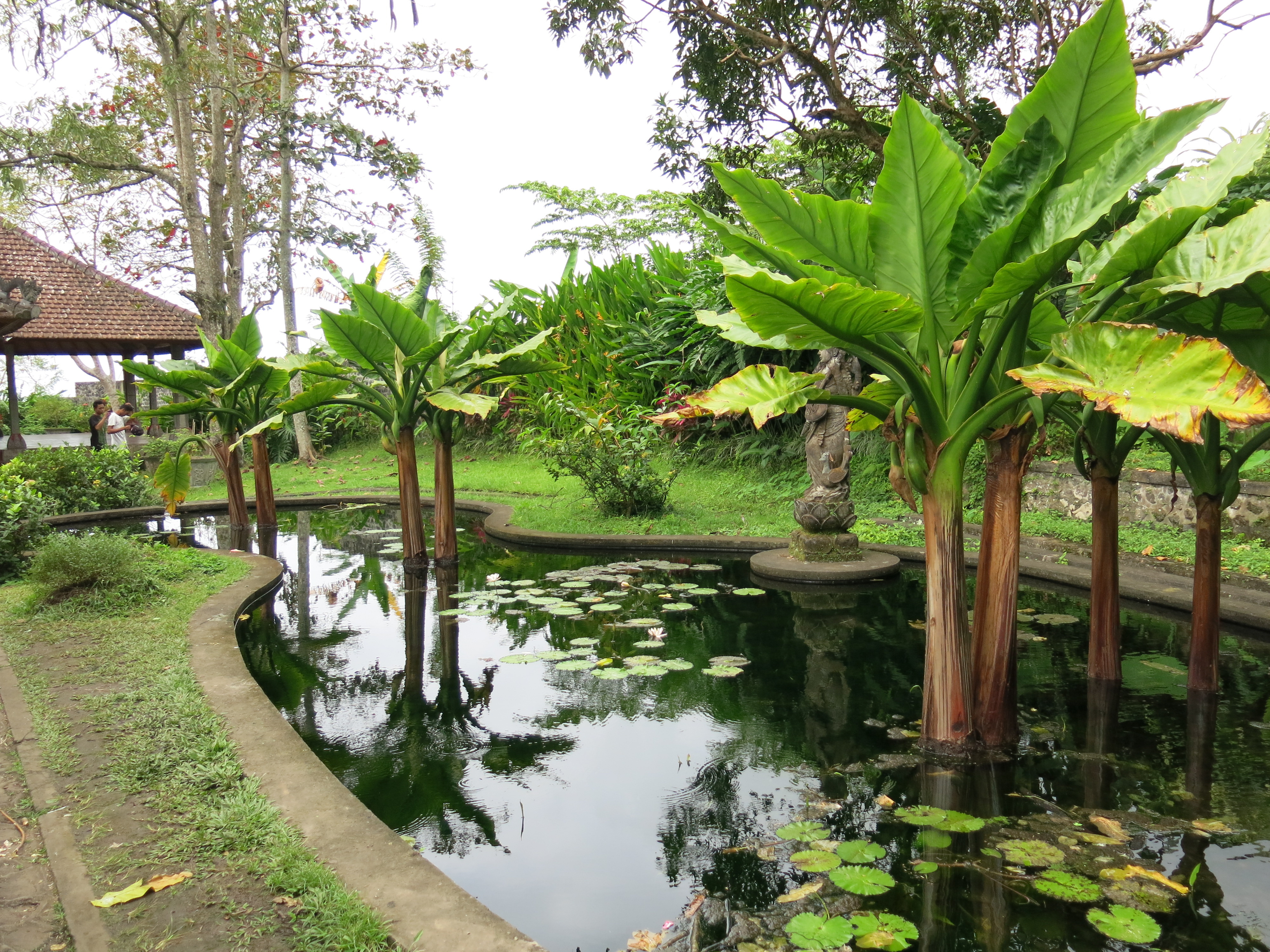
Tirta Gangga: A King Who Built Heaven in Water
The last king of Karangasem was not content to rule from a throne. He wanted to build paradise, and he wanted it made of water. In 1946, while the rest of Indonesia was fighting for independence from the Dutch, Anak Agung Anglurah Ketut Karangasem designed a water palace in the shadow of Mount Agung and then climbed down into the mud to build it with his own hands. Tirta Gangga -- named for the sacred Ganges River of India -- was his private vision of the Hindu cosmos rendered in fountains, stepping stones, and fish ponds. Seventeen years later, the volcano above it erupted and nearly erased it from the earth.
A King in the Mud
I Gusti Bagus Jelantik, the raja of Karangasem, was an architect by obsession. He had already built Ujung Water Palace on the coast, a sprawling complex of pools and pavilions that mixed Balinese and European design. Tirta Gangga was his second and more personal creation, set seven kilometers north of Amlapura in the village of Ababi. The site was chosen for its natural springs, which emerged from higher ground to the northwest and fed the pools with cold, clear water year-round. The king did not merely commission the palace -- he designed its layout, directed its construction, and waded into the work alongside his laborers. The result was a one-hectare compound that blended Balinese Hindu symbolism with Chinese architectural influences, a garden where water moved through every space and every level.
Walking on Water
Tirta Gangga's most photographed feature is deceptively simple: hexagonal stepping stones set into a pond full of enormous golden koi. Visitors cross the water on these stones while fish the size of small dogs swirl around their feet, mouths gaping for food. It feels playful, almost whimsical -- but the design is deliberate. The stepping stones force you to slow down, to watch your footing, to become aware of the water beneath you. Above the ponds, an eleven-tiered fountain rises in the shape of a lotus flower. Called the Nawa Sanga, it represents the nine guardian gods of the Balinese Hindu compass directions. Water cascades down each tier, catching light and scattering it across the surrounding gardens. The lower pools hold fish; the upper pools hold sacred water used in temple ceremonies. The king built recreation and reverence into the same structure.
The Day the Mountain Spoke
On February 18, 1963, Mount Agung began to erupt for the first time in over a century. The eruption lasted months, killed more than a thousand people, and reshaped the landscape of eastern Bali. Tirta Gangga sat in the path of the destruction. Lava flows and volcanic debris overwhelmed the palace grounds, burying gardens, cracking pools, and toppling the carefully placed statuary. The one-hectare paradise that the king had built with his own hands was almost entirely destroyed. The raja himself had died years earlier, and the royal family that remained could do little against the scale of the damage. Tirta Gangga might have stayed a ruin -- another tropical folly swallowed by geology.
Stone by Stone
But the people of Ababi rebuilt it. Not quickly, and not all at once, but painstakingly over the decades that followed. The springs still flowed -- the volcano could destroy the palace but not the water source that made it possible. Local communities restored the pools, re-carved the statues, replanted the gardens. The eleven-tiered fountain was reconstructed. The stepping stones were reset in their ponds, and koi were reintroduced to circle beneath them. The restoration was not a government project or a tourism investment -- it was a community effort to reclaim a piece of their cultural landscape. Today the palace looks much as it did when the king finished it, though the stone is newer and the gardens younger. The springs continue to serve their original triple purpose: irrigation for the surrounding rice fields, water for Hindu ceremonies, and beauty for anyone who walks through the gates.
Sacred Water in a Thirsty Landscape
Tirta Gangga's springs do more than fill ornamental pools. The water that flows through the palace grounds feeds irrigation channels throughout the surrounding farmland, sustaining rice terraces that cascade down the slopes below the palace walls. In Balinese Hindu tradition, water management is inseparable from spiritual practice -- the subak system of cooperative irrigation is itself a UNESCO-recognized cultural landscape. The king understood this when he chose the site. By building his palace around the springs, he placed royal authority at the source of the water that sustained his people's livelihoods. The palace was recreation, yes, but it was also a statement about the relationship between power, sacred duty, and the resource that makes eastern Bali's agriculture possible. That relationship persists. The springs flow into the palace, through the fountains and koi ponds, and out into the rice fields below, connecting ceremony to harvest in a single unbroken current.
From the Air
Located at 8.41S, 115.59E in eastern Bali, about 7 km north of Amlapura. From the air, the water palace appears as a geometric arrangement of pools and gardens set against the green of surrounding rice terraces, with Mount Agung looming to the northwest. The palace grounds cover roughly one hectare and are visible by the contrast of blue-green water against the lush vegetation. Nearest airport is Ngurah Rai International (WADD/DPS) in Denpasar, approximately 75 km to the southwest. The coastline of eastern Bali and the strait to Lombok are visible to the east. Best viewed at 2,000-4,000 feet AGL.