Titanic Quarter
Before it built the Titanic, this patch of Belfast had a zoo. In the 1840s, engineers cut a deep channel through the mudflats of the River Lagan, piling the dredged material into an artificial island they named after William Dargan, the engineer overseeing the work. When Queen Victoria visited Belfast in 1849, the island was renamed in her honour. Queen's Island's first incarnation was as a people's park, complete with a Crystal Palace, gardens, and a bathing pond. Within a decade, all of that was gone, replaced by the clamour of rivets and the smell of hot steel. The island's second life -- as the home of Harland and Wolff -- would make it famous. Its third, as the Titanic Quarter, is still being written.
The Shipyard Years
In 1853, the Harbour Commissioners leased land on Queen's Island to shipbuilder Robert Hickson, who employed a twenty-three-year-old Yorkshireman named Edward Harland as his manager. In 1861, Harland joined forces with Hamburg-born Gustav Wolff, and together they established what would become the world's most successful shipyard. By 1875, Harland and Wolff employed more than 1,000 workers. The Abercorn Basin and Hamilton Dock were established in 1876 to serve the growing industry. Swan-necked cranes lined the basin, and White Star Line vessels were launched from its slipways. At the yard's peak in the early twentieth century, it was building the three Olympic-class ocean liners simultaneously -- Titanic, Olympic, and Britannic -- on slipways so vast they required a purpose-built gantry designed by Sir William Arrol.
From Dereliction to Destination
Shipbuilding's decline left most of Queen's Island derelict. In 2001, the wasteland was renamed the Titanic Quarter and earmarked for regeneration. Harcourt Developments acquired development rights over 185 acres for 47 million pounds, with 23 additional acres set aside for a science park. What has emerged is a mixed-use waterfront district unlike anything Belfast has seen. The 97-million-pound Titanic Belfast museum, opened in 2012, draws over 800,000 visitors annually. Belfast Metropolitan College opened a 211-million-pound campus in 2011 -- the largest education facility in Northern Ireland. The Public Record Office of Northern Ireland relocated to Titanic Boulevard, housing records dating to 1219 in a 30-million-pound headquarters.
Where Winter Fell
Among the Quarter's more unexpected tenants is Titanic Studios, built in the former Paint Hall. Created by film producer Jo Gilbert, the studios became globally famous as the primary filming location for HBO's Game of Thrones. The show's eight seasons transformed Northern Ireland's film industry, and the studios have hosted other productions including City of Ember. Catalyst Inc, a science park affiliated with Queen's University Belfast and the University of Ulster, opened in 2005. The Titanic Hotel Belfast opened in 2017 inside the former Harland and Wolff headquarters and drawing offices, its rooms featuring artwork by Colin H. Davidson, himself a former Harland and Wolff worker. In Hamilton Dock, the restored SS Nomadic -- the last surviving White Star Line vessel, built alongside Titanic in 1911 -- sits in the water where she was originally fitted out.
A Waterfront Reborn
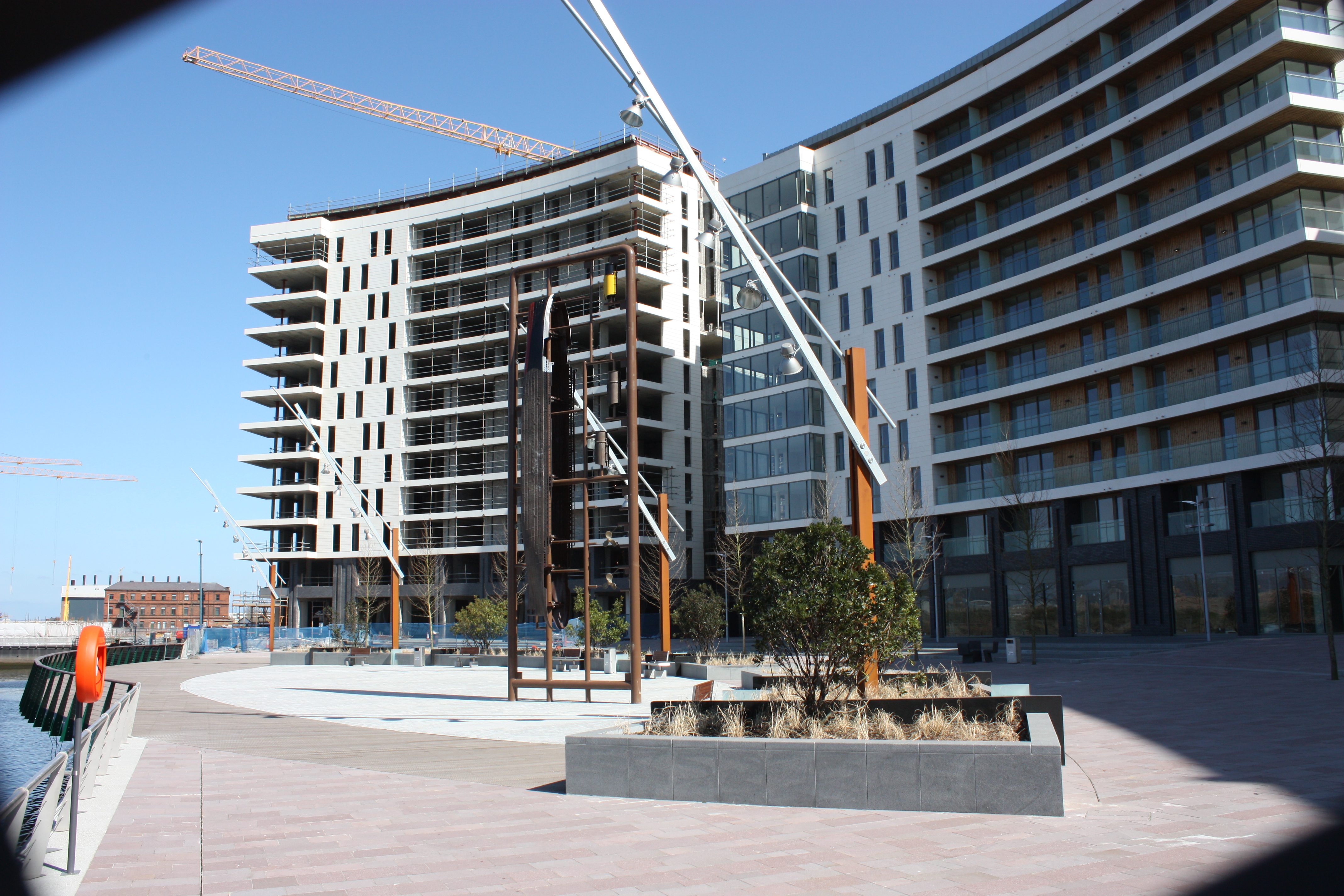
The Titanic Quarter's heritage landmarks have been carefully preserved amid the new development. The Olympic, Titanic, and Britannic slipways are protected, as are the graving docks and the iconic Samson and Goliath cranes that still dominate Belfast's skyline. Belfast Harbour Marina opened in the Abercorn Basin in 2009 with 40 berths, the forerunner of a planned 200-berth marina. Residential development arrived in December 2010 with The Arc, apartments and shops adjacent to the basin. Transport connections include the Glider rapid transit, a dedicated rail station on the Belfast-Bangor line, and bus services linking the Quarter to the city centre. In September 2014, boxer Carl Frampton won the IBF world super-bantamweight title in a specially constructed outdoor arena here, in front of 16,000 fans -- Northern Ireland's largest ever boxing crowd. From Crystal Palace to boxing ring, Queen's Island has always known how to draw a crowd.
From the Air
Located at 54.61°N, 5.91°W on the eastern shore of Belfast's harbour. The 185-acre site is easily identified from the air by the twin yellow Samson and Goliath cranes, among Belfast's most recognisable landmarks, and the angular silver form of Titanic Belfast. Belfast City Airport (EGAC) sits immediately southeast. The River Lagan and Belfast Lough define the Quarter's western and northern boundaries.