The Sinking of the Titanic: The Unsinkable Ship That Sank
At 11:40 PM on April 14, 1912, the RMS Titanic - the largest ship afloat, proclaimed 'practically unsinkable' - struck an iceberg in the North Atlantic. Two hours and forty minutes later, she broke apart and sank, taking more than 1,500 people to their deaths in 28°F water. The disaster shocked the world. The Titanic had been the pinnacle of Edwardian technology and luxury - her sinking exposed the hubris of the age. The ship that couldn't sink became the defining symbol of human overconfidence, a story that haunts the imagination over a century later.
The Ship
The RMS Titanic was a marvel. At 882 feet long and 46,000 tons, she was the largest moving object ever built. Her first-class accommodations rivaled the finest hotels - a swimming pool, Turkish bath, squash court, and grand staircase that became legendary. Even third-class passengers enjoyed conditions better than most other ships' second class.
Built by Harland and Wolff in Belfast, the Titanic represented the triumph of industrial civilization. Her hull was divided into 16 watertight compartments; she could stay afloat with any four flooded. A promotional brochure called her 'practically unsinkable.' The press dropped the qualifier. Hubris was built into the Titanic's DNA.
The Voyage
The Titanic departed Southampton on April 10, 1912, bound for New York on her maiden voyage. She carried 2,224 passengers and crew - the very rich in first class, immigrants in steerage, and everyone in between. Captain Edward Smith, the most experienced commander in the White Star Line, was making his final voyage before retirement.
The crossing was smooth. The Titanic received multiple ice warnings by wireless, but the ship maintained full speed - 22 knots. Ice warnings were common in the North Atlantic. The Titanic was unsinkable. What could go wrong?
The Impact
At 11:40 PM on April 14, lookout Frederick Fleet spotted an iceberg dead ahead. He rang the bridge: 'Iceberg, right ahead!' First Officer Murdoch ordered hard to starboard and engines reversed. The ship began to turn - but not fast enough. The iceberg scraped along the starboard side for about 10 seconds.
The damage was fatal. The iceberg had buckled hull plates below the waterline, opening a 300-foot gash across six compartments. The Titanic could survive four flooded compartments. Not five. Not six. Captain Smith was informed the ship would sink in less than two hours. There were lifeboats for only half those aboard.
The Sinking
The evacuation was chaotic. Women and children were loaded into lifeboats, but many boats launched half-empty - officers feared they would buckle if filled. The band played ragtime, then hymns. First-class passengers had better access to boats than those below decks. Of the 2,224 aboard, only 710 would survive.
At 2:20 AM, the Titanic broke apart between the third and fourth funnels. The stern rose vertically, hung for a moment, then plunged. The ship that took three years to build disappeared in 160 seconds. Over 1,500 people were left in 28°F water. Almost all would die of hypothermia within 15 minutes.
The Aftermath
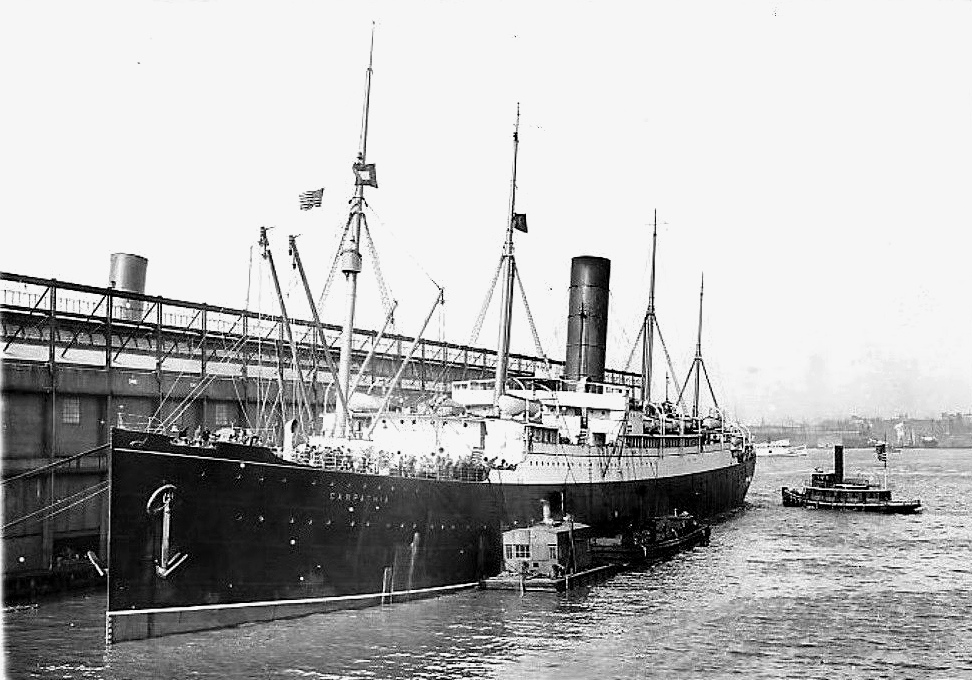
The Carpathia arrived at 4 AM and rescued 710 survivors from the lifeboats. The death toll exceeded 1,500, including Captain Smith, Thomas Andrews (the ship's designer), and Benjamin Guggenheim. The wealthy died alongside the poor - though first-class passengers survived at far higher rates.
The disaster prompted international reforms: enough lifeboats for everyone, 24-hour wireless watch, the International Ice Patrol. The wreck wasn't found until 1985, lying in two pieces 12,500 feet down. The Titanic remains the most famous shipwreck in history - a cautionary tale about arrogance, class, and the limits of technology. The unsinkable ship that sank on her first voyage.
From the Air
The Titanic sank at approximately 41.73N, 49.95W, about 370 miles southeast of Newfoundland. St. John's International Airport (CYYT) is 550km northwest. The wreck lies 3,800 meters below the surface. The North Atlantic is open water with no visual landmarks. Weather is maritime - cold, with frequent fog and ice from March through July.