The Tlatelolco Massacre
The plaza was full of students when the flares went up. Around 5:55 p.m. on October 2, 1968, a red flare arced from the tower of the Ministry of Foreign Relations overlooking the Plaza de las Tres Culturas in Mexico City's Tlatelolco neighborhood. Twenty minutes later, two more flares launched from a helicopter - one green, one red. Then 5,000 soldiers, backed by 200 tankettes and trucks, moved in on an estimated 10,000 unarmed people. What followed was a massacre that the Mexican government would spend the next three decades trying to erase from the record. The families who lost sons, daughters, and neighbors that evening would spend just as long refusing to let them.
A Summer of Defiance
The students who gathered in the plaza that October evening were part of a movement that had been building since July. It began when Mexico City police violently broke up a fight between rival student groups, and the disproportionate response radicalized university campuses across the capital. Students at the National Autonomous University of Mexico and the National Polytechnic Institute, along with students from other universities, formed a National Strike Council to organize protests and present demands to President Gustavo Diaz Ordaz's government. The context mattered: the 1968 Summer Olympics were set to open in Mexico City on October 12, and the government under Interior Minister Luis Echeverria was determined to project stability. The student movement grew throughout the summer, its marches drawing larger and larger crowds. The government saw a threat to its international image. The students saw an opening to demand accountability from a ruling party that had held unbroken power for decades.
The Evening of October 2
The crowd in the Plaza de las Tres Culturas included far more than activists. University and high school students had gathered outside the Chihuahua Building, a thirteen-story apartment complex, to listen to speeches. But neighbors from the surrounding residential complex were there too - families, bystanders, children drawn by the commotion. Among the chants rising from the crowd: No queremos olimpiadas, queremos revolucion - we don't want Olympics, we want revolution. Rally organizers noticed the growing military presence but did not call off the demonstration. When the flares went up and the soldiers closed in, gunfire erupted from the surrounding buildings. The government would later claim that protesters had shot first. Documents declassified decades later told a different story: a special forces unit called the Brigada Olimpica, drawn from the presidential guard, had opened fire from the buildings above, triggering the military response below.
What the Government Hid
The full scale of what happened that night has never been definitively established, and that uncertainty is itself an indictment. American analyst Kate Doyle, working with U.S. National Security Archive documents, confirmed 44 deaths. Eyewitnesses reported hundreds. Estimates from researchers range from 300 to 400. The head of Mexico's Federal Directorate of Security reported 1,345 arrests. For decades, the ruling Institutional Revolutionary Party suppressed evidence. Former president Miguel de la Madrid later told the press that when he asked the military and interior ministry for documents and photographs, he was subjected to intense political pressure not to investigate - and when he persisted, officials claimed their files were in disarray and that nothing existed. Declassified U.S. documents eventually revealed that the Pentagon had sent military radios, weapons, ammunition, and riot control materials to Mexico before the crisis, and that the CIA station in Mexico City had been producing near-daily intelligence reports on the student movement from July through October.
The Long Road to Acknowledgment
It took Mexico more than 30 years to begin confronting what happened. In 2001, President Vicente Fox - the first president from outside the PRI in seven decades - ordered the release of classified documents that confirmed what survivors had long testified: the massacre was orchestrated from above. In 2006, former president Luis Echeverria, then 84, was arrested on genocide charges but ultimately cleared when courts ruled the statute of limitations had expired. In December 2008, the Mexican Senate designated October 2 as a National Day of Mourning. In 2020, the government announced plans to remove the names of officials responsible for the massacre from public places and to digitize 8,000 boxes of still-sealed archives. On October 2, 2024, President Claudia Sheinbaum - whose own mother was a professor who participated in the 1968 student movement - issued an official government apology.
No Estuve Ahi Pero No Olvido
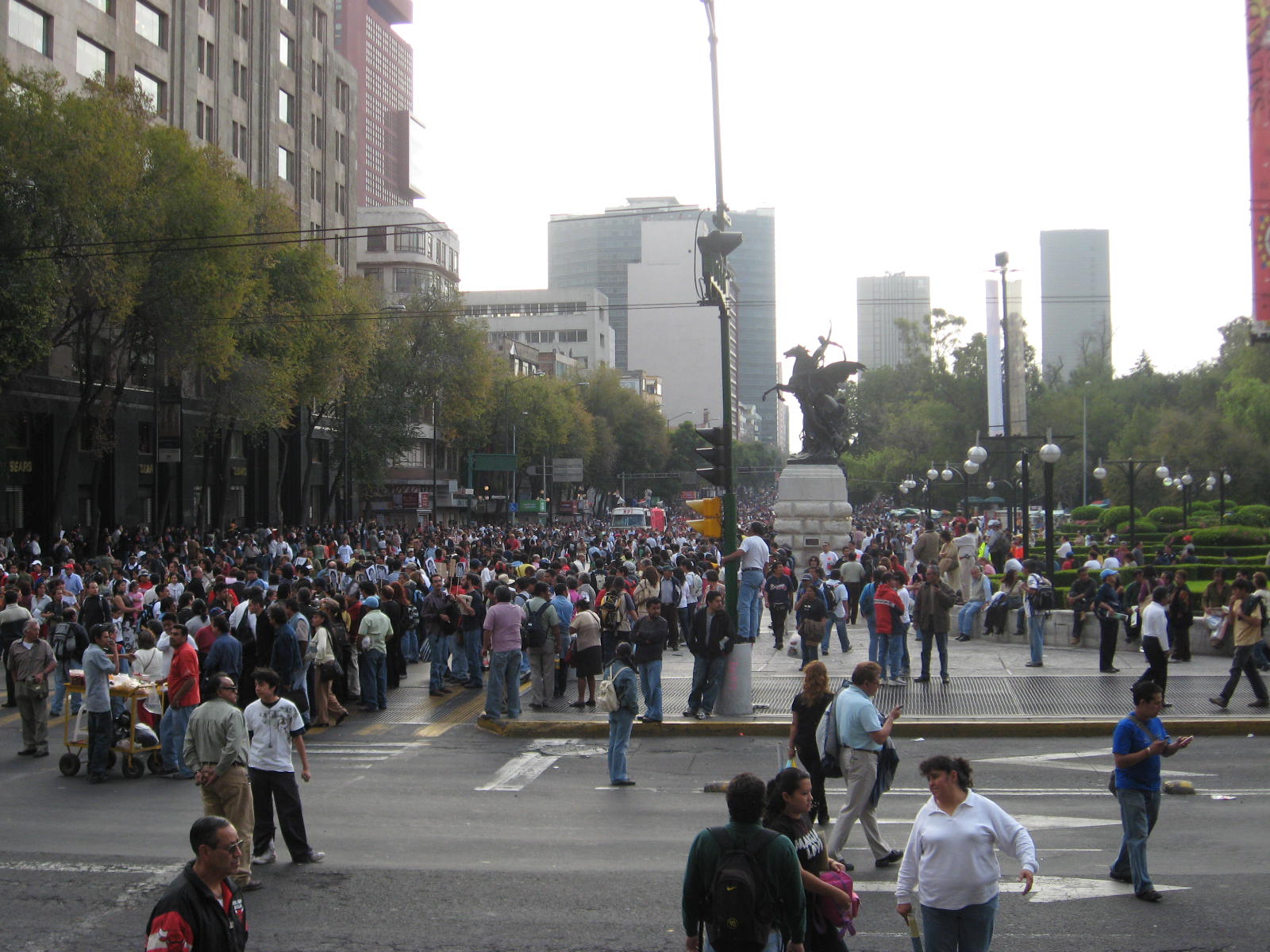
Every October 2, marchers walk from campuses and gathering points across Mexico City to the Plaza de las Tres Culturas. At the 40th anniversary in 2008, an estimated 40,000 people participated. A memorial stele in the plaza bears the names of some who died. Elena Poniatowska's La Noche de Tlatelolco, published in 1971, collected the voices of survivors - their interviews, chants, slogans, and testimony - and became one of the most important works of Mexican literature. Poets Octavio Paz, Carlos Monsivais, and Jose Emilio Pacheco wrote about the massacre. Filmmaker Jorge Fons's Rojo Amanecer told the story through the eyes of a family living in the apartment buildings that surrounded the plaza. A sign carried at the 2008 march read: No estuve ahi pero no olvido. I was not there, but I do not forget.
From the Air
Located at 19.4517°N, 99.1361°W in the Tlatelolco neighborhood of Mexico City, approximately 2 km north of the Zocalo. The Plaza de las Tres Culturas is identifiable from altitude by the juxtaposition of pre-Columbian ruins, a colonial-era church, and modern apartment towers surrounding an open plaza - the three cultures the name references. The Chihuahua Building, the thirteen-story apartment complex where students gathered, is part of the Nonoalco Tlatelolco housing complex visible as a cluster of modernist towers. Nearest major airport is Mexico City International (MMMX/MEX), approximately 7 km southeast. Elevation approximately 7,350 feet.