Tobu World Square: The Whole Earth at Your Feet
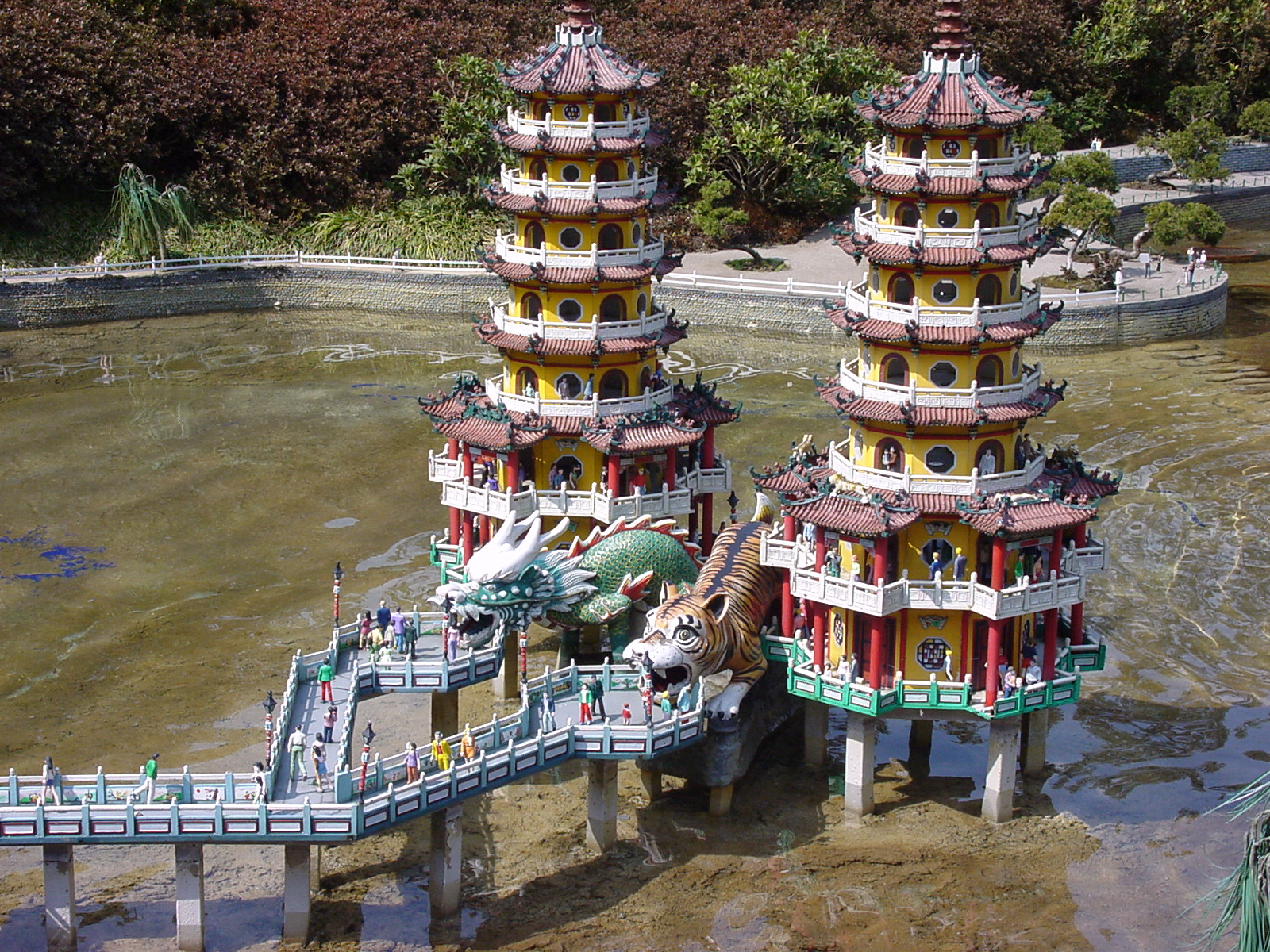
Fourteen billion yen and five years of meticulous construction produced something genuinely strange in the mountains of Tochigi Prefecture. When Tobu World Square opened in April 1993, visitors could stand eye-level with the dome of St. Peter's Basilica, peer down into the Colosseum, and walk from the Sphinx to the Eiffel Tower in under five minutes. The park holds 102 famous structures from 21 countries, all built at 1:25 scale, staffed by 140,000 miniature figurines going about their tiny lives. It sounds like a novelty. It is, in fact, a quietly astonishing feat of model-making -- a place where the Great Wall of China coils through actual landscaped terrain and Angkor Wat rises from sculpted jungle, each detail obsessively faithful to the original.
Six Zones, Twenty-One Countries, One Afternoon
Tobu World Square divides its collection into six geographical zones: Japan, Modern Japan, Asia, America, Egypt, and Europe. The Japan zone alone includes meticulous reproductions of Kinkaku-ji, Todai-ji, Horyu-ji, and dozens of temples and castles. The Modern Japan section features the National Diet Building, Tokyo Station, and a 26-meter-tall replica of the Tokyo Skytree, unveiled in April 2010 -- tall enough to dwarf the 19.95-meter World Trade Center replica in the America zone. The designers isolated each zone visually so that the Egyptian pyramids sit against sand-colored backdrops while Neuschwanstein Castle emerges from actual forest. Forty-seven of the 102 structures are UNESCO World Heritage Sites, making this one of the densest concentrations of World Heritage architecture on the planet, even if none of it is full-size.
The Art of Shrinking a World
Scale modeling at this level is not miniaturization -- it is architecture practiced in reverse. Every cornice, window frame, and roof tile must be faithful to the original, just twenty-five times smaller. The 20,000 bonsai trees planted throughout the park are not decoration; they are scaled landscaping, trimmed and shaped to maintain the illusion that these buildings exist in real environments. The 140,000 figurines populate plazas, streets, and temple grounds, each one positioned to suggest a living scene. At the base of the pyramids, tiny tourists raise tiny cameras. Around European cathedrals, miniature crowds mill through miniature squares. The effect is uncanny -- a world that feels inhabited despite being entirely constructed. The park's attention to landscaping detail, from sculpted waterways to carefully graded terrain, transforms what could be a static display into something closer to a continuous diorama.
A Million Points of Winter Light
Between November and March, Tobu World Square extends its hours for a winter illumination that transforms the park after dark. Approximately 1.4 million red and blue LED lights are strung across the grounds, turning the miniature skylines into glowing cityscapes. The Eiffel Tower blazes with white light. The Duomo di Milano glows against the winter darkness. The Tokyo Skytree replica becomes a beacon visible across the park. A 150-meter tunnel of lights leads visitors toward the Alpine Roses Park area, creating a passage between the illuminated zones. The winter illumination inverts the daytime experience: where sunlight reveals the craftsmanship of individual models, the nighttime display transforms the entire park into a single luminous landscape, blurring the boundaries between zones and countries into one continuous field of color.
Hot Springs and Scale Models
Tobu World Square sits in Kinugawa Onsen, one of the most popular hot spring resort towns in the Kanto region. The combination is distinctly Japanese: spend the morning walking among shrunken world wonders, then spend the afternoon soaking in mineral-rich thermal waters along the Kinugawa River gorge. The park is operated by Tobu Railway, whose Kinugawa Line connects the area directly to central Tokyo, making the entire Nikko region -- from the UNESCO-listed shrines to the hot spring resorts to this improbable collection of miniature monuments -- accessible as a day trip or weekend excursion. For a park that contains the Parthenon, the Taj Mahal, and the Statue of Liberty within its boundaries, the setting could not be more Japanese: cedar-covered mountains, river mist, and the faint sulfur smell of volcanic hot springs drifting over a quarter-scale world.
From the Air
Located at 36.8078N, 139.7118E in the Kinugawa Onsen area of Nikko, Tochigi Prefecture, along the Kinugawa River gorge. From altitude, the park appears as a geometrically organized clearing in mountainous forest terrain with distinctly shaped miniature structures visible at lower altitudes. Best appreciated below 2,000 feet AGL. The nearest airport is Utsunomiya (RJTU), a JSDF field approximately 25 nautical miles to the southeast. Tokyo Narita (RJAA) is roughly 85 nautical miles south. Mountain terrain surrounds the site; expect turbulence and variable visibility in the river valley.