Toei Kyoto Studio Park
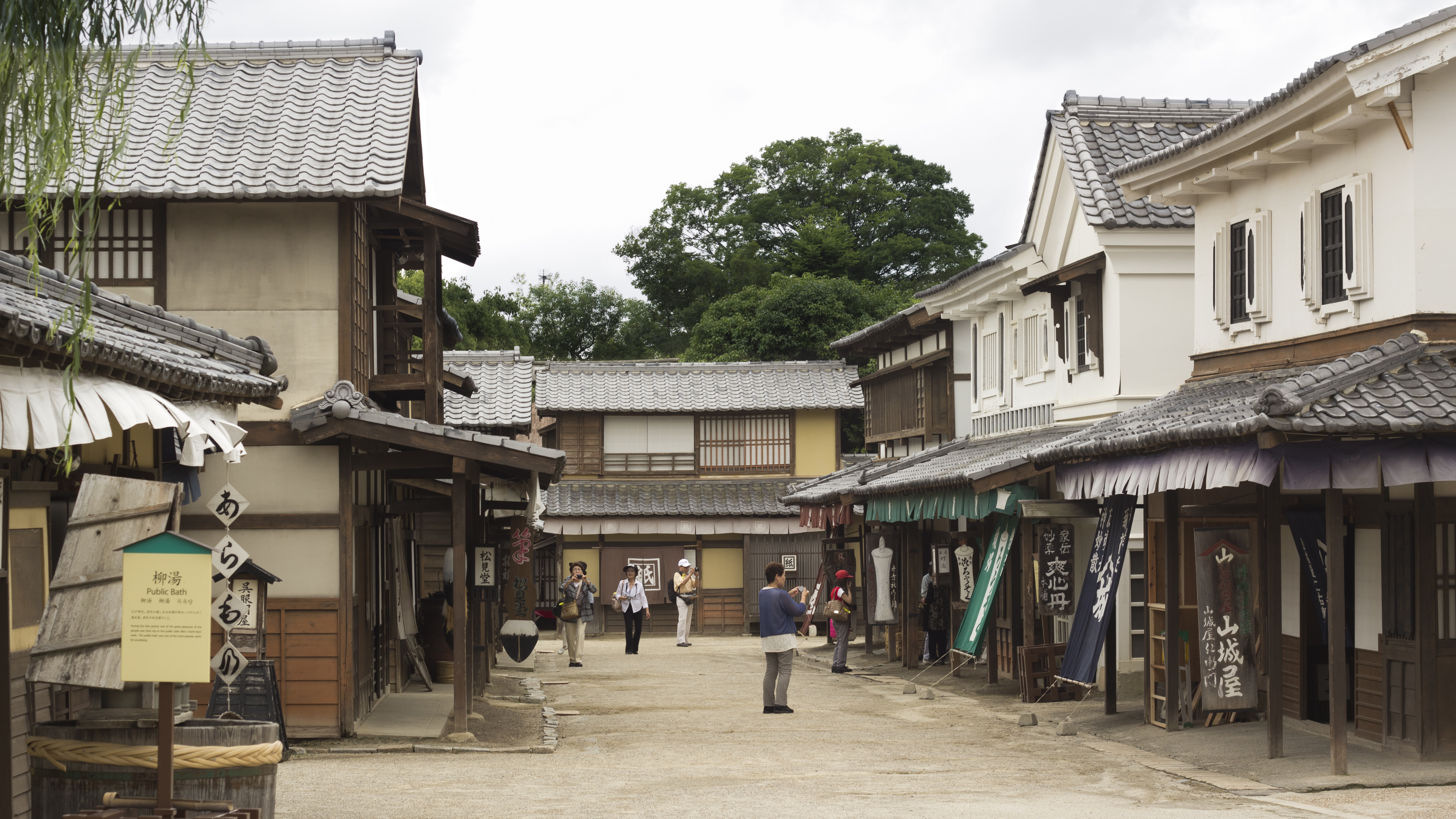
Somewhere on the back lot, a ronin draws his sword. The crowd watches, cameras roll, and nobody is entirely sure whether this is a rehearsal, a live show, or an actual scene from the next NHK period drama. That blur between spectacle and craft is the entire point of Toei Kyoto Studio Park, a place where Japan's film industry and its tourist economy occupy the same streets, the same wooden buildings, the same meticulously recreated Edo-period world. Since 1975, Toei Company has opened its working Kyoto studio to visitors, inviting them to walk through the same feudal-era sets where over two hundred films and television shows are produced each year. The park sits in the Uzumasa district, a neighborhood once called the Hollywood of Japan, where cheap land and nearby lumberyards attracted the first film studios in the 1920s.
The Hollywood of Japan
Uzumasa's filmmaking history stretches back a full century. In 1926, the legendary samurai film star Tsumasaburo Bando built the district's first studio, and within a few decades as many as eight production companies operated in the area. Kyoto was a natural home for jidaigeki, the period dramas that became Japan's signature film genre. The city's surviving castles, temples, and traditional streetscapes provided authentic backdrops, while the surrounding hills could stand in for the countryside of feudal-era Japan. By the 1960s, television had begun to erode the movie industry, and several studios closed. Toei held on. In 1975, the company opened its back lot to the public, transforming working sets into a theme park experience. Visitors could walk the same streets where chambara sword-fighting films had been shot for decades, and if they were lucky, watch a production in progress.
Walking Through the Edo Period
The park recreates an entire Edo-period townscape in meticulous detail. A replica of the old Nihonbashi Bridge anchors one end of the set, with streets branching out past a traditional courthouse, a Meiji-era police box, and storefronts from the merchant quarters. The buildings are functional film sets, designed to be reconfigured for different productions, but they are built with enough fidelity to feel genuinely historical. Visitors can rent period costumes, transforming themselves into samurai, geisha, or Shinsengumi swordsmen for the day. Live ninja shows and samurai sword-fighting demonstrations run on a regular schedule, performed by stunt actors who work on actual film productions. Over sixty million visitors have walked these streets since the park opened, making it one of Kyoto's most enduring attractions and the only theme park in Japan where guests can witness real jidaigeki filming.
Where Anime Meets the Shogunate
In 2020, the park made an unexpected pivot. Evangelion Kyoto Base opened within the studio grounds, anchored by a towering 15-meter statue of the EVA-01 mecha's upper body from the anime franchise Neon Genesis Evangelion. Visitors can climb into a replica Entry Plug or pose on the robot's outstretched hand. The juxtaposition is deliberately surreal: a giant purple mecha rising above thatched-roof Edo-period buildings. But the pairing reflects a deeper truth about Japanese popular culture, where samurai epics and giant robot stories share the same storytelling DNA of honor, sacrifice, and spectacular combat. The park has always understood this. Alongside its historical recreations, it has hosted attractions themed around Super Sentai (the franchise that became Power Rangers in the West), Kamen Rider, and other Toei properties that bridge traditional and modern Japanese storytelling.
Still Rolling
What separates Toei Kyoto Studio Park -- which reopened in March 2026 under a new name, Uzumasa Kyoto Village, after a brief closure for renovation -- from a typical theme park is that it remains a working production facility. The sets are not museum pieces. Crew members string cables, directors call for quiet, and actors in full samurai regalia move between takes. On any given day, a television drama, a feature film, or a commercial might be shooting on the grounds. This dual identity keeps the park honest. The buildings have to look authentic on camera, the costumes have to pass muster with period-drama audiences who know their kimono patterns, and the stunt choreography has to work at both live-show and broadcast quality. Uzumasa's century of filmmaking expertise shows in every detail, from the weight of a prop sword to the grain of a wooden storefront, making the park both a living museum and an active workshop for Japan's oldest continuous film tradition.
From the Air
Toei Kyoto Studio Park is located at 35.016N, 135.708E in the Uzumasa district of western Kyoto. From above, look for a cluster of low traditional-style buildings distinct from the surrounding modern urban development, situated west of central Kyoto near the JR Sagano Line. The nearest airport is Osaka Itami (RJOO), approximately 28 nm to the southwest. Kansai International (RJBB) is about 55 nm south. Best viewed at 2,000-3,000 feet AGL. The Katsura River to the west and the distinctive Edo-period rooflines of the studio back lot are the primary visual landmarks.