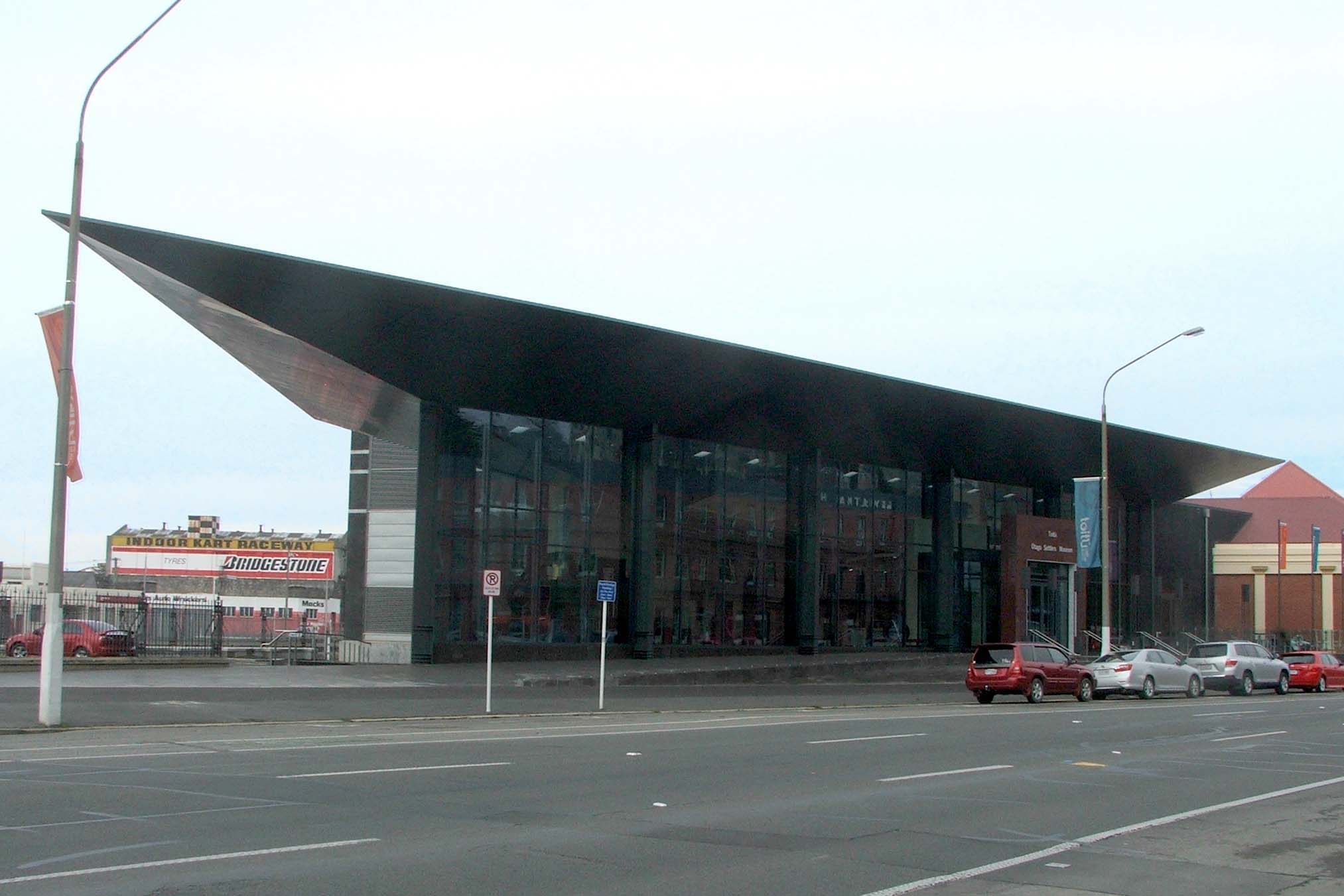
Toitu Otago Settlers Museum
Josephine arrived in 1872, a compact Fairlie-type steam locomotive built for the rough terrain of colonial Otago. She hauled freight and passengers through a province still raw from the gold rush, and when the railways retired her in the late 1920s, someone decided she was worth saving -- decades before New Zealand had anything resembling a heritage preservation movement. That instinct to keep what matters, to hold the physical evidence of who we were, is the animating idea behind the Toitu Otago Settlers Museum. Standing at the southern edge of Queen's Gardens in central Dunedin, the museum is the oldest history museum in New Zealand, and one of the few in the country that survived the twentieth century's indifference to local history intact.
Born of Nostalgia, Built to Last
The museum was founded in 1898, exactly fifty years after Scottish settlers established the Otago colony. The Otago Early Settlers' Association wanted to preserve the memories and material culture of those first arrivals -- the people who came between 1848 and the gold rush of 1861. Architect John Burnside designed their building in Queen's Gardens, and by 1908 the collection had a permanent home. The scope was narrow at first: only the pioneer Europeans qualified. But history kept accumulating, and the museum gradually broadened its reach to include later arrivals and eventually the full sweep of regional life since James Cook's first visit to southern New Zealand in 1770. The word 'early' was quietly dropped from both the museum's name and the association's.
The Years of Near-Death
Between 1949 and 1977, the museum nearly ceased to exist. New Zealand's interest in its own past had reached a low point. Comparable institutions in Auckland and Wellington closed after the Second World War, their collections scattered. The Otago museum survived, but barely. The Burnside buildings were large and expensive to maintain -- even heating them was a struggle. The collections were enormous and varied: furniture, clothing, household appliances, vehicles, archives, paintings. All of it needed care that the institution could barely afford, with the Dunedin City Council offering little support. Then in 1978, a new director named Seddon Bennington arrived and began the slow work of revival. Elizabeth Hinds continued the effort after him, and by 1991 the city council had taken over ownership and operation entirely.
Art Deco and Iron Horses
The museum's physical expansion tells its own story. In 1927, it absorbed the neighbouring building vacated by the Dunedin Public Art Gallery -- another Burnside design. Then came its most distinctive acquisition: the former New Zealand Railways Road Services bus station, an Art Deco structure designed in 1939 by James Hodge White. This building, one of Dunedin's finest examples of the style, now houses the transport collection. Inside, historic vehicles line up from drays to trolley buses. Josephine, the 1872 locomotive, sits in the modern Josephine Foyer at the museum's northern end. Nearby, in a separate structure, rests JA 1274 -- the last steam locomotive ever built by the New Zealand Railways Department, completed at Dunedin's own Hillside Workshops in December 1956. Between them, these two engines bookend the entire age of New Zealand steam.
A Stream Remembered in a Name
When the museum reopened in December 2012 after extensive renovations, it carried a new name: Toitu. The word, meaning 'to remain unchanged,' was the name of a stream that once flowed near the museum site. It was suggested by the Holmes family during a public naming competition, and it captures something essential about the institution's purpose -- preserving what endures. The revamped displays now tell Dunedin's story chronologically, from the first encounters between southern Maori and Europeans in the late eighteenth century through to the present. The Smith Gallery, known locally as the Portrait Room, retains its walls of painted and photographed faces -- the settlers who made the journey. Interactive displays let visitors trace the stories behind those faces. A Roll of Honour commemorates Dunedin's war dead, placed fittingly near the Dunedin Cenotaph in the gardens outside.
Where Mainframes Meet the Dunedin Sound
The museum's range is startling. In the former bus depot's twentieth-century wing, an ICT 1301 mainframe computer sits on display -- one of only four known to survive worldwide. Nearby, exhibits celebrate Dunedin's pioneering role in New Zealand's radio and television industries, alongside the city's indie music legacy, the Dunedin sound that put bands like The Clean and The Chills on the international map. Behind the southern wing, a traditional Chinese garden -- a gift from Dunedin's sister city, Shanghai -- honours the Chinese miners who came during the gold rush. The garden opened in 2008 and is one of very few authentic Chinese gardens outside China. From nineteenth-century locomotives to 1960s mainframes, from Scottish settlers' portraits to Cantonese heritage, the museum holds the whole complicated story of a city that once punched far above its weight.
From the Air
Located at 45.88°S, 170.51°E in central Dunedin, on the southern edge of Queen's Gardens adjacent to the railway station. The museum complex spans several heritage buildings along the rail corridor, with the Art Deco former bus station and modern Josephine Foyer visible from low altitude. Best viewed at 1,000-2,000 feet. The Dunedin Cenotaph and Chinese Garden are immediately adjacent. Nearest airport: NZDN (Dunedin International), approximately 25 km to the southwest.