Tokyo: A City That Keeps Rebuilding Itself
Twice in the past century, Tokyo was reduced to rubble. The Great Kanto Earthquake of 1923 killed more than 100,000 people and leveled much of the city. Twenty-two years later, American firebombing raids destroyed vast swaths of what had been rebuilt. And yet today, Tokyo is the most populous metropolitan area on Earth, home to nearly 14 million people in the city proper and over 37 million in the greater region -- an economy larger than Canada's, containing the world's busiest pedestrian crossing, the planet's largest wholesale fish market, and more Michelin-starred restaurants than any other city. The story of Tokyo is the story of a place that refuses to stay down.
Edo's Ghosts Still Walk
Beneath the neon and concrete, traces of Tokyo's former life as Edo -- the shogun's capital from 1603 to 1868 -- survive in unexpected places. The Imperial Palace still occupies the grounds of Edo Castle, its moats and stone walls dating to the Tokugawa era even though the main palace and tower have been lost. The Ueno Toshogu shrine maintains its original 1651 building, constructed by the third shogun Iemitsu. The Nezu Shrine and Gokokuji were built by the fifth shogun Tsunayoshi in the late 1600s and still stand. At their peak, the mansions of feudal lords covered half the total area of Edo, but none survived the modernization drives of the Meiji period. What did survive were their gardens: Hamarikyu, Koishikawa Korakuen, Rikugien, and others remain open to the public, islands of designed landscape amid a city that long ago swallowed every other trace of the feudal era.
The Skyline That Would Not Stay Low
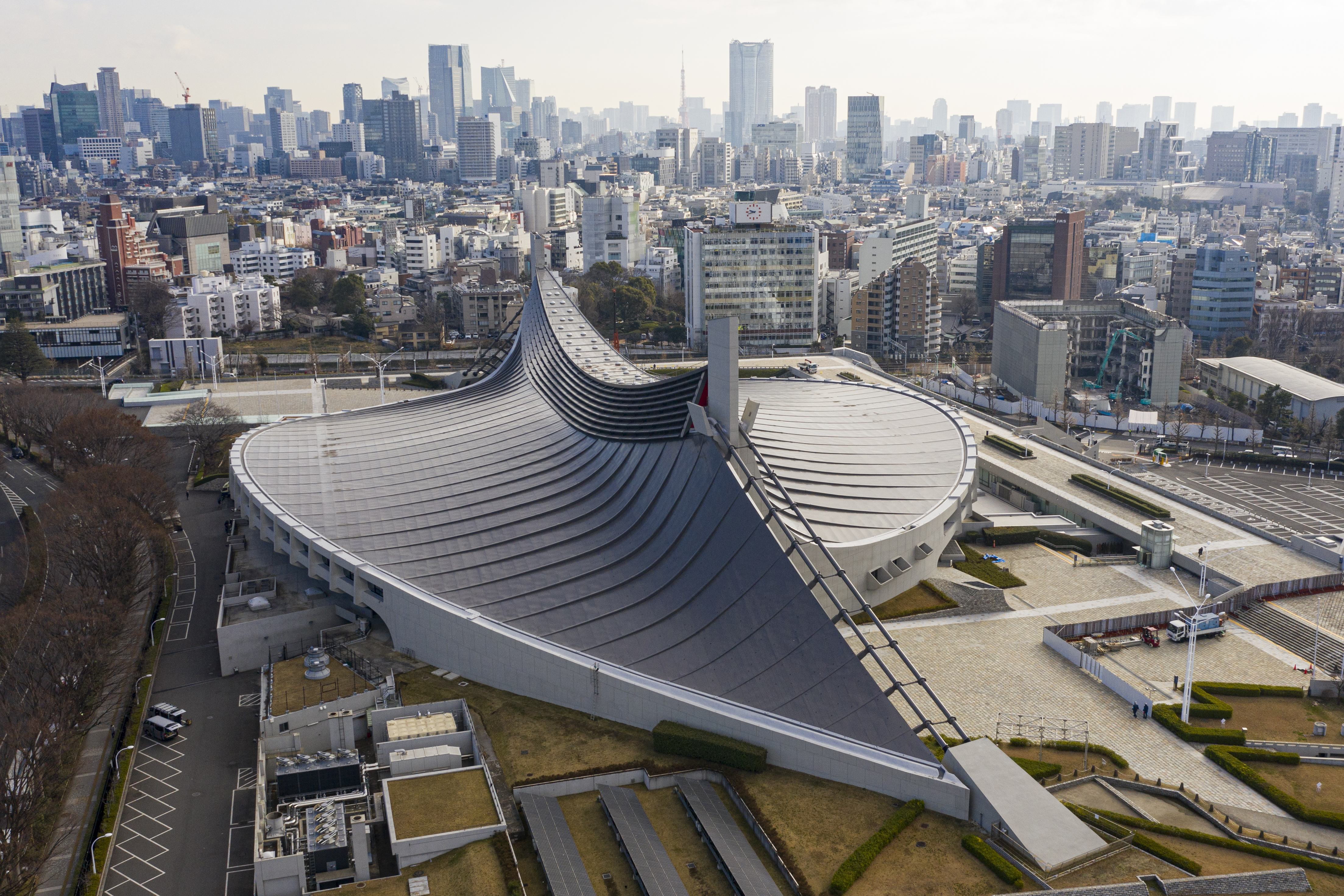
For decades, a 30-meter height restriction kept Tokyo flat. When the limit was lifted in the 1960s, the city shot upward with an intensity that has not relented. As of 2024, at least 184 buildings exceed 150 meters in height. Tokyo Tower, built in 1958 as a broadcast antenna, rises 333 meters and became the city's first modern icon. But it was eclipsed in 2012 by Tokyo Skytree, a 634-meter lattice tower in Sumida ward that is the tallest tower in the world and the third tallest structure of any kind. The Shinjuku skyline, anchored by the twin-forked Tokyo Metropolitan Government Building, forms a secondary cluster to the west. Each ward has its own vertical ambitions: Roppongi Hills, Azabudai Hills, Shibuya's scramble of towers. The population swings tell the story -- Chiyoda, Chuo, and Minato wards hold 326,000 residents at night but 2.4 million during the day, as commuters flood in on one of the world's most extensive rail networks.
Sixty-Two Lines and Nine Hundred Stations
Tokyo runs on trains. Up to 62 electric rail lines and more than 900 stations form the most extensive urban railway network in the world. The Yamanote Line loops around central Tokyo like a steel circulatory system. Multiple Shinkansen lines radiate outward to Osaka, Sendai, and beyond. Two separate subway networks -- Tokyo Metro and Toei -- thread beneath the streets, operated by different organizations with interleaving routes. The city once had 213 kilometers of streetcar tracks, but the age of motorization in the 1950s reduced the tram network to a single line, the Arakawa. What replaced the trams was not cars but more trains. Tokyo has the lowest car ownership rate of any Japanese prefecture -- just 0.416 cars per household, in a city where the nominal GDP per capita is around 75,000 US dollars. A 2021 survey found that 81 percent of carless respondents were perfectly satisfied with public transit.
Where Cultures Collide at Every Corner
Tokyo's neighborhoods function almost as separate cities, each with a distinct character that visitors can read at a glance. Akihabara, once known as Electric Town for its electronics shops, has become the global capital of anime and otaku culture. Harajuku's Takeshita Street is a corridor of youth fashion that has influenced designers worldwide. Ginza and Nihonbashi represent old-money Tokyo, with department stores like Mitsukoshi -- founded in 1673 -- anchoring streets of luxury brands. Jinbocho holds one of the world's great concentrations of bookstores. Kabukicho in Shinjuku pulses with neon-lit nightlife. And at Shibuya Crossing, as many as 3,000 people step into the intersection simultaneously when the lights change, moving in every direction at once in what has become one of the most photographed urban spectacles on Earth. Beneath it all, the Toyosu Market -- successor to the legendary Tsukiji -- serves 50,000 buyers and sellers daily as the world's largest wholesale fish and seafood market.
Living on the Ring of Fire
Tokyo sits near the junction of three tectonic plates, making it one of the most seismically active major cities on the planet. Residents brush off hundreds of minor quakes each year -- magnitudes 4 to 6 that set buildings swaying as if on water. The city has been struck by powerful megathrust earthquakes in 1703, 1782, 1812, 1855, and 1923, and felt the effects of the 2011 Tohoku earthquake with liquefaction in landfill zones. Mount Fuji, roughly 100 kilometers to the southwest, last erupted in 1707, depositing several centimeters of ash across southern Tokyo. The threat has shaped the city's architecture: after the 1923 earthquake exposed the weakness of brick buildings, reinforced concrete became standard. Today's skyscrapers are engineered with base isolation and damping systems. Tokyo is a city built on the understanding that the ground beneath it cannot be trusted -- and it builds anyway.
From the Air
Located at 35.69°N, 139.69°E on the Kanto Plain at the head of Tokyo Bay. The urban sprawl of the Greater Tokyo Area is one of the most dramatic sights from altitude -- an unbroken expanse of development stretching from the mountains in the west to the Pacific coast. Key visual landmarks include Tokyo Skytree (634m, tallest structure), Tokyo Tower (333m, red-and-white lattice), the Imperial Palace moat complex (large green space in central Tokyo), and the Shinjuku skyscraper cluster to the west. The Rainbow Bridge and Odaiba artificial island are visible in Tokyo Bay. Haneda Airport (RJTT) sits on the bay shore approximately 10 nautical miles south of central Tokyo. Narita International Airport (RJAA) is roughly 35 nautical miles east-northeast in Chiba Prefecture. Best viewed at 5,000-10,000 feet AGL to appreciate the full scale of the metropolitan area, with Mount Fuji visible to the southwest on clear days.