Toliara
The journey down Route Nationale 7 is an 18-to-24-hour endurance test by taxi brousse -- cramped minibus, uncertain engine, unpredictable road. Passengers who survive the rattling descent from the highlands through Fianarantsoa and past the sandstone towers of Isalo National Park arrive at the end of the road: Toliara, Madagascar's southwestern port, where the asphalt runs out at the Mozambique Channel. Also known as Tuliar, the city sits at the edge of the island's driest region, a place where rainfall is scarce and the surrounding landscape bristles with the alien silhouettes of the spiny desert. For travellers, Toliara is both destination and gateway -- a launching point for coral reefs, fishing villages, and some of Madagascar's most unusual ecosystems.
The Pousse-Pousse City
Toliara's streets belong to the pousse-pousse. These hand-pulled rickshaws are seemingly everywhere, their operators navigating the heat-shimmered roads with a practised trot. They are the cheapest transport in town -- and the most democratic. Everyone uses them: locals hauling shopping bags, travellers escaping the midday sun, vendors moving goods between markets. The men who pull them take visible pride in their work. For a first-time visitor, being pulled through the streets by another person can feel uncomfortable, but in Toliara this is simply how the city moves. Beyond the pousse-pousse, the streets hold a compact commercial core: ATMs at the BNI, BFV, and BOA banks; the Tsena Cociagy craft market behind the Alliance Francaise; and supermarkets bearing the local Supermaki brand.
At the End of the RN7
Route Nationale 7 is Madagascar's most travelled highway, connecting the capital Antananarivo to the southwest coast. The road passes through dramatically shifting landscapes -- terraced rice paddies, rainforest, the red sandstone formations of Isalo -- before descending into the dry lowlands. Toliara marks its terminus. Many travellers rent a car and make the journey over several days, stopping at Parc National Ranomafana near Fianarantsoa and Parc National Isalo along the way. Those without the budget or the time for a private vehicle take the taxi brousse from the Fasan-karana station in the capital, departing around 9:00 or 16:00 and arriving roughly a day later, road conditions and mechanical reliability permitting. The fare is about 35,000 Ariary -- modest for the distance, but earned through discomfort.
Between Reef and Desert
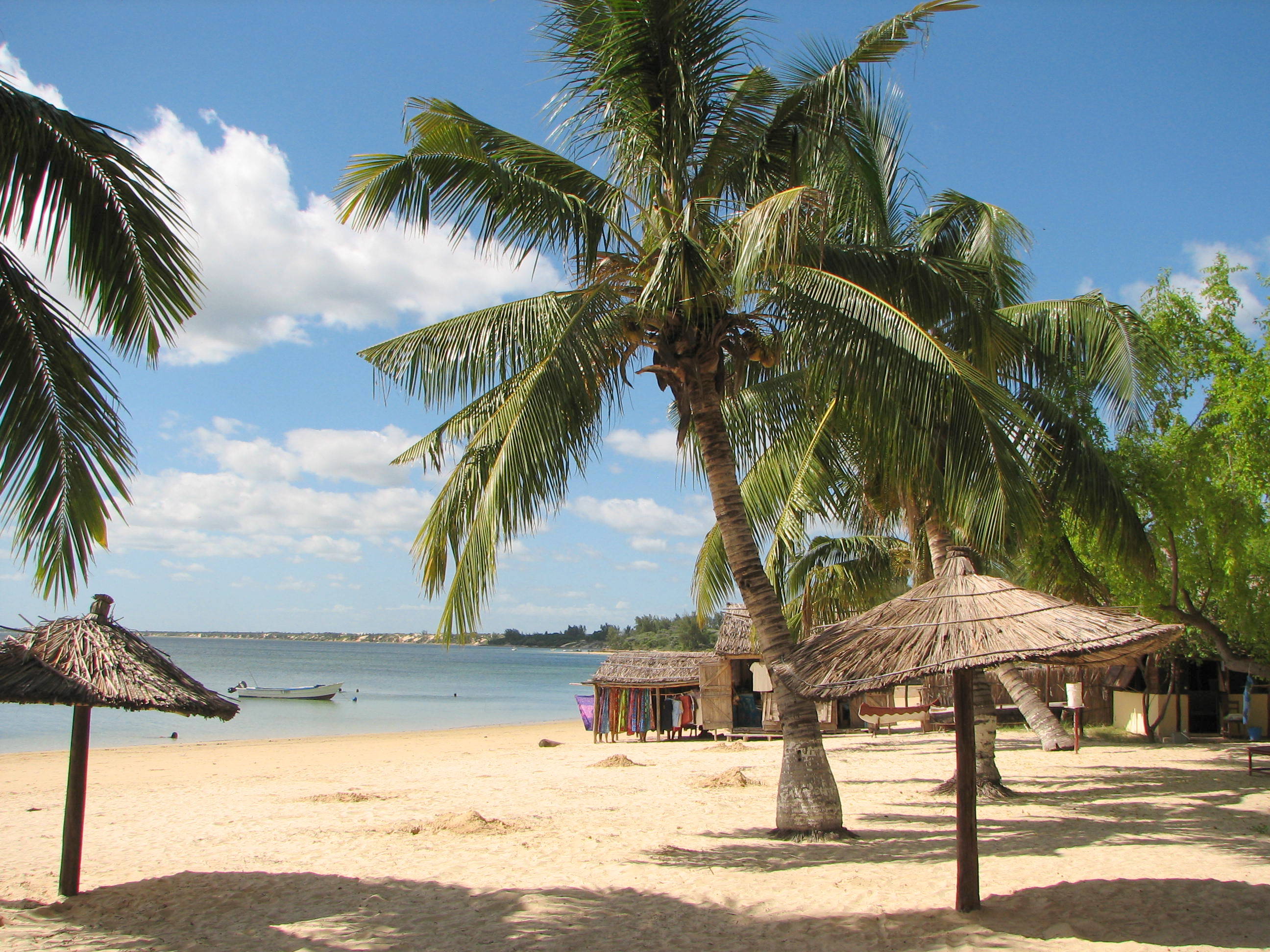
Toliara's setting is defined by contrasts. To the west, the Mozambique Channel offers warm waters, coral reefs, and the fishing village of Anakao, accessible by morning boats heading south along the coast. To the north, a rough road leads to Ifaty, a coastal town known for diving, beaches, and patches of spiny forest. Inland, the landscape dries into one of Madagascar's most distinctive ecosystems: the spiny desert, where octopus trees and swollen baobabs have evolved in isolation for millions of years. The Arboretum d'Antsokay, just 12 kilometres southeast of town, showcases 900 endemic plant species -- 90% of them found only in Madagascar. The Tropic of Capricorn passes through the region, and the combination of latitude, aridity, and isolation has produced a biological world unlike any other.
A City That Earns Its Edges
Toliara is not a polished destination. It is hot, often dusty, and its charms are not the kind that announce themselves from postcard racks. The craft market sells handicrafts mostly brought in from Ambositra and Fianarantsoa -- savvy buyers are advised to shop there or in the capital, where prices are lower and selection broader. Some shells on offer come from endangered species, and importing them can bring serious legal trouble at home. Safety concerns have also surfaced: as of 2023, Batterie Beach, just north of the city, has been the scene of violent incidents serious enough for Canada and New Zealand to issue travel advisories. But for those who approach Toliara on its own terms -- as a working port city at the edge of a biological frontier -- it rewards with an atmosphere that feels genuinely unlike anywhere else in Madagascar. The heat, the rickshaws, the spiny landscape pressing in from every side: this is the island's wild margin, unvarnished and unforgettable.
From the Air
Located at 23.35S, 43.67E on Madagascar's southwest coast. From altitude, Toliara appears as a compact coastal settlement where Route Nationale 7 terminates at the Mozambique Channel shoreline. The city's grid is visible against the pale brown of the surrounding arid landscape. Toliara Airport (FMST) is located approximately 6 km to the southeast. The Mozambique Channel stretches westward. The spiny desert vegetation is visually distinctive from the air -- sparse, pale, and sharply different from the greener landscapes of Madagascar's east coast. Ifaty is visible along the coast to the north.