Tomb of Daniel: A Prophet Shared Between Faiths
The argument over Daniel's bones lasted for generations. On one bank of the Choaspes River in Susa, the residents prospered. On the opposite bank, they did not. Both sides agreed on the cause: Daniel's grave was on the wealthy side, and the prophet's remains brought good fortune to whoever possessed them. The solution was to alternate -- the bier would rest one year on each bank. The arrangement held until the Seljuk sultan Sanjar visited the city and decided the back-and-forth was undignified. He ordered the coffin chained to the middle of the bridge, suspended over the water between the two communities, and built a chapel on the spot for Muslims and Jews together. The story, recorded by the twelfth-century traveler Benjamin of Tudela, captures everything about this place: the power attributed to the dead, the quarrels of the living, and the strange compromises that arise when multiple faiths share a single holy site.
The Prophet in Persia
The Book of Daniel places the prophet in Babylon during the captivity of the sixth century BC and mentions a vision he received at the palace of Susa. Where Daniel died, the text does not say. But Jewish and Muslim traditions converge on Susa as his burial place, and the tomb there has been venerated for at least fourteen hundred years. When the Arab commander Abu Musa al-Ash'ari conquered Susa in 638 CE, he reportedly found Daniel's coffin, which had been brought from Babylon to induce rain during a drought. Abu Musa consulted the caliph Umar, who ordered the coffin sunk into a riverbed to prevent it from becoming an object of worship. The body was hidden, but the memory of its location was not.
A Bridge Between Believers
Benjamin of Tudela, a Jewish traveler from Navarre, visited Susa between 1160 and 1163 CE and recorded the most famous account of the tomb. He was shown the site at a synagogue facade, though he noted the tradition that Daniel's actual remains had been discovered around 640 CE. The tenth-century Arab chronicler Ibn Hawqal described similar veneration. Al-Muqaddasi wrote of disputes between the people of Susa and those of nearby Tustar over possession of the remains. Ibn Taimiyyah offered a different version: that the body was found in Tustar and buried secretly at night in one of thirteen freshly dug graves, specifically to discourage tomb worship. The disagreements are themselves evidence of how deeply both faiths valued the connection to Daniel.
The Shrine That Endures
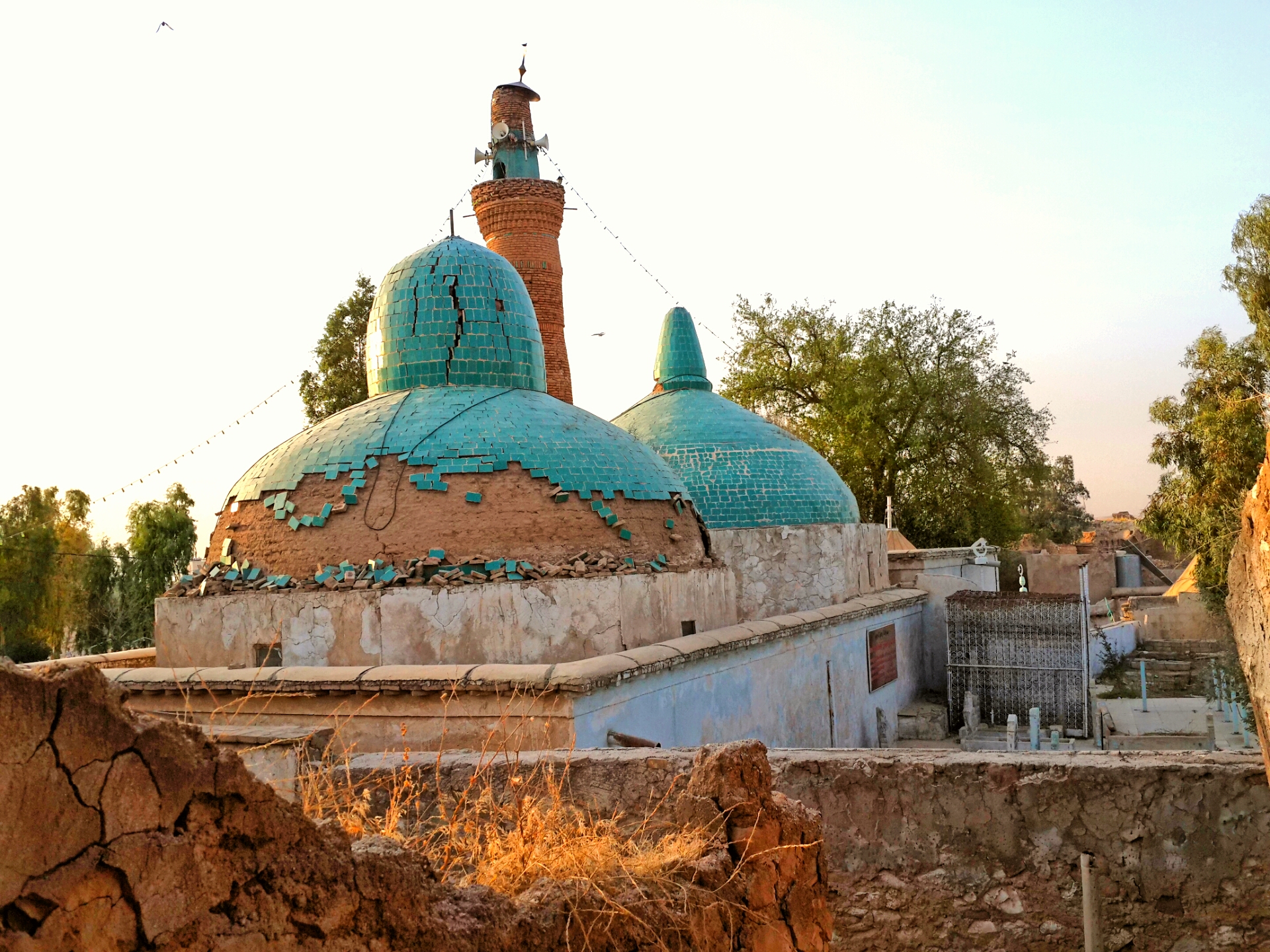
The current structure in Shush, Iran, is topped with a distinctive white cone that rises above the town's low skyline. Much of what stands today dates to renovations ordered in 1870 by the Shia scholar Sheikh Jafar Shooshtari, with the work carried out by Haj Mulla Hassan Memar. His son, Mulla Javad, continued further restorations. The tomb remains a popular pilgrimage destination for Iranian Muslims and the country's Jewish community alike. Inside, the atmosphere is one of quiet devotion -- visitors from different faiths praying at the same site, united by reverence for a figure claimed by Judaism, Christianity, and Islam. Daniel belongs to all three Abrahamic traditions, and at Susa, that shared inheritance takes physical form.
Susa's Sacred Geography
The Tomb of Daniel sits within one of the most historically layered landscapes on Earth. Susa itself was continuously inhabited for over six thousand years, serving as the capital of Elam and a winter residence of the Achaemenid Persian kings. The Book of Esther is set here. Darius the Great built his palace on this ground. The archaeological mounds of the ancient city rise nearby, and the Louvre holds thousands of artifacts excavated from their depths. Daniel's tomb adds a devotional layer to a site already rich with secular history. Visitors come not for archaeology but for prayer, following a tradition that predates the current structure by many centuries. The cone-topped shrine, modest against the immensity of the ancient ruins surrounding it, represents something Susa has always been: a place where civilizations overlap and the sacred persists.
From the Air
Located at 32.19°N, 48.24°E in the town of Shush, Khuzestan province, Iran. The distinctive white conical roof of the tomb is potentially visible from low altitude against the flat terrain of the Khuzestan plain. The site sits near the archaeological mounds of ancient Susa along the Karkheh River. Nearest major airport is Ahvaz International Airport (OIAW), approximately 120 km southeast. The flat river plain between the Zagros foothills and the Mesopotamian lowlands provides clear visibility in good weather. Best approached at 3,000-5,000 feet to spot the shrine amid the town.