Tomb of Ferdowsi: A Nation's Debt to Its Poet
Ferdowsi died poor. The man who spent thirty years writing the Shahnameh -- the sixty-thousand-couplet epic that preserved the Persian language when Arabic threatened to replace it -- ended his life as a widower who had outlived his only son. He was buried around 1020 AD in the garden of his house in Tus, a city in the Khorasan province of northeastern Iran. His daughter arranged the burial. For centuries afterward, his resting place was marked by nothing more than a small dome-shrine, erected by a Ghaznavid governor who recognized what the poet's own patrons had not. It took nine hundred years and a political revolution for Iran to give Ferdowsi the monument his work demanded.
The Poet Who Saved a Language
Ferdowsi's achievement is almost impossible to overstate. When he began composing the Shahnameh in the late tenth century, the Arabic language had been steadily displacing Persian across the Islamic world for three hundred years. Ferdowsi wrote his epic almost entirely in Persian, deliberately avoiding Arabic loanwords -- a linguistic act of defiance as much as a literary one. The Shahnameh traces the mythic and historical kings of Persia from the creation of the world to the Arab conquest, weaving together pre-Islamic legends, Zoroastrian cosmology, and accounts of real dynasties. It became the foundational text of Persian cultural identity. Yet Ferdowsi himself wandered from court to court seeking patronage, never receiving the recognition or payment he was promised. He died in Tus around 1020 AD, and only after his death did his poetry win the admiration it deserved.
Building a Monument from Politics
The tomb that stands in Tus today owes its existence to the nationalist currents of 1920s and 1930s Iran. When Reza Shah, the first ruler of the Pahlavi dynasty, consolidated power, he inherited a country stung by decades of foreign interference -- British control of Iranian oil through the Anglo-Iranian Oil Company, Russian encroachment in Central Asia, and the failures of the Qajar dynasty that preceded him. A group of secular intellectuals calling themselves the Society for National Heritage had already been laying the groundwork, lobbying parliament for funds to celebrate Iran's pre-Islamic past. Figures like Abdolhossein Teymourtash, Hassan Pirnia, and Mohammad Ali Foroughi pushed the project through. The millennial celebration of Ferdowsi in 1934 became the occasion to erect a permanent tomb -- not merely to honor a poet, but to declare that Persian civilization predated and transcended the Arab conquest.
Stone Echoes of Cyrus
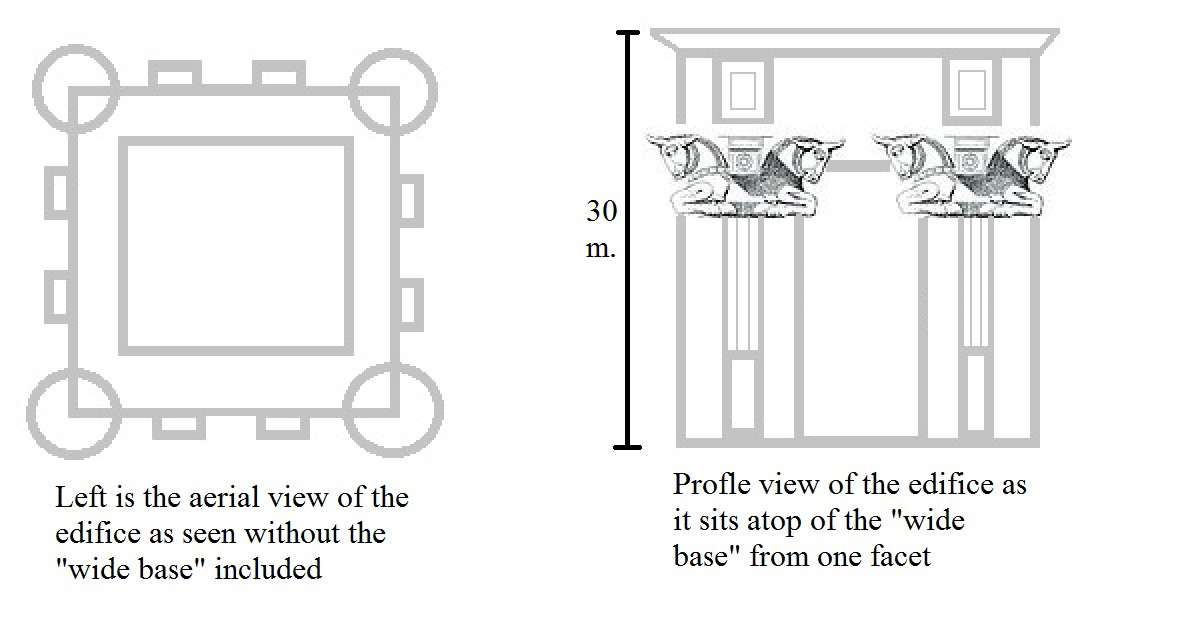
The architect Haj Hossein Lurzadeh produced the original design, and it was Karim Taherzadeh who replaced Lurzadeh's dome with a stark cubical form resting on a stepped white marble base for the 1934 celebration -- deliberately evoking the tomb of Cyrus the Great at Pasargadae. After the structure failed, architect Houshang Seyhoun redesigned the burial chamber in 1968, and it is his version of the monument that visitors see today. The choice was political as much as aesthetic. By linking Ferdowsi visually to the founder of the Achaemenid Empire, the designers drew a straight line from the sixth century BC to the twentieth century AD. Faravahar symbols -- the winged disc of Zoroastrianism -- appear on every other face of the edifice, reinforcing the pre-Islamic message. Four pillars surround the upper cube, and carved scenes from the Shahnameh decorate the walls. The poet's body lies interred in the wide chamber beneath. Around the structure, a Chaharbagh garden unfolds in the traditional Persian four-part pattern, its pathways forming a cross with the tomb at the center.
Between Empires and Earthquakes
The tomb sits in a landscape shaped by conquest. Tus was once one of the great cities of Khorasan, home to scholars, poets, and administrators across multiple dynasties. The Arab conquest of Persia in the seventh century and the Mongol invasion in the thirteenth century each devastated the region, yet the literary culture Ferdowsi helped define survived both. The decision to build his mausoleum in Achaemenid style, with Zoroastrian iconography, in a region that had been Muslim for over a millennium, was an intentional act of cultural archaeology. The monument says: we were here before all of this. Persian flower designs -- concentric patterns of seven oval petals around a central circle -- and hexagonal marble tiling cover the base structure's floor and walls, blending ancient decorative traditions with the clean modernist lines Taherzadeh favored.
A Garden in Khorasan
Today the tomb complex draws visitors from across Iran and beyond. The white marble catches the intense Khorasan sunlight, making the monument visible across the flat terrain long before you reach it. Inside the wide chamber, the atmosphere shifts -- cool stone, carved inscriptions, the quiet weight of a thousand years of literary history pressing down from above. The Shahnameh remains the most important work of Persian literature, studied in schools, recited at gatherings, and quoted in conversation across the Persian-speaking world. Ferdowsi's tomb has become what the poet himself could not achieve in life: proof that Iran remembers. The garden paths converge on his resting place like lines of verse converging on a couplet's final word.
From the Air
Located at 36.49°N, 59.52°E near the city of Tus in Razavi Khorasan province, northeastern Iran. The white marble monument is visible against the flat, arid terrain of the Khorasan plateau. Mashhad International Airport (OIMM) is the nearest major airport, approximately 25 km to the southeast. The tomb complex sits in a garden setting, distinguishable from altitude by the geometric garden layout surrounding the white structure. Best viewed at 3,000-5,000 feet AGL. The region is generally dry with good visibility, though dust storms can reduce clarity in summer months.