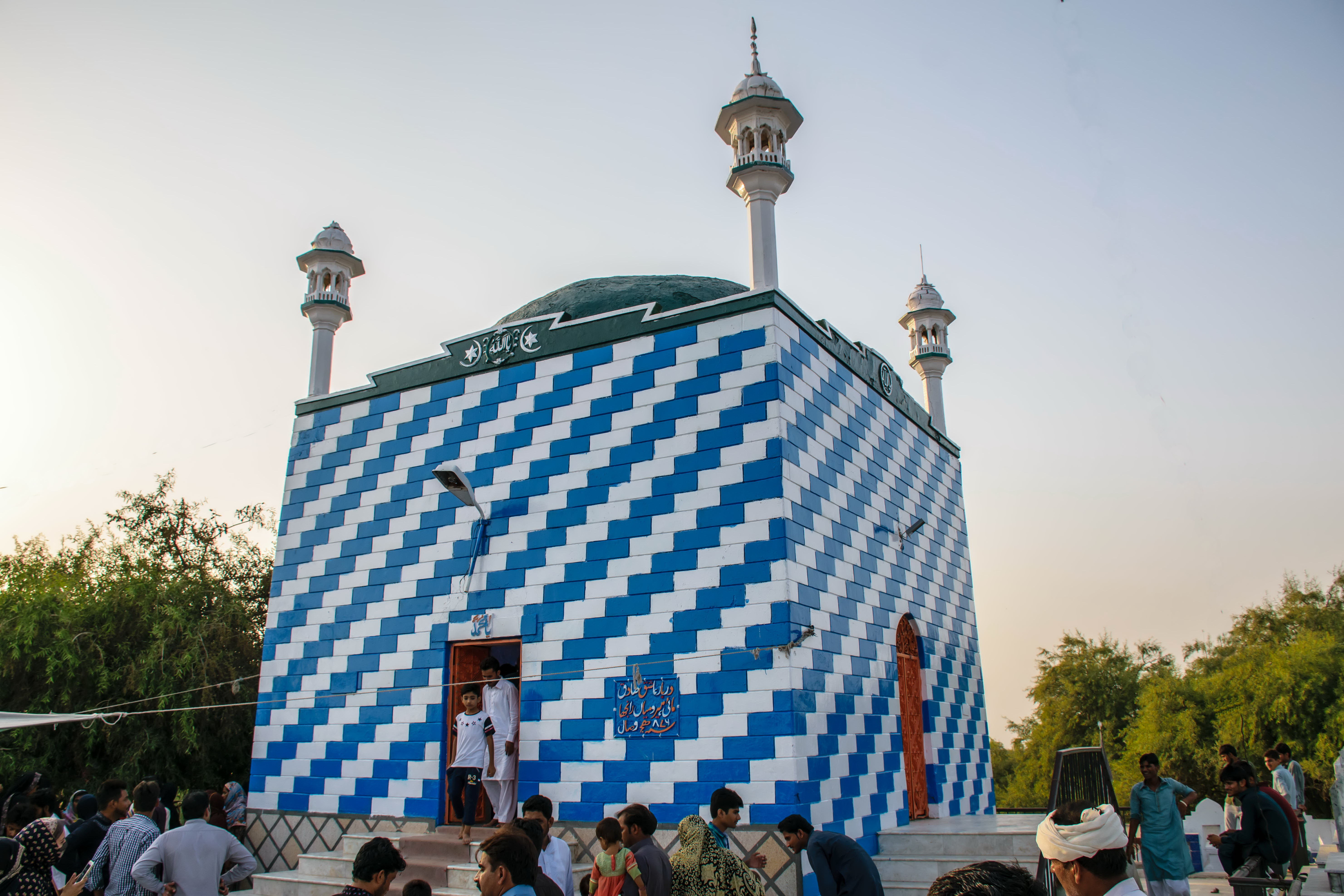
Tomb of Heer Ranjha
Every great culture has its doomed lovers, and Punjab's are buried together. In the city of Jhang, in Pakistan's Punjab province, a modest domed tomb holds the remains of Heer Syal and Dheedo Ranjha -- or so tradition insists. A plaque on the tomb records the year 876 AH, corresponding to 1471 AD, as the date of their death. Whether the bones beneath the marble tombstone truly belong to the couple whose love story has been sung across the Indian subcontinent for half a millennium is a question no one in Jhang seems particularly interested in answering. The story is enough.
A Love That Defied Clans
The tale of Heer and Ranjha is one of the great romantic tragedies of South Asian folklore, standing alongside Mirza-Sahiba, Sohni-Mahiwal, and Laila-Majnu in the Punjabi literary canon. Heer, a woman of the powerful Syal clan, fell in love with Ranjha, a wandering musician from a rival family who had taken work tending her father's buffalo herds. Their love crossed clan boundaries that were not meant to be crossed. When Heer's family discovered the affair, they married her off to another man. Ranjha became a wandering ascetic, and the two were eventually reunited only to die together -- poisoned, in most tellings, by Heer's own uncle. The details shift from version to version, shaped by centuries of oral retelling, but the core remains constant: love that refuses to bend to the will of family or tribe, and a world that destroys what it cannot control.
The Poet Who Made Them Immortal
Many writers have told the story of Heer and Ranjha, but one version towers above the rest. In 1766, the Sufi poet Waris Shah composed his epic poem Heer, transforming a folk tale into the masterwork of Punjabi literature. His rendering gave the story philosophical depth, weaving Sufi mysticism into the romance -- Ranjha's longing for Heer becomes a metaphor for the soul's yearning for the divine. Waris Shah's Heer is recited at weddings and funerals alike, quoted in political speeches and whispered in private devotion. It made Heer and Ranjha not merely characters in a story but symbols of an entire culture's understanding of love, loss, and spiritual transcendence. The poem elevated the tomb in Jhang from a local curiosity to a pilgrimage site.
Dome and Devotion
The tomb itself is built in an Islamic architectural style, featuring a central dome that rises just above the spring of the arch, topped with a small cupola. Four turrets stand at the corners. Inside, Heer and Ranjha share a single grave -- united in death as they were denied in life -- marked by a marble tombstone decorated with tiles. Every year during Muharram, an Urs festival is held at the site, drawing pilgrims and devotees who come to pay respects not to saints or martyrs in the traditional religious sense, but to lovers whose suffering sanctified them in the popular imagination. The tomb sits near Faisalabad Road and the railway line in Jhang, close to Mai Heer Ground. Reports from Pakistani media describe the site as suffering from neglect, its historic fabric deteriorating even as the legend it commemorates continues to grow.
Where Legend Meets the Living City
Jhang wraps itself around the memory of Heer. The city's identity is inseparable from the love story born here -- street names, landmarks, and local businesses invoke the couple as naturally as breathing. Mai Heer Ground, near the tomb, hosts gatherings and festivals that keep the narrative alive in daily life rather than consigning it to museum glass. For visitors arriving from the air or by road, the tomb is easy to overlook. It is not monumental in the way of Mughal architecture or grand Sufi shrines. Its power lies in what it represents: proof that a story, told well enough and long enough, can outlast empires. The Syal clan and Ranjha's family are dust. The British Raj that once administered this district is gone. But Heer and Ranjha endure, buried together in a small domed building in a busy Pakistani city, still drawing people who believe that love -- even doomed love -- deserves a pilgrimage.
From the Air
Located at 31.275°N, 72.337°E in Jhang, Punjab, Pakistan. The city sits along the Chenab River in the flat agricultural plains of central Punjab. Best viewed from 5,000-8,000 feet AGL. The nearest major airport is Faisalabad International Airport (OPFA), approximately 50 nautical miles to the east. The flat terrain and grid-pattern agricultural fields of the Punjab plain are visible in all directions.