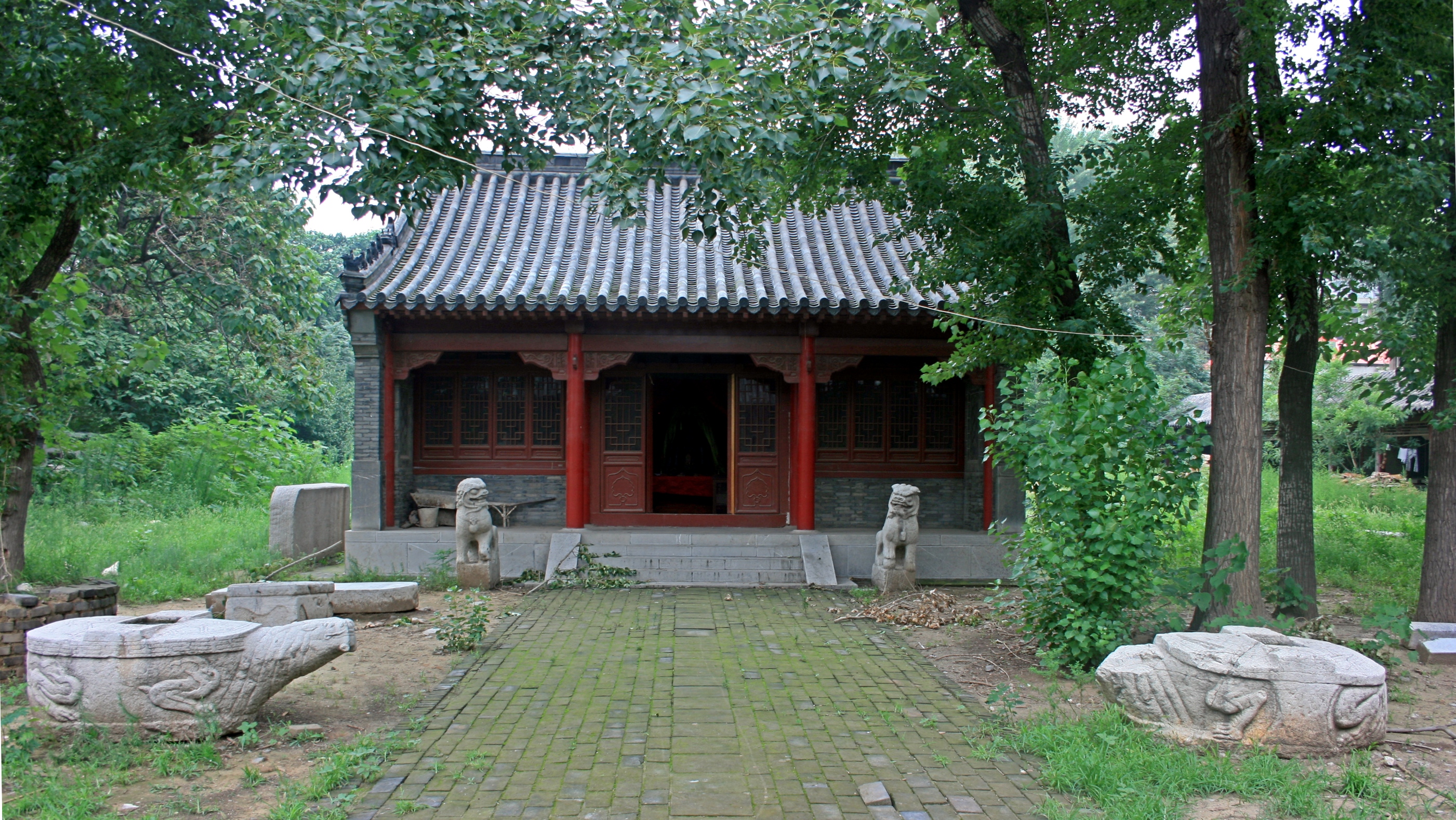
Tomb of Min Ziqian
The boy's stepmother dressed him in thin reed catkins while her own sons wore warm cotton. When his father discovered the deception and moved to divorce her, Min Ziqian pleaded: "With her here, one child is cold. Without her, all three children will be cold." His father relented. This story, told and retold across twenty-five centuries, made Min Sun -- courtesy name Ziqian, born around 536 BCE -- the fourth of the Twenty-four Confucian Paragons of Filial Piety. In Jinan, the capital of Shandong Province, a memorial tomb preserves his legacy, even though no one is certain his body rests there.
A Tomb Without a Body
The Tomb of Min Ziqian is designed as a classical Confucian memorial, complete with an ancestral temple, a spirit way, and a burial mound. But it is, in all likelihood, a cenotaph. The actual burial place of Min Sun remains unknown; at most, some of his clothes may have been interred at the Jinan site. Before the Cultural Revolution, the memorial grounds stretched roughly 300 meters north to south and 200 meters east to west -- a substantial complex for a man who lived in an era when such monuments would have been unthinkable. The memorial's size reflects not the historical figure but the scale of the idea he came to represent: that devotion to one's parents is the foundation of all virtue.
The Disciple's Legacy
Min Sun was one of Confucius's inner circle, a disciple singled out in the Analerta for his moral character. His story of the reed catkins became one of the most widely known parables in Chinese culture, codified in the collection of the Twenty-four Filial Exemplars -- a set of stories compiled to teach filial piety by example. What makes Min Ziqian's tale distinctive among these exemplars is its emphasis on mercy rather than sacrifice. He did not simply endure his stepmother's cruelty; he argued for her continued presence in the family, recognizing that her punishment would harm his stepbrothers more than her absence would help him. It is a parable about seeing past personal suffering to the well-being of others.
Catkins and the Park Next Door
The tomb sits east of Min Ziqian Road, adjacent to Baihua Park -- formerly known as Catkins Park. That name is no coincidence. The catkins of the park's name refer directly to the reed catkins that Min Ziqian's stepmother used to stuff his winter coat, the flimsy material that could not keep out the cold. The story is so deeply embedded in the local landscape that even the parks carry its memory. Today, two stone bixi -- tortoise figures that traditionally support commemorative stelae -- stand in the memorial hall, though their stelae are missing. The turtles remain, patient and unburdened, waiting for inscriptions that may never return. The Cultural Revolution damaged the site, as it damaged so many Confucian monuments across China, but the memorial endures as a quiet testament to a virtue that predates the politics of any era.
From the Air
Located at 36.676°N, 117.061°E in Jinan, adjacent to Baihua Park. The memorial is in the eastern part of the city's urban core. Nearest airport is Jinan Yaoqiang International Airport (ZSJN), approximately 25 km northeast. Look for the green space of Baihua Park as a reference. Elevation approximately 40 meters above sea level.