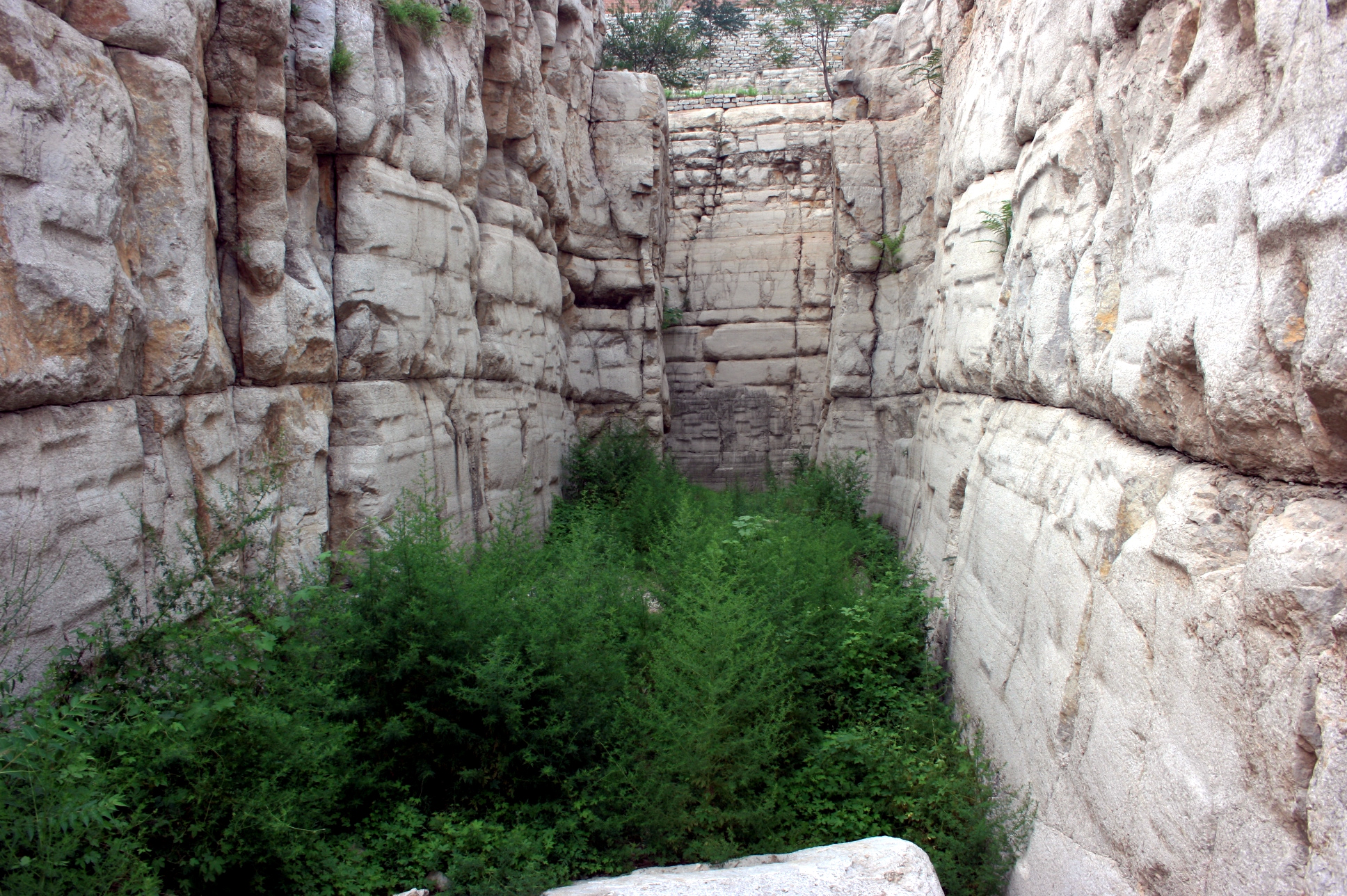
Tomb of the Jibei King
Liu Kuan had an affair with his widowed stepmother and cursed the emperor during a sacrifice. For this, the last king of Jibei was forced to commit suicide around 85 BC. What happened next is the puzzle: someone gave him a royal burial anyway. His tomb was carved into a limestone cliff on Shuangru Mountain near Jinan, filled with jade, gold, and bronze -- but possibly denied the jade burial suit that was customary for Han aristocrats of his status. Then the tomb was sealed and, against all odds, remained untouched by grave robbers for over two thousand years.
A Kingdom Carved in Stone
The Kingdom of Jibei occupied part of what is now Shandong Province during the Western Han dynasty, with its capital at the City of Lu, believed to have been located near modern Luchengwa about five kilometers north of the tomb site. Jibei was a cultural and economic center during the Han period, one of many semi-autonomous kingdoms that existed under the loose authority of the imperial court. Liu Kuan ruled from 97 to 85 BC during the reign of Emperor Wu of Han, one of China's most powerful emperors. His tomb was hewn directly into limestone bedrock on Shuangru Mountain in what is now the Changqing District of Jinan, covering a total area of 1,500 square meters -- an enormous underground space for a single burial.
The Disgrace and the Burial
The circumstances of Liu Kuan's death add an unusual tension to the archaeological record. Imperial chronicles record that his offenses -- the affair with his stepmother and the sacrilegious outburst during a ritual sacrifice -- were severe enough to warrant forced suicide. Yet the tomb's contents suggest he received burial honors befitting a king. More than 2,000 artifacts were recovered during excavations conducted by Shandong University archaeologists between 1995 and 1997: bronze vessels, lacquerware, iron implements, ceramics, and gold objects including roughly 20 gold ingots known as "gold cakes." The jade artifacts were particularly striking -- a facial mask assembled from 18 pieces, jade swords, and jade headrests. Scholars believe, however, that the absence of a full jade burial suit may reflect his disgrace, a subtle but significant withholding of the highest posthumous honor.
Untouched for Two Millennia
What elevated the Shuangru Mountain tomb from an important find to a nationally significant one was its condition. Chinese National Office for Cultural Artefacts ranked it among the top ten archaeological discoveries of 1996 precisely because grave robbers had never reached it. In a country where ancient tombs have been systematically looted for centuries, an intact royal burial from the Western Han dynasty is extraordinarily rare. The artifacts, now housed at the Museum of Changqing District and the Shandong Museum in Jinan, provide an unfiltered snapshot of aristocratic life and death in the second century BC -- from the gilt bronze chariot fittings that accompanied the king into the afterlife to the small jade objects carefully arranged on his body.
A Second Tomb in the Shadow
The archaeological designation of the site as Shuangrushan Han Tomb Number 1 hints at a broader story. A second tomb from the same period sits nearby, suggesting that other members of the Jibei royal family or high-ranking officials were also buried on this mountain. The site has been listed as a protected monument of the People's Republic of China. For visitors, the recovered treasures tell a story more vivid than any chronicle: of a kingdom wealthy enough to fill a king's tomb with gold and jade, and of an imperial system powerful enough to strip him of his throne while still granting him the dignity of a royal resting place.
From the Air
Located at 36.45N, 116.64E in the Changqing District of Jinan, Shandong Province. The Shuangru Mountain tomb site sits in a hilly area visible from low altitude. Nearest major airport is Jinan Yaoqiang International (ZSJN), approximately 40 km to the northeast. Best viewed at altitudes below 5,000 feet in clear weather.