Tombstone Courthouse State Historic Park
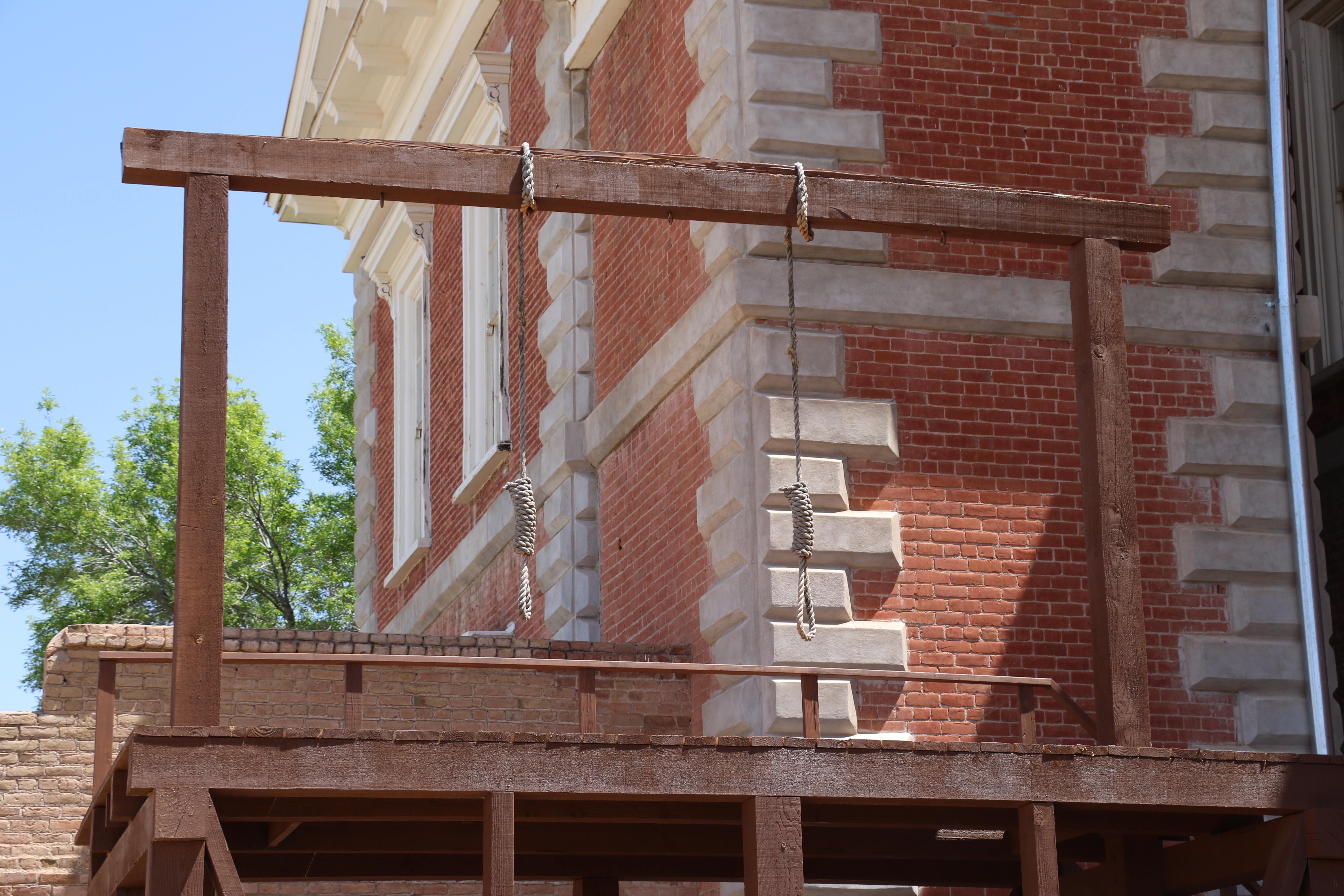
Seven men dropped through the trapdoor in the courtyard, their crimes ranging from robbery to murder. The gallows that dispatched them have been rebuilt twice now, replicas standing where originals once did their grim work. But the red brick courthouse that oversaw their trials still stands, the oldest courthouse remaining in Arizona, a monument to the moment when a lawless mining camp decided to settle its disputes with gavels instead of guns. The building cost fifty thousand dollars in 1882, a staggering sum for a frontier town, and it represented nothing less than Tombstone's declaration that civilization had arrived.
Born of Silver and Necessity
Ed Schieffelin discovered silver in these desert hills in 1877, and by 1881 Tombstone had exploded to more than seven thousand residents. The problem was paperwork. Every mining claim, deed, and contract had to be recorded at the Pima County Courthouse in Tucson, a punishing 150-mile round trip through hostile territory that took two full days. Stage robberies had become so common they barely made the news. Tombstone's merchants and miners struck a shrewd deal with the Prescott delegation to the Territorial Legislature: Cochise County would be carved from eastern Pima County, with Tombstone as its seat. In exchange, the territorial capital would remain in Prescott rather than moving to Tucson. The deal passed, the county formed, and construction on a proper courthouse began immediately.
From Streets to Courtrooms
Sheriff John Behan took his office on the ground floor, first door on the right. He and his successors faced an enormous task: convincing men accustomed to settling disputes with six-shooters that the courtroom upstairs offered a better arena. The Earp-Clanton feud had given Tombstone international notoriety from which, as locals wryly note, it has no interest in recovering. But the courthouse represented something new. Men who had followed mining rushes through Colorado, Utah, and Nevada recognized the pattern. These experienced frontier hands knew that courthouses, not gunfighters, ultimately tamed boomtowns. They put the new system into effect quickly, without fumbling, building on hard-won knowledge from silver strikes past.
Victorian Elegance in the Desert
The building rises two stories in elegant Territorial Victorian style, its red brick walls quoined at the corners with white stone. A distinctive dripstone course of the same white stone divides lower and upper floors. The structure spreads seventy-six feet wide in a cruciform shape, with east and west wings projecting nineteen feet from the main body. Atop it all sits a one-story cupola with a mansard roof, adorned with lacy gingerbread cresting that creates a kind of widow's walk. An iron spiral staircase still climbs the southeast corner to the courtroom. A second spiral once rose directly from the jail below to the prisoner's dock, replacing an elevator that proved unsatisfactory. When Maricopa County built its courthouse a few years later, they copied liberally from Tombstone's example.
Decline and Resurrection
Tombstone remained the county seat until 1929, when growing Bisbee won the vote to relocate the seat there. The last county office departed in 1931. The building stood largely vacant for two decades, surviving an ill-fated attempt in the 1940s to convert it into a hotel. In 1955, the Tombstone Restoration Commission acquired the courthouse and began its rehabilitation. Four years later, when Arizona established its State Parks Board in 1957, the courthouse became one of the first designated state parks and the very first to open its doors to the public. Today thousands of artifacts fill its rooms, telling stories of the silver boom, the lawmen and outlaws, the working miners and ambitious merchants who built a city in the desert.
Where Justice Still Echoes
The replica gallows in the courtyard remind visitors of frontier justice at its harshest, marking the exact spot where seven condemned men met their ends. Inside, the original courtroom survives, its judge's bench and witness stand testaments to trials that captivated territorial newspapers. The judge's chambers and Clerk of the Court office remain intact. Listed on the National Register of Historic Places in 1972, the courthouse stands as both museum and monument. It preserves not just artifacts but an idea: that even in the most violent corners of the frontier, people built institutions to channel conflict into law. The building that once processed mining claims and murder trials now processes something equally valuable, the memory of how the West was really won.
From the Air
Located at 31.71N, 110.07W in downtown Tombstone, Arizona, elevation approximately 4,540 feet. The distinctive red brick courthouse with its white cupola is visible from low altitude approaches over the historic district. Tombstone Municipal Airport (P31) lies just north of town with a 3,500-foot runway suitable for light aircraft. Bisbee-Douglas International (DUG) sits 25 nm southeast with longer runways. The San Pedro River Valley stretches north and south, with the Dragoon Mountains creating a dramatic eastern backdrop where Cochise once made his final stronghold.