Tongzhou Mutiny
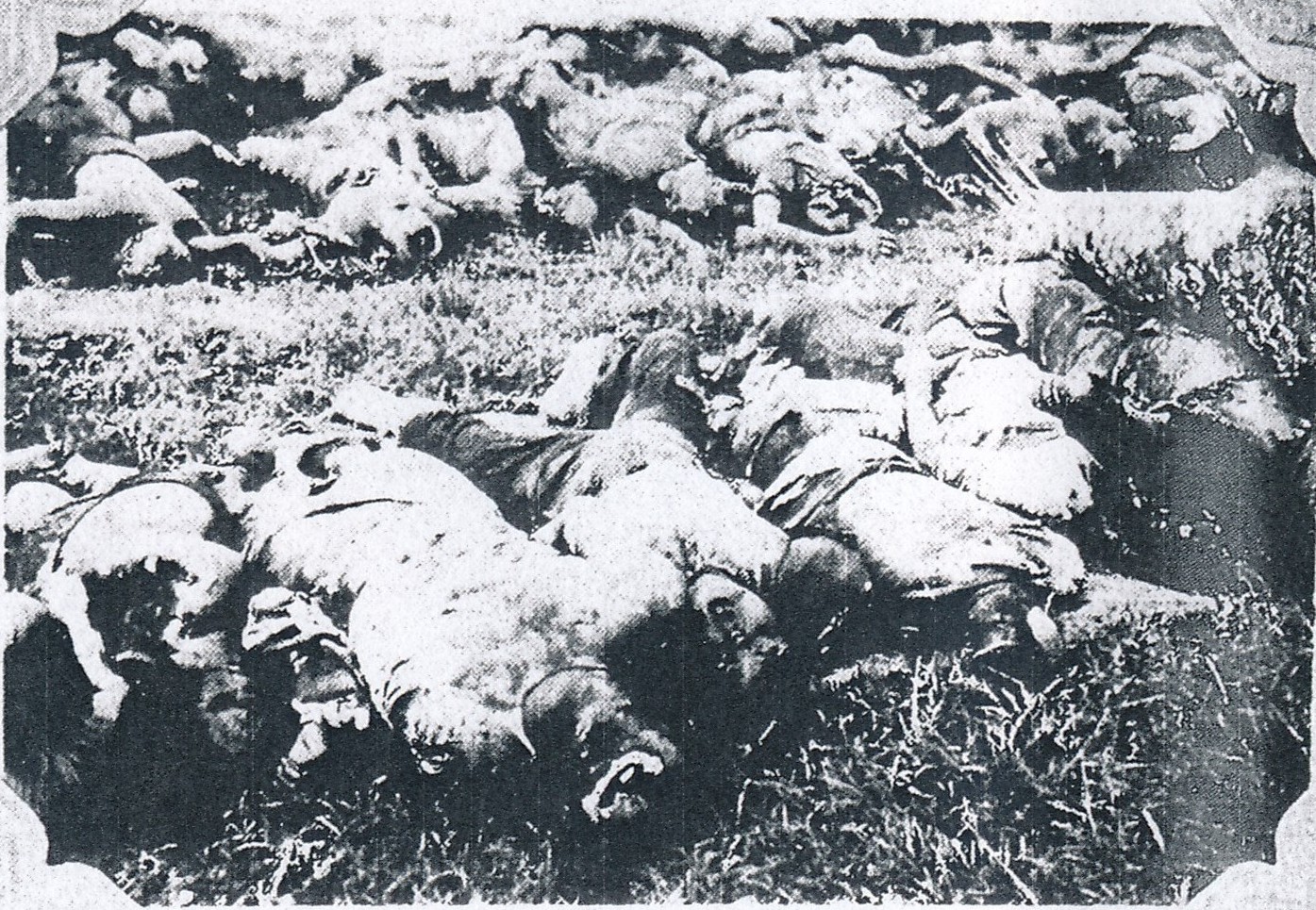
Three weeks after shots rang out at the Marco Polo Bridge on July 7, 1937, the garrison town of Tongzhou -- just 30 kilometers east of Beijing -- erupted in violence that nobody on either side had predicted. The Chinese security forces of the East Hebei Anti-Communist Autonomous Government, trained and armed by Japan itself, turned their weapons against the very people they were supposed to protect. By the time the mutiny ended, approximately 260 Japanese and Korean civilians lay dead, and the already fragile peace between China and Japan had shattered beyond repair.
A Puppet State's Fractured Loyalty
Tongzhou served as the capital of the East Hebei Anti-Communist Autonomous Government, a puppet regime established in 1935 under the leadership of Yin Ju-keng, a pro-Japanese graduate of Waseda University. The arrangement was part of Japan's broader strategy to carve North China into politically pliable buffer zones. But the security forces tasked with keeping order were drawn from a volatile mix: Han Chinese soldiers, former members of the Northeast Army, and horse bandits who had fled Manchuria to escape Japanese control. Many harbored deep anti-Japanese sentiment. The irony was poisonous -- Japan had armed the very men whose resentments would turn lethal. Within the walls of Tongzhou, elements of the First Security Forces General Division and the Training General Division were stationed alongside a small Japanese garrison of fewer than 50 soldiers and a handful of military police.
The Night Everything Changed
On July 29, 1937, with the main Japanese Second Regiment deployed south to Nanyuan, Tongzhou was left defended by only non-combat-capable personnel. Japan considered the East Hebei security forces friendly. That assumption proved catastrophic. The causes behind the uprising remain debated: Kuomintang radio propaganda may have convinced the troops that Chinese forces had won decisively at the Marco Polo Bridge. A secret agreement between the Kuomintang and the East Hebei Government may have been reached. Widespread anger at the Japanese-sanctioned opium trade that was poisoning the region likely played a role. Whatever the trigger, the security forces attacked Japanese and Korean residents living in Tongzhou under the protections of the 1901 Boxer Protocol. An American journalist who visited the aftermath reported 117 Japanese and 106 Korean civilians killed. Chiang Kai-shek's private diaries, published decades later, recorded 104 Japanese and 108 Korean casualties.
Survivors and the Ashes of a City
Approximately 60 foreign civilians survived the uprising and provided firsthand accounts to journalists and historians. The Chinese forces set fire to large portions of the city, leaving Tongzhou in ruins. About 260 people -- soldiers and civilians alike -- had been killed. These were real people caught in the grinding machinery of imperial ambition and nationalist fury: Japanese merchants and their families who had settled under treaty provisions, Korean residents displaced by colonial pressures of their own, and Chinese soldiers whose mixed loyalties finally snapped under impossible circumstances.
A War's Accelerant
In Japan, the news from Tongzhou was weaponized immediately. The popular slogan "Punish China the outrageous" swept through the home islands, and military adventurists stationed in North China seized on the massacre to justify expanded operations under the pretext of protecting Japanese lives and property. The incident fed a cycle of escalation that was already spinning out of control in the summer of 1937. After World War II, the Japanese defense team at the International Military Tribunal for the Far East submitted the 1937 Foreign Ministry statement about Tongzhou as evidence of the inevitable cause of the Sino-Japanese conflict. Presiding Judge Sir William Webb rejected it. History, as the tribunal recognized, is rarely that simple. Today, the site in what is now Tongzhou District of Beijing carries few visible traces of the violence. But the mutiny remains a contested and painful chapter, a reminder of how quickly alliances forged in coercion can collapse into bloodshed.
From the Air
Located at 39.80N, 116.80E, in what is now the eastern suburbs of Beijing. Tongzhou District is visible as part of Beijing's urban sprawl. The nearest major airport is Beijing Capital International (ZBAA/PEK), approximately 30 km to the northwest, and Beijing Daxing International (ZBAD/PKX) to the southwest. Best viewed from 3,000-5,000 feet AGL.