Tono: Where the Kappa Are Red
Elsewhere in Japan, the kappa are green. In Tono, they are red. That small distinction -- noted by folklorist Kunio Yanagita when he visited this mountain-ringed city in Iwate Prefecture in 1909 -- hints at something deeper about the place. Tono does things its own way. Nestled in a basin surrounded by the peaks of the Kitakami Mountains, the city has been telling stories for centuries: tales of water spirits lurking in streams, of ghostly children who haunt the spare rooms of old farmhouses, of a girl who fell in love with a horse. When Yanagita published those stories as Tono Monogatari in 1910, he did more than preserve local legends. He founded an entire academic discipline -- minzokugaku, the study of Japanese folklore -- and turned this quiet farming town into the spiritual heartland of Japan's supernatural imagination.
The Book That Built a Field
Kunio Yanagita was a government bureaucrat when he met Kizen Sasaki, a young storyteller from Tono, in Tokyo in 1908. Sasaki told him tales he had heard growing up in the mountain valleys of Iwate -- stories of kappa dragging horses into rivers, of zashiki-warashi (child spirits) whose presence in a home brought prosperity, of Oshirasama, a deity born from the love between a girl and a horse. Yanagita traveled to Tono, listened, and wrote. The result, Tono Monogatari, published in 1910, contained 119 tales drawn from the oral traditions of this single small region. The book electrified literary and scholarly circles. It was not a fairy tale collection for children but a serious ethnographic record, written in spare, evocative prose. Yanagita went on to become the father of Japanese folklore studies, but he never found a place richer in stories than Tono.
Spirits in the Streams and Spare Rooms
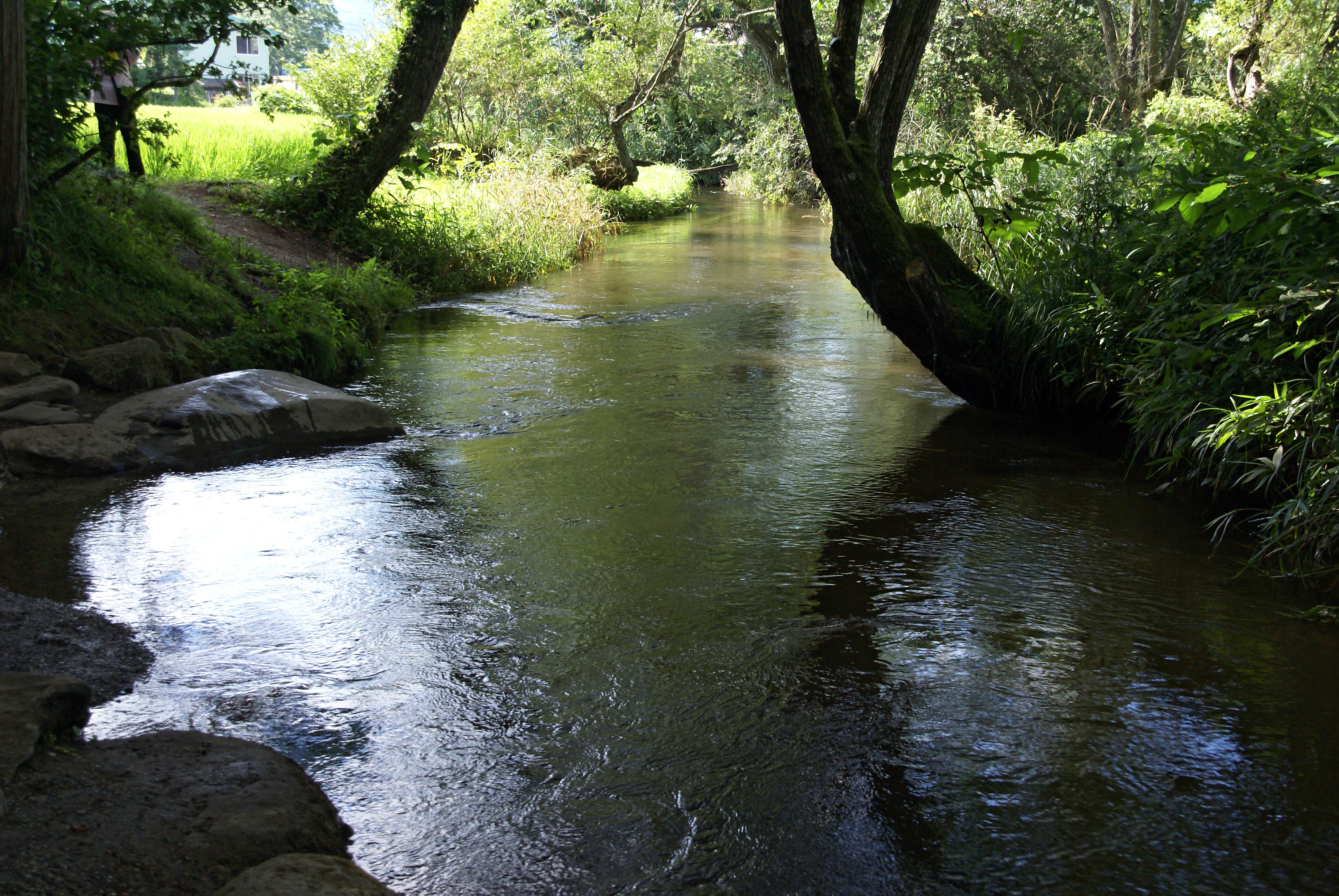
The creatures of Tono's folklore are not distant myths -- they inhabit specific places you can still visit. The Kappabuchi pool, shaded by trees near Joken-ji temple, is where the red-skinned kappa are said to live, their dish-like head depressions filled with water that grants them their power. Nearby, the Denshoen folk village preserves the legend of Oshirasama with a dedicated exhibit, telling the story of the maiden and her beloved horse through carved mulberry-wood figures wrapped in cloth. The Five Hundred Disciples -- a moss-covered grove where ordinary-looking rocks reveal carved faces when you look closely -- sits quietly in the forest, each stone disciple worn smooth by centuries of rain. And in the old thatched-roof farmhouses of the folk villages, the zashiki-warashi are never far away. These child-like house spirits, invisible to most, were said to bring fortune to any family whose home they chose to inhabit. When a zashiki-warashi left, the household fell into decline.
A Landscape Made for Legends
Tono's geography explains its folklore. The Kitakami Mountains wall the basin off from the Pacific coast to the east and the interior plains to the west, creating a world that was, until modern roads arrived, deeply isolated. Farmhouses with their distinctive L-shaped magariya design -- built to shelter horses and people under the same thatched roof -- dot the valley floor. Mist gathers in the rice paddies at dawn. Streams cut through dense forest. It is easy to understand why, in this landscape, the boundary between the human world and the spirit world felt thin. The four folk villages scattered around the city preserve these traditional buildings and the crafts that went with them: charcoal-burning, silk-weaving, rice-straw braiding. The largest, Tono Furusato Village, recreates an entire farming hamlet. The smallest, Denshoen, feels like stepping into a single family's past.
Pedaling Through the Stories
The best way to experience Tono is by bicycle. The city is compact enough that most attractions sit within a comfortable ride of Tono Station, and the countryside between them -- rice fields stretching to forested hills, weathered farmhouses with stone walls, narrow lanes crossing clear streams -- is half the point. Buses exist but run infrequently; wait times of two hours at remote stops like Fukusenji Temple are common. By bike, you set your own pace, stopping at the five-story pagoda of Fukusenji, circling past the kappa pool, climbing the steep hill to Takamuro Suikoen Park where an onsen waits at the summit. The Tono Municipal Museum and the Castle Town Materials Museum, both steps from the station, anchor the cultural side with exhibits on traditional crafts and the region's samurai-era history. And everywhere, the symbol of the kappa follows you: on manhole covers, on shop signs, on candies and cookies and bottles of sake. Tono has made peace with its most famous resident -- even if that resident might still be lurking in the nearest stream.
From the Air
Tono sits at 39.33N, 141.53E in a mountain basin in Iwate Prefecture, northern Honshu. The Kitakami Mountains rise to the east and west, framing the valley. From altitude, the basin's patchwork of rice paddies and clustered settlements is visible against the surrounding forested peaks. Nearest airport is Iwate Hanamaki Airport (RJSI), approximately 35 km to the northwest. Recommended viewing altitude is 3,000-5,000 feet AGL to appreciate the enclosed mountain basin geography. The JR Kamaishi Line railway threading through the valley provides a useful visual navigation reference.