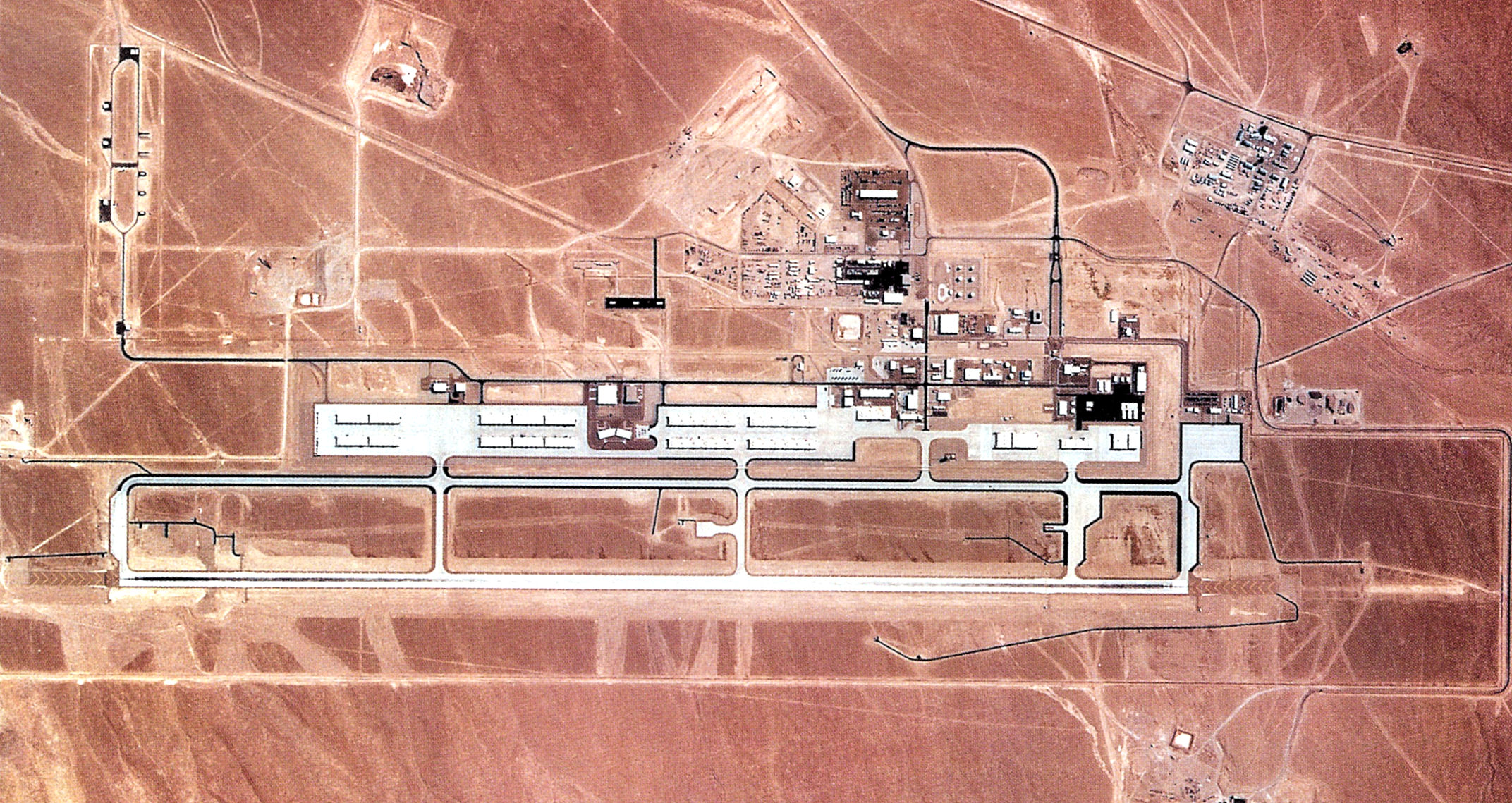
Tonopah: Where Stealth Aircraft Hid in Plain Sight
For nine years, the world's most advanced aircraft flew from a base that didn't officially exist. The F-117 Nighthawk - the first operational stealth aircraft - operated from Tonopah Test Range in central Nevada from 1983 until its public unveiling in 1988. Pilots flew only at night, landing before dawn, their angular black aircraft hidden in climate-controlled hangars during daylight. They commuted weekly from Las Vegas on unmarked 737s, telling families they worked on 'special projects.' The secrecy was so complete that even after the Air Force acknowledged the F-117's existence, the full story of Tonopah's role took years to emerge. America's stealth revolution was born in Nevada's empty basin country, invisible until it no longer needed to be.
The Location
Tonopah Test Range occupies a remote valley in the Nevada Test and Training Range, the vast military complex that includes Area 51. The base had tested nuclear weapons delivery systems since the 1950s; its isolation and existing security infrastructure made it ideal for even more sensitive programs. When Lockheed's Skunk Works needed somewhere to operate the revolutionary F-117, Tonopah offered distance from prying eyes - both foreign satellites and American civilians. The nearest population was Tonopah, a former mining town 70 miles northwest. The emptiness that defined central Nevada became the stealth program's greatest asset.
The Program
The 4450th Tactical Group - its designation deliberately bland - began F-117 operations at Tonopah in October 1983. Everything about the program emphasized concealment. Aircraft flew only at night; daytime operations risked Soviet satellite detection. Hangars were climate-controlled to mask thermal signatures. Pilots underwent background investigations rivaling those of astronauts. The operational tempo was punishing: night flying in an aircraft with unusual handling characteristics, minimal navigation aids, and no margin for error. Several pilots died in crashes that the Air Force attributed to other aircraft types. The truth was too classified to acknowledge, even in death.
The Double Lives
Pilots at Tonopah lived compartmentalized existences. They commuted weekly from Nellis Air Force Base outside Las Vegas on unmarked 'Janet' flights - white 737s visible at Las Vegas airport's restricted terminal. Families knew only that their spouses worked on classified projects somewhere in the desert. Pilots couldn't discuss their aircraft, their missions, or even that they flew at night. They maintained cover stories about A-7 Corsairs, the obsolete aircraft officially assigned to their unit. The psychological burden was considerable: flying the world's most advanced combat aircraft while pretending to fly thirty-year-old jets.
The Revelation
The Pentagon acknowledged the F-117's existence in November 1988, five years after it became operational. The unveiling included carefully controlled photographs and sanitized descriptions. The full Tonopah story emerged more slowly: the night-only operations, the elaborate deception, the hidden infrastructure. The F-117 went on to combat in Panama and achieved fame during the 1991 Gulf War, where its precision strikes made it a media icon. The secrecy that defined its development seemed, in retrospect, almost excessive - but that secrecy had protected a genuine technological revolution until America was ready to deploy it.
Visiting Tonopah
Tonopah Test Range remains an active military installation; civilian access is prohibited. However, the town of Tonopah, 70 miles northwest on US-95, offers related points of interest. The Tonopah Historic Mining Park covers the area's silver mining heritage. The Clown Motel has achieved internet fame for its eerie aesthetic. The Central Nevada Museum includes regional history. From surrounding hills, distant views of military aircraft are occasionally possible, though photography is restricted. The vast Nevada Test and Training Range is visible only as empty territory on maps - the secrecy that protected the F-117 continues for whatever programs operate there today.
From the Air
Located at 37.80°N, 116.78°W in the Nevada Test and Training Range, central Nevada. From altitude, the Tonopah Test Range appears as a cluster of runways and buildings in an otherwise empty valley. The base is surrounded by restricted airspace; civilian overflights are prohibited. The Nevada Test Site and Area 51 lie to the southeast. Highway 95 runs northwest to the town of Tonopah. The terrain is classic basin-and-range: parallel mountain ridges separating broad valleys. The isolation is total - no development, no roads, no reason for anyone to be here except military purpose. What flew from here at night for a decade is now history; what flies here now remains classified.