Torres del Paine National Park
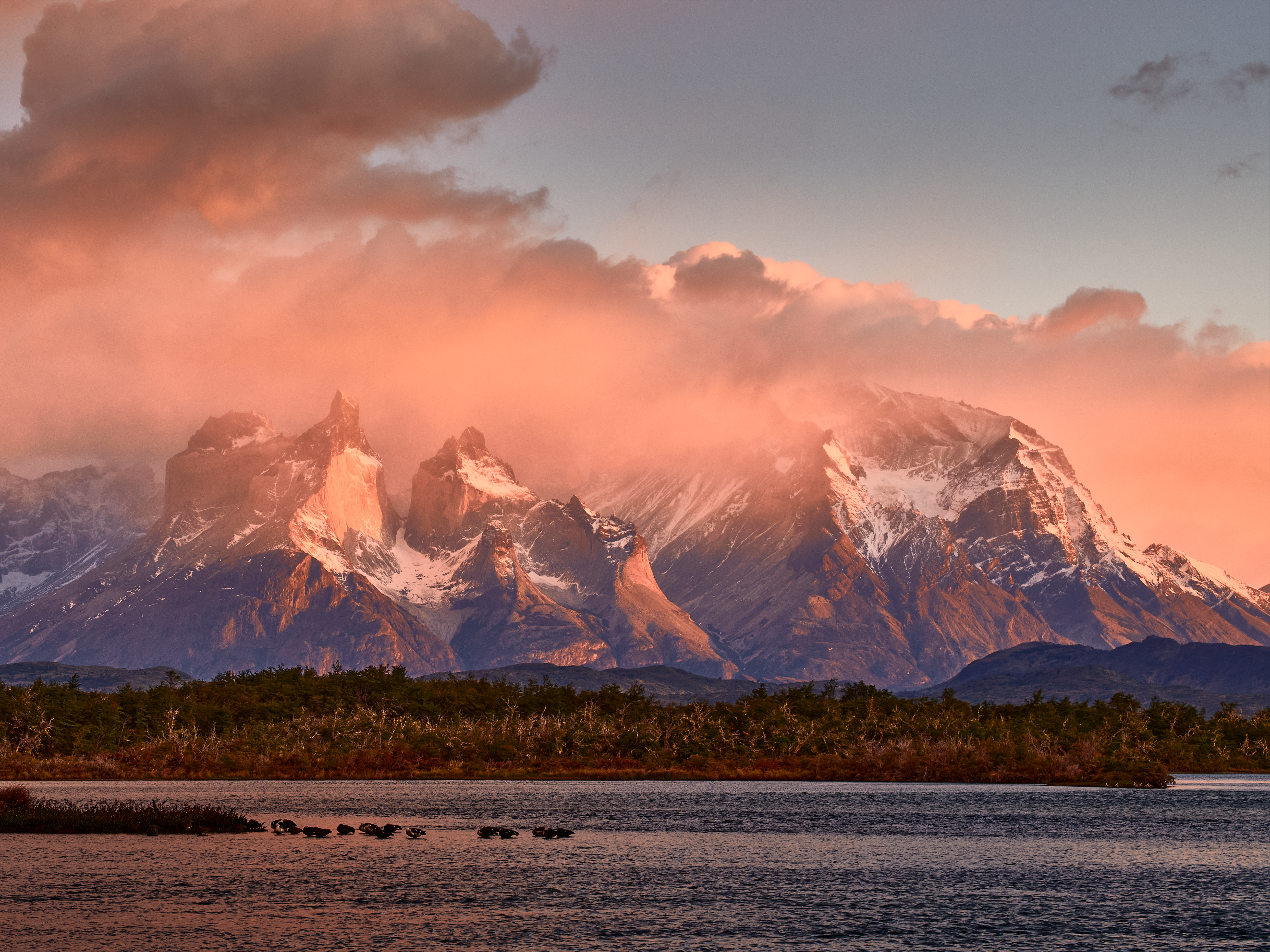
The three granite towers appear suddenly, like jagged teeth biting into the Patagonian sky. At 51 degrees south, where the Andes make their final stand before dissolving into windswept steppe, Torres del Paine guards some of the most dramatic scenery on Earth. The Tehuelche people named this place for the color of those towers at dawn - *paine* meaning blue in their language - and watching the first light turn cold granite into warm amber, you understand why. Turquoise lakes sprawl at the mountains' feet, their impossible color coming from glacial flour ground fine by millennia of ice. This is the end of the world, and it looks like the beginning.
Towers and Horns
The Paine Massif dominates everything. The three Torres - Norte, Central, and Sur - rise nearly 2,500 meters, their sheer granite faces catching the first and last light of each day. Just north, the Cuernos del Paine tell a different geological story: dark sedimentary caps perched atop pale granite, like chocolate drizzled over vanilla. This layering reveals deep time - granite plutons that pushed up through older rock millions of years ago, then were carved by ice age glaciers into the fantastical shapes that now define the skyline.
The classic view comes from the shores of Lago Pehoé, where the Cuernos rise directly from water so blue it looks artificial. But the towers themselves hide from most angles, revealing themselves only to those who make the steep climb to the Mirador Base Las Torres - a four-hour trek that ends at a glacial lake cradled directly beneath the spires.
Ice and Water
Grey Glacier flows down from the Southern Patagonian Ice Field - the third-largest reserve of fresh water on Earth. Standing at its face, you hear it before you understand what you're hearing: deep groans and sudden cracks as ancient ice calves into the lake. Icebergs drift through Lago Grey, chunks of compressed blue ice that glow from within, holding light that fell as snow centuries ago.
The glacial lakes are the park's palette. Lago Pehoé glows turquoise from suspended rock flour. Lago Nordenskjöld shifts between deep blue and pale green depending on the light. Lago Sarmiento, rimmed with white mineral deposits, looks almost lunar. Each lake tells its own story of ice, rock, and time.
Wild Patagonia
Guanacos own the steppe - herds of twenty or more grazing the golden grasslands, their tawny coats blending with the landscape until they move. They've been here for millennia, and so have the pumas that hunt them. Torres del Paine has one of the highest concentrations of pumas in the world, though seeing one requires patience, luck, and often a specialized guide who knows their territories.
Andean condors ride the thermals along the cliff faces, their three-meter wingspans dwarfing everything else in the sky. Chilean flamingos wade the shallower lakes, improbable splashes of pink against the austere landscape. Gray foxes trot through the campgrounds at dusk, utterly unimpressed by human presence.
The Trekking Life
The W Trek has become a rite of passage - four to six days traversing the park's highlights: Grey Glacier, the French Valley, and the base of the Torres themselves. The full Circuit adds the wild backside of the massif, including the brutal John Gardner Pass where hikers first glimpse the ice field stretching to the horizon.
Patagonian weather is its own character. Locals say you can experience all four seasons in a single day, and they're not exaggerating. Winds regularly exceed 100 kilometers per hour, rain sweeps in without warning, and the sun, when it appears, burns with high-latitude intensity. But this volatility creates the drama: clouds streaming off peaks like flags, sudden shafts of light turning glaciers incandescent, double rainbows arcing over the steppe.
At the Edge of the World
Torres del Paine feels remote because it is. Puerto Natales, the gateway town, sits two hours away by bus. Punta Arenas, the nearest real city, is one of the southernmost in the world. Beyond the park's western boundary lies the ice field, and beyond that, only the fractured channels and islands that lead to Cape Horn.
The Tehuelche who named these peaks are gone now, but their word remains. *Paine* - blue. And in the half-light of a Patagonian dawn, when the towers catch the first color and the lakes lie silver and still, the name feels less like description than prophecy. This is a place that reveals itself in its own time, in its own light, to those willing to wait.
From the Air
Located at 51.0°S, 73.0°W. Best viewed from 10,000-15,000 feet for full massif perspective. The three Torres are unmistakable granite spires; look for turquoise glacial lakes (Pehoé, Grey, Nordenskjöld) as navigation aids. Grey Glacier flows from the white expanse of the Southern Patagonian Ice Field to the west. The Cuernos (Horns) are immediately north of the Torres - note the dark sedimentary caps on pale granite. Nearest major airport: Presidente Carlos Ibáñez (PUQ) in Punta Arenas, 150km south. Expect strong westerly winds, especially afternoon. Morning offers best visibility before Patagonian gusts build.