Tortuguero
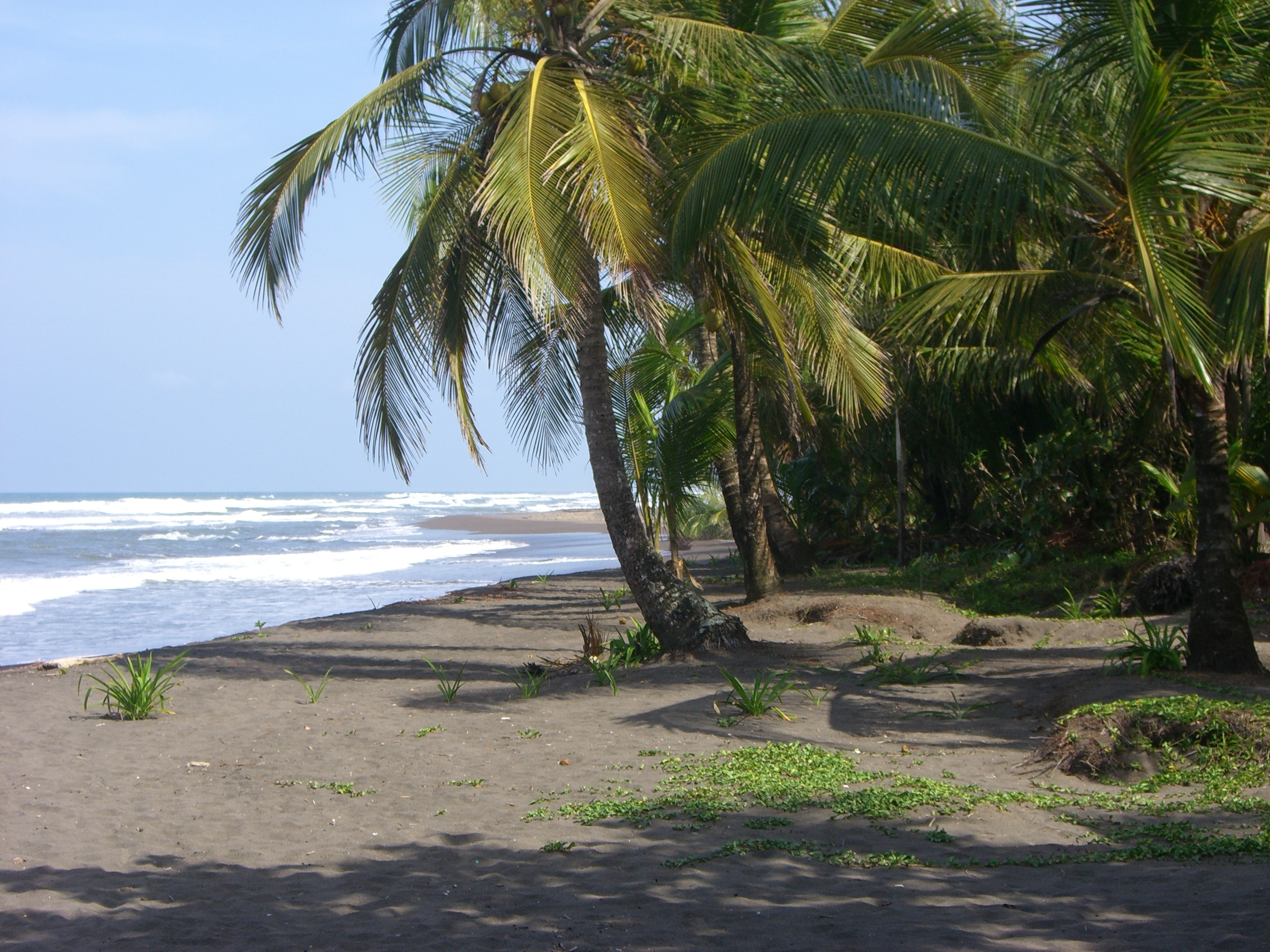
There are no roads to Tortuguero. To reach this village of a few hundred people on Costa Rica's northeastern Caribbean coast, you take a bus to the end of the pavement, then transfer to a boat that winds through jungle canals for up to two hours. The isolation is the point. Tortuguero National Park protects the last remnant of a lowland rainforest that once blanketed the entire Caribbean shoreline, and the long dark beach where it meets the sea is one of the most important sea turtle nesting sites in the Western Hemisphere. Four of the world's seven turtle species come ashore here to lay their eggs -- a cycle that has repeated for millions of years and now depends, in no small part, on this village's willingness to guard it.
A Canopy Built on Black Water
The landscape around Tortuguero is shaped entirely by water. Sandbanks form the coastal strip through sedimentation, while low-lying areas behind them flood with every heavy rain, creating lakes, grass marshes, and brackish swamps. Rivers flow through the park to depths of three meters, and the lakes in the northern section are fed by the Colorado River. It rains on more than 330 days per year here -- roughly 3,000 millimeters annually -- with no true dry season. The humidity fuels staggering biodiversity: some 400 tree species and 2,000 plant species crowd the forest. The oldest and largest are almond trees whose wood is so dense it sinks in water and resists termites entirely. In their branches, roughly 30 breeding pairs of the rare great green macaw build their nests -- one of the last populations of this endangered bird. Vines drape along the riverbanks like curtains, and about half of all bird species found in Costa Rica -- around 350 -- live within the park's boundaries.
The Turtles That Named This Place
Tortuguero means 'place of turtles,' and the name is not metaphorical. Several thousand green turtles arrive between June and October each year, hauling themselves up the dark sand beach to dig nests and deposit an average of 110 eggs each. The hatchlings that survive -- a tiny fraction -- will return to this same beach 25 to 50 years later, navigating thousands of ocean miles by mechanisms scientists still do not fully understand. Leatherback turtles, which can grow beyond two meters in length, come between February and June. Their shells are not hard like other sea turtles' but consist of small bone chips coated in a leather-like substance. About 100 female leatherbacks nest at Tortuguero each season. Hawksbill and loggerhead turtles also visit. All four species are threatened with extinction. Plastic bags kill leatherbacks, who mistake them for the jellyfish they dive deep to eat. The village's turtle-spotter program, funded entirely by sticker sales to tourists, coordinates nighttime viewing so that visitors can witness nesting without disturbing the animals.
From Timber Canals to Ecotourism
A Colombian family founded Tortuguero in 1930, and within a decade, logging operations had begun carving canals through the surrounding forest to float timber out. Those canals still exist, threading through the jungle in a network that earned the area its nickname: Costa Rica's Amazon. By the time the national park was established in 1975, little primary forest remained -- most of what visitors see today is secondary growth, a forest rebuilding itself. The park's creation flipped the local economy from extraction to conservation. Tourism became the primary source of income, and the growing protection brought the turtles back in larger numbers. There are no cars in the village. Boats are the only transport, and at dawn each morning, guided canoe tours slip silently into the canals to look for jaguars, manatees, tapirs, three species of monkey, and sloths hanging motionless in the canopy. The motorboat tours cover more ground, but the canoes go where engines cannot -- deeper into the waterways, closer to the wildlife, and further from the noise.
Living at the End of the Road
Tortuguero's remoteness shapes every aspect of daily life. Power outages are common enough that hotel owners remind guests to carry flashlights after 5:30 in the evening. Groceries cost more because everything arrives by boat. The few small shops sell hand-carved wood alongside basic staples, and dining options lean heavily on rice, chicken, and beans -- the national staples -- though fresh fish can be found if you ask around. The village is small enough to walk end to end in minutes. Yet this remoteness also preserves something increasingly rare: a community whose rhythm is set by tides and seasons rather than highways and schedules. Cerro Tortuguero, a modest 119-meter hill six kilometers north of the village, offers panoramic views of the canal system, the coastline, and the unbroken green of the forest canopy stretching to every horizon. The swimming is unsafe -- rough surf, strong currents, and sharks patrol these waters -- but the walking trails through the jungle parallel to the beach reward anyone willing to remember that darkness comes early in the tropics.
From the Air
Located at 10.58N, 83.52W on Costa Rica's northeastern Caribbean coast. From altitude, Tortuguero appears as a narrow strip of land between the Caribbean Sea to the east and an intricate canal system to the west, with dense jungle extending inland. The village sits at the entrance to Tortuguero National Park. The nearest airstrip is Tortuguero Airport (TTQ), a small strip serving light aircraft. The nearest major airport is Juan Santamaria International Airport (MROC) near San Jose, roughly 80 km to the southwest. The long, dark nesting beach is visible stretching north along the coast, and the canal network is distinguishable as dark ribbons threading through the green canopy.