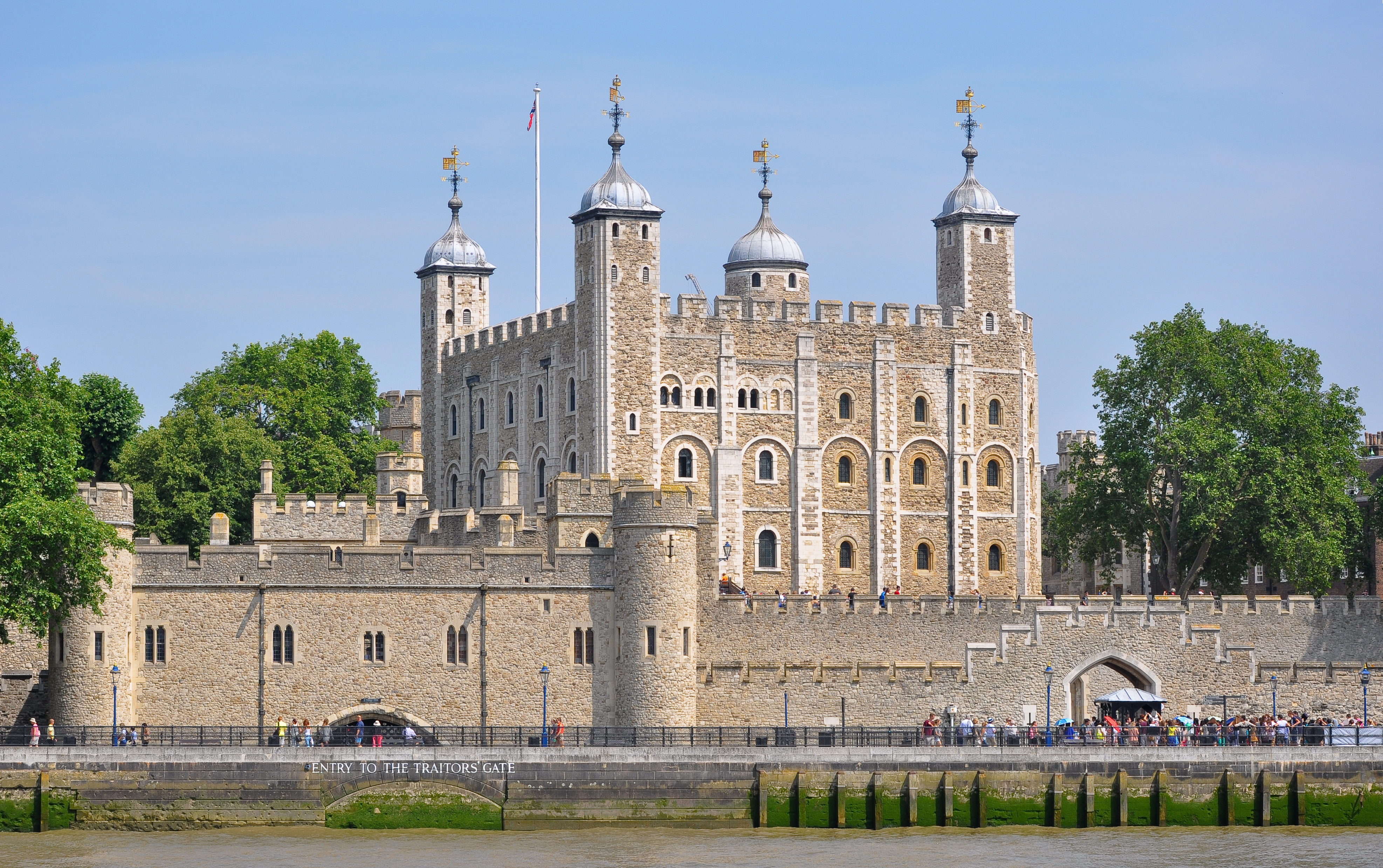
The Tower of London: The Fortress That Imprisoned Two Queens and Lost Two Princes
The Tower of London was built to inspire terror, and it succeeded. William the Conqueror raised the White Tower in 1078 to dominate Saxon London. For 900 years, the fortress served as palace, prison, armory, mint, and execution ground. Anne Boleyn was beheaded here. The Princes in the Tower vanished here. Guy Fawkes was tortured here. Rudolf Hess was imprisoned here. Today, tourists queue to see the Crown Jewels, while ravens patrol the grounds - legend says if the ravens leave, the kingdom will fall. The Tower that once terrified Londoners now terrifies no one, but its ghosts remain.
The Conquest
William the Conqueror built the White Tower after his 1066 invasion to control a hostile city. The massive stone keep, 90 feet tall with walls 15 feet thick, was the largest building in England. It was a statement: the Normans were here to stay.
The tower was designed as a fortress, royal residence, and administrative center. Kings lived here until the 16th century. The menagerie held exotic animals from the 13th century until 1835. The Royal Mint operated within the walls until 1810. The Tower was a city within a city, serving whatever purpose the crown required.
The Prisoners
The Tower's most famous function was as a prison for high-status captives. The first recorded prisoner arrived in 1100. Over nine centuries, a remarkable cast passed through: kings of Scotland and France, the navigator Walter Raleigh (imprisoned for 13 years), the playwright Ben Jonson (briefly), and Nazi Rudolf Hess (in 1941, the last state prisoner).
Conditions varied by rank. Some prisoners lived in relative comfort with servants. Others were tortured in the basement. The rack, the manacles, and 'Scavenger's Daughter' (a compression device) were used to extract confessions. The Tower was England's most feared address.
The Executions
Only seven people were executed inside the Tower walls - all considered too important or controversial for public execution. Two were wives of Henry VIII: Anne Boleyn in 1536 and Catherine Howard in 1540. Both were beheaded on Tower Green.
Anne Boleyn's execution was particularly theatrical. A swordsman was imported from Calais (the English preferred axes). Anne reportedly said: 'I heard say the executioner was very good, and I have a little neck.' She laughed and touched it. Moments later, she was dead. Her ghost is said to walk the chapel where she's buried.
The Princes
In 1483, 12-year-old Edward V and his younger brother Richard were placed in the Tower by their uncle, the Duke of Gloucester. They were never seen again. Gloucester became Richard III. Did he murder his nephews? The mystery has never been solved.
In 1674, workmen found a wooden box containing two small skeletons. They were buried in Westminster Abbey as the princes. A 1933 examination was inconclusive about age and cause of death. DNA testing has been requested but not permitted. The Princes in the Tower remain England's most famous cold case.
The Ravens
Six ravens live at the Tower, cared for by the Ravenmaster. Legend holds that if the ravens ever leave, the Tower will crumble and the kingdom will fall. Charles II supposedly established the tradition after considering removing the birds for astronomical observations.
The legend is probably Victorian invention - no records mention it before the 1880s. But the ravens remain, their wings clipped to prevent escape. Tourists photograph them. The Ravenmaster feeds them raw meat and biscuits soaked in blood. The Tower that once housed prisoners and executioners now houses birds and tourists. The terror has faded. The spectacle continues.
From the Air
The Tower of London (51.51N, 0.08W) sits on the Thames in central London, UK. London Heathrow (EGLL) is 25km west. London City (EGLC) is 10km east. The Tower is visible from the air as a walled fortress beside Tower Bridge, the distinctive drawbridge. The Thames curves past the southern walls. The City of London's skyscrapers rise to the west. Weather is maritime - mild and cloudy year-round, with frequent rain.