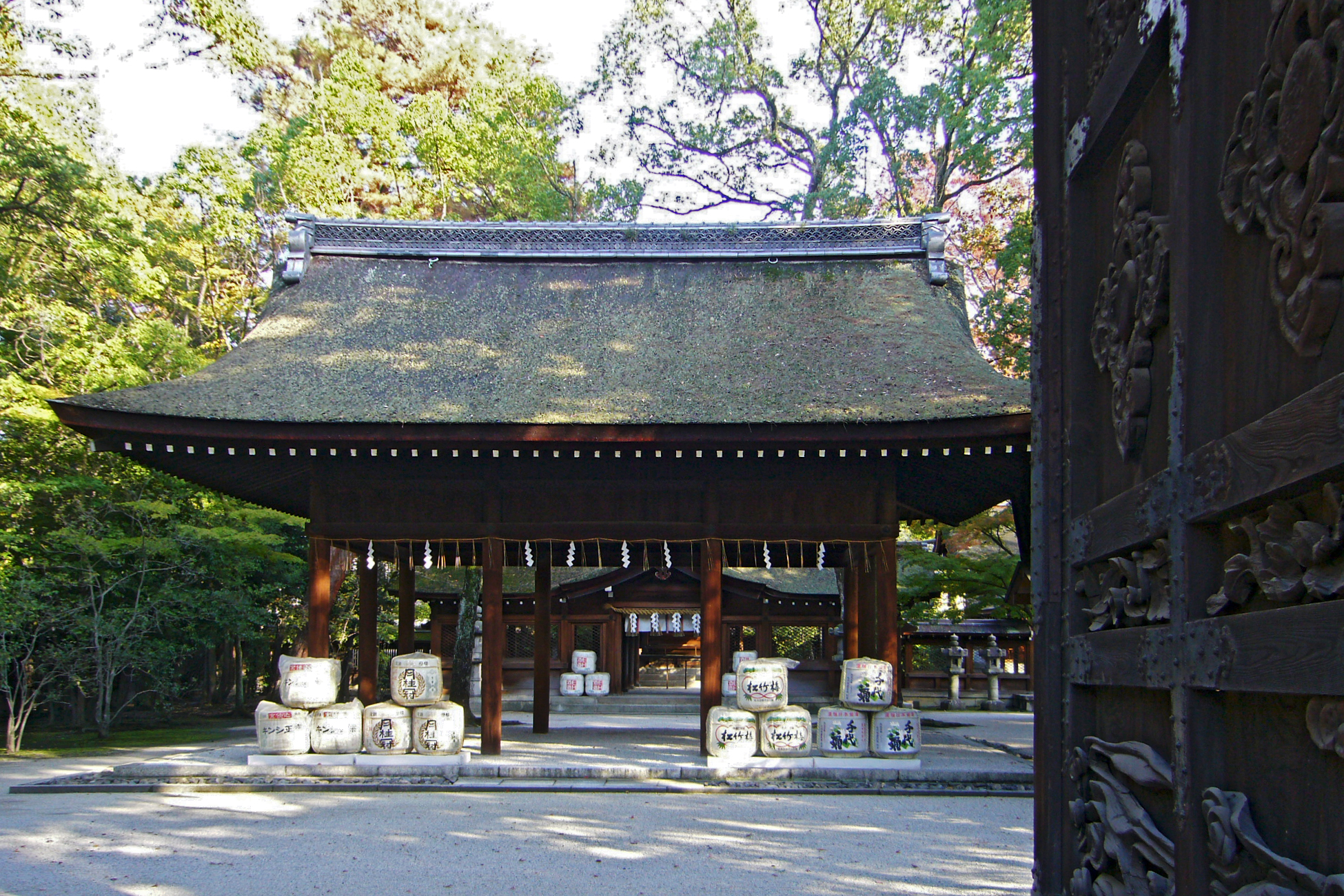
Toyokuni Shrine (Kyoto)
Tokugawa Ieyasu had a problem. Every year, nobles, priests, warriors, and townspeople gathered at a shrine in eastern Kyoto to celebrate the anniversary of Toyotomi Hideyoshi's apotheosis with banquets, music, and boisterous festivity. The man they honored had unified Japan. The man who watched from Edo had merely inherited it. In June 1615, Ieyasu ordered the shrine closed, wanting to discourage what he called "unseemly displays of loyalty to a man he had eclipsed." For the next 253 years, the shrine of Japan's greatest unifier sat abandoned, its grounds left to decay as the Tokugawa shogunate ruled in his place. Toyokuni Shrine is a story of power, memory, and the ways that even the most determined erasure can fail.
The Peasant Who Became a God
Toyotomi Hideyoshi died on September 18, 1598, having risen from peasant origins to become the supreme ruler who unified Japan's warring states. The following year, in 1599, a shrine was erected in his honor in Higashiyama-ku, Kyoto. It was not merely a memorial. Under the Shinto tradition, Hideyoshi was deified, and the shrine became the site of Japan's first tamaya, a sacred altar for ancestor worship. The concept was radical: a commoner-born warlord elevated to divine status, his spirit enshrined to receive offerings and prayers. The celebrations that followed each year were lavish and widespread, drawing people from every class. Hideyoshi had been popular in life, and in death his cult only grew. The shrine became a political statement as much as a spiritual one, a persistent reminder that the Toyotomi name still commanded deep loyalty.
253 Years of Silence
When Tokugawa Ieyasu destroyed the Toyotomi clan at the Siege of Osaka in 1615, eliminating the shrine's political symbolism became an immediate priority. He shuttered the complex and left it to crumble. The Tokugawa shoguns who followed saw no reason to reverse the decision. For over two and a half centuries, the shrine where nobles and commoners had once feasted together stood empty and neglected. The tamaya was destroyed. The grounds decayed. But the memory of Hideyoshi proved harder to demolish than his buildings. When the Meiji Restoration toppled the Tokugawa shogunate in 1868, Emperor Meiji personally directed that Toyokuni Shrine be restored. The order came on April 28, 1868, and the shrine grounds were expanded by absorbing a small parcel of land from the adjacent Hoko-ji temple. In 1897, the tercentenary of Hideyoshi was celebrated at the restored site.
A Gate That Traveled Through History
The shrine's most remarkable artifact is its karamon gate, designated a National Treasure of Japan. This ornate Chinese-style gate is believed to have been originally built in 1598 for Hideyoshi's Fushimi Castle, one of his most ambitious architectural projects. When the Tokugawa dismantled Fushimi Castle in 1623, the gate began a journey across Kyoto. It was first relocated to Nijo Castle, the Tokugawa seat of power in the city. From there it moved to Konchi-in, a sub-temple of the great Nanzen-ji complex. Finally, in 1876, after the Meiji Restoration had swept away the old political order, the gate was installed at its current home at Toyokuni Shrine. The karamon is one of only three such gates in Kyoto designated as national treasures, alongside examples at Daitoku-ji Temple and Nishi Hongan-ji Temple, all three connected to Hideyoshi's original constructions.
Treasures of the Unifier
Beyond the gate, the shrine houses a collection of Important Cultural Properties that speak to the grandeur of Hideyoshi's era. A painted folding screen by Kano Naizen of the celebrated Kano School depicts the Festivals of Toyokuni, capturing the boisterous celebrations that once filled these grounds. A vest garment decorated with gold chrysanthemum motifs reflects the extravagant taste of the Momoyama period. Three decorated Chinese-style chests and an iron lantern cage hint at the international trade networks that flourished under Hideyoshi's rule. Perhaps the most striking object is a naginata blade called Honebami, meaning "Bone-eater," attributed to the legendary swordsmith Awataguchi Yoshimitsu. These artifacts survived the centuries of neglect, preserving a material record of the man whose shrine his enemies tried to erase from the landscape of Kyoto.
From the Air
Toyokuni Shrine is located at 34.991N, 135.773E in the Higashiyama-ku district of eastern Kyoto, near the base of the eastern hills. From above, look for the shrine compound adjacent to Kyoto National Museum and the distinctive Hoko-ji temple grounds. The nearby Mimizuka (ear mound) is another Hideyoshi-related landmark. The nearest airport is Osaka Itami (RJOO), approximately 30 nm southwest. Kansai International (RJBB) is about 55 nm south. Best viewed at 2,000-3,000 feet AGL. The Kamo River running north-south through central Kyoto and the forested eastern hills (Higashiyama) are the primary navigation references.