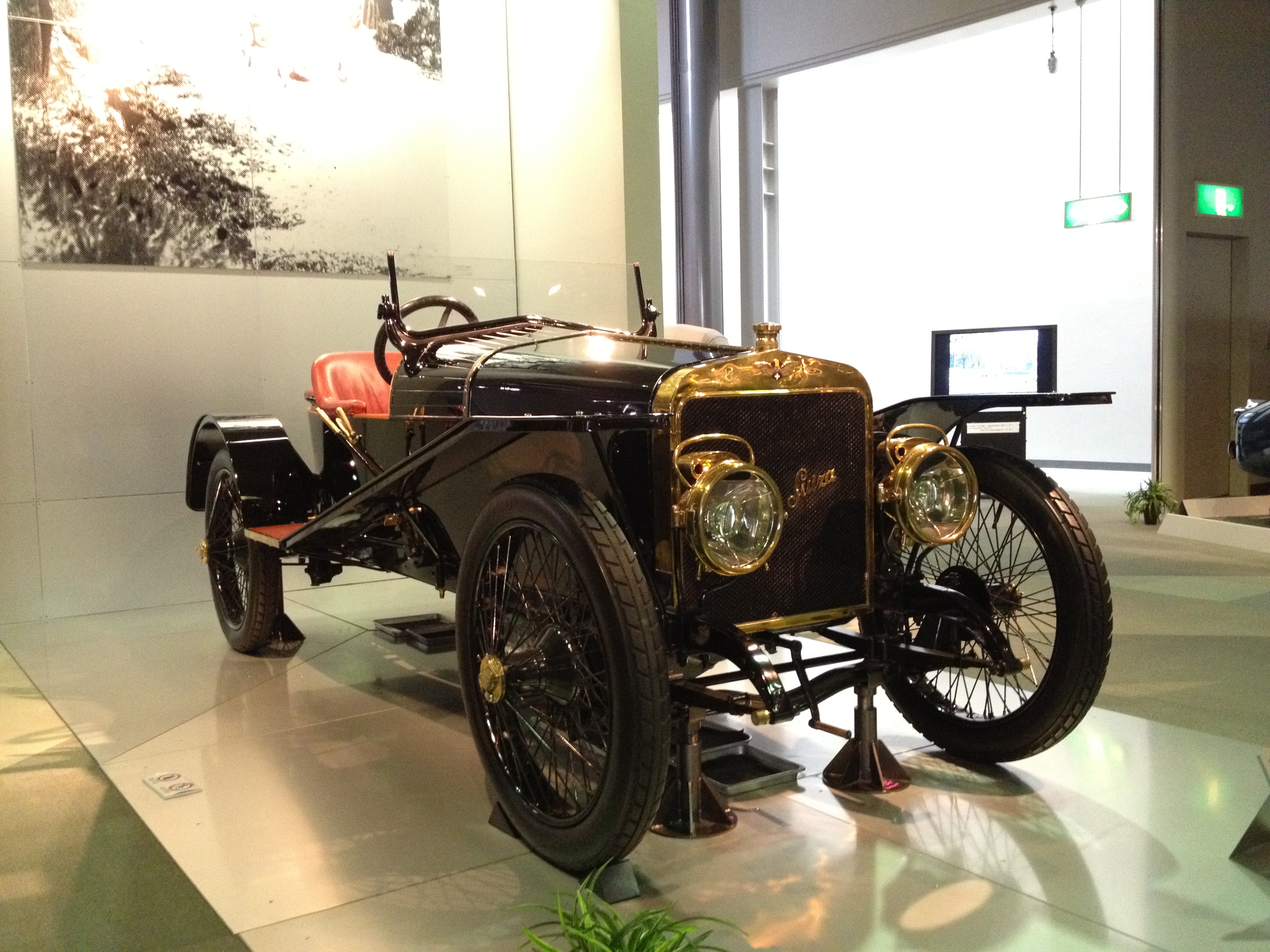
Toyota Automobile Museum: 130 Years of Speed Under One Roof
A 1929 Duesenberg Model J sits a few paces from a tiny 1955 Messerschmitt KR200 bubble car. A Rolls-Royce Silver Ghost from 1910 gleams under the same roof as a 1958 Subaru 360 barely larger than a refrigerator. This is the Toyota Automobile Museum in Nagakute, just outside Nagoya, and the most surprising thing about it is what it is not: a shrine to Toyota. When Toyota Motor Corporation opened this museum on April 16, 1989, marking the company's 50th anniversary, it made an unusual decision. Rather than filling the halls exclusively with its own vehicles, it built a collection spanning the entire history of the automobile -- from the sputtering gasoline experiments of the 1890s to the hybrid revolution of the late 20th century. The result is one of the most comprehensive automotive museums in the world, and one of the most intellectually honest.
From the Benz Velo to the Curved Dash
The museum's timeline begins in the final decade of the 19th century, when the automobile was still an invention searching for a purpose. An 1894 Benz Velo -- one of the earliest production automobiles ever manufactured -- anchors the collection's opening chapter. Nearby, an 1898 De Dion-Bouton and a Panhard et Levassor B2 from the same year represent the French pioneers who turned Karl Benz's invention into a viable industry. A 1902 Oldsmobile Curved Dash demonstrates the moment when America entered the race. These are not replicas or static shells. The museum's philosophy emphasizes roadworthy vehicles -- machines maintained in running condition, their engines theoretically capable of firing to life. Seeing a century-old car with polished brass fittings and inflated tires changes the way you think about it. It stops being an artifact and becomes a vehicle someone actually drove.
The Golden Age of Excess
The interwar period fills the museum's most dramatic galleries. A 1929 Duesenberg Model J, the car that inspired the slang term "it's a doozy," represents American automotive ambition at its most extravagant. A 1935 Mercedes-Benz 500K, with its sweeping fenders and supercharged inline-eight engine, embodies the engineering confidence of pre-war Germany. A 1928 Hispano-Suiza H6B and a 1937 Rolls-Royce Phantom III capture the era when coachbuilders treated car bodies as sculptural canvases. But the collection refuses to worship only luxury. A 1936 Fiat 500 Topolino -- the "little mouse" -- sits alongside the grand tourers, reminding visitors that the real revolution was putting ordinary people behind the wheel. A 1909 Ford Model T, the car that democratized mobility, holds its place of honor without apology.
Japan Finds Its Voice
The museum's Japanese automotive section traces a national industry that evolved from imitation to innovation in a single generation. A 1947 Toyoda AC -- note the original family spelling, before the company changed it to Toyota for commercial reasons -- represents the earliest postwar production efforts. A 1958 Subaru 360, nicknamed the ladybug, was Japan's first mass-market people's car, designed to meet the government's kei car regulations. The 1968 Toyota 2000GT, widely regarded as Japan's first true sports car, proved that Japanese manufacturers could compete with European grand tourers on style and performance. A 1969 Mazda Cosmo Sport showcased the Wankel rotary engine that Mazda bet its future on. The 1997 Toyota Prius, the world's first mass-produced hybrid vehicle, closes the Japanese timeline with a machine that changed the global industry's direction. Together, these vehicles chart Japan's journey from rebuilding a war-shattered economy to leading the world in automotive technology.
Beyond the Machines
The museum expanded in 2019 with a Cultural Gallery housing approximately 4,000 artifacts -- miniature cars, vintage advertisements, enamel badges, design sketches, and automotive posters from around the world. These objects illuminate the automobile's influence on culture, design, and daily life in ways that the vehicles alone cannot. A collection of toy cars from the 1950s reveals which models children dreamed about. Period advertisements show how manufacturers sold speed, freedom, and social status. The reserve collection includes exceptional rarities such as a 1922 Grand Prix Sunbeam racing car. Spread across a 46,700-square-meter site with the main Automobile Gallery occupying 4,800 square meters, the museum offers enough space to present its vehicles without crowding -- each car given room to breathe, to be walked around, to be studied from every angle.
The Generous Rival
The most remarkable aspect of the Toyota Automobile Museum remains its philosophical generosity. A Nissan Skyline 2000GT-B, an Isuzu 117 Coupe, a Suzuki Fronte 360 -- these are competitors' vehicles, displayed with the same care and lighting as Toyota's own products. The museum should not be confused with the Toyota Commemorative Museum of Industry and Technology in central Nagoya, which focuses on the company's manufacturing history. The Automobile Museum in Nagakute tells a larger story. It argues that the automobile belongs to no single company or country, that the Stutz Bearcat and the Stanley Steamer and the Tucker 48 Torpedo are all chapters in the same human narrative about movement, ambition, and engineering. Toyota built this museum to celebrate not itself, but the machine that made it possible.
From the Air
Located at 35.17°N, 137.06°E in Nagakute city, Aichi Prefecture, approximately 15 kilometers east of central Nagoya. The museum's large footprint and parking areas are identifiable from altitude in the suburban landscape near the Aichi Expo 2005 memorial site. Chubu Centrair International Airport (RJGG) lies approximately 35 nautical miles to the south-southwest. Nagoya Airfield / Komaki (RJNA) is approximately 10 nautical miles to the northwest. Best viewed at 2,000-3,000 feet AGL.