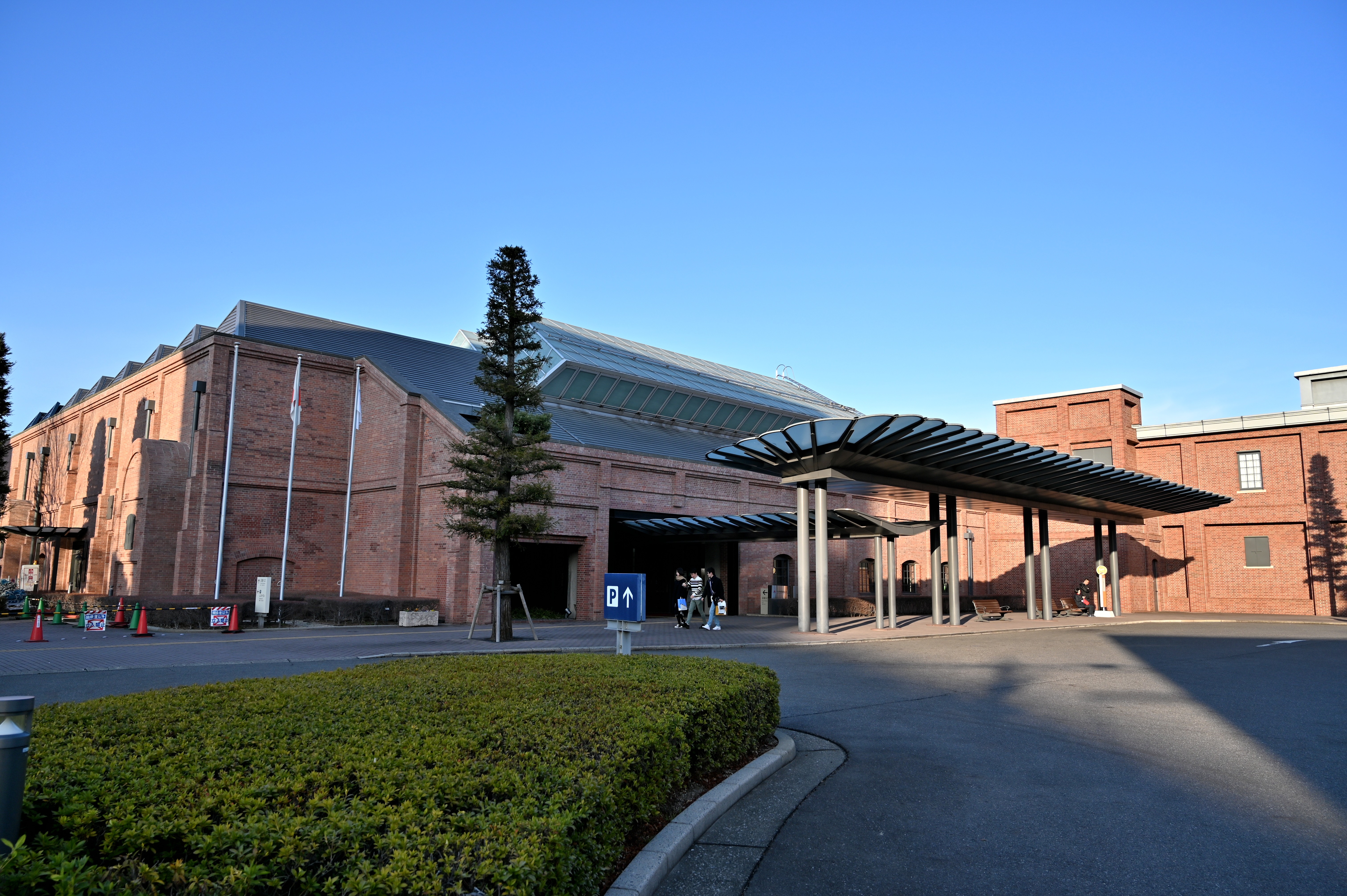
Toyota Commemorative Museum of Industry and Technology
It started with thread. In 1911, Sakichi Toyoda opened a spinning mill in the Noritake-Shinmachi district of western Nagoya, filling its red-brick halls with the rhythmic clatter of power looms. Those same walls still stand today, but where cotton once flowed between spindles, visitors now walk a timeline that stretches from handmade fabric to hydrogen fuel cells. The Toyota Commemorative Museum of Industry and Technology occupies the birthplace of the Toyota Group, and stepping inside feels less like entering a museum and more like tracing the DNA of one of the most consequential companies in industrial history.
The Weaver's Son
Sakichi Toyoda was born in 1867 to a carpenter's family in Shizuoka Prefecture. He watched his mother weave by hand, labor-intensive work that consumed entire days for modest output, and became obsessed with mechanizing the process. By 1897, he had perfected Japan's first power-driven loom. Over the next three decades, he acquired 84 patents and developed 35 loom models, each iteration faster and more reliable than the last. His masterpiece arrived in 1924: the Toyoda Automatic Loom Type G, a fully automatic high-speed machine that could change shuttles without stopping and halt itself the instant a thread broke. That self-stopping principle, which Sakichi called jidoka, would eventually become a pillar of the Toyota Production System. The Type G delivered a twenty-fold increase in productivity and was so advanced that the British firm Platt Brothers purchased the patent rights. The proceeds from that sale would fund something entirely unexpected.
From Looms to Engines
Sakichi gave the entire sum from his loom patent sale to his eldest son, Kiichiro, with a single instruction: invest it in automobile research. Kiichiro set up shop in a corner of this very textile factory in the early 1930s, working alongside spinning machines as he designed his first engine prototypes. By 1933, the automobile department was formally established within Toyoda Automatic Loom Works. Three years later, the Model AA passenger car rolled off the line, Toyota's first mass-produced vehicle. The department spun off into Toyota Motor Co., Ltd., and the name was changed from Toyoda to Toyota because it took eight brush strokes to write in Japanese, a number considered lucky. A weaver's ambition had become an automaker's reality.
Two Pavilions, One Philosophy
The museum opened in June 1994, preserving the original Taisho-era factory buildings as industrial heritage. The Textile Machinery Pavilion occupies the older wing, where roughly 100 working machines demonstrate the evolution from hand looms to Sakichi's automatic marvels. Guides operate the devices live, filling the hall with the percussive rhythm of shuttles firing across warp threads. Across the courtyard, the Automobile Pavilion traces vehicle manufacturing from Kiichiro's earliest prototypes through modern robotics. Working assembly-line demonstrations show stamping, welding, and painting processes. The museum's philosophy centers on monozukuri, the Japanese concept of making things with care and ingenuity, a principle Sakichi embedded into every loom and Kiichiro carried into every car.
The Red Bricks of Noritake
The factory buildings themselves tell a story. Built during the Taisho era in the early twentieth century, the red-brick structures reflect the industrial architecture that was transforming Nagoya from a castle town into a manufacturing powerhouse. The Nishi-ku district surrounding the museum still carries echoes of that transformation. Nearby Noritake Garden, the former headquarters of the famous porcelain maker, shares the same red-brick industrial heritage. In 2005, the museum acquired a steam engine to further illustrate the story of industrial power, adding yet another layer to a collection that spans from wooden hand looms to partner robots performing musical instruments. A walk through the grounds reveals the contrast at the heart of the Toyota story: heavy timber beams and hand-forged bolts overhead, precision robotics and digital displays at eye level. The circular red-brick entrance, with its signature Toyota logo, has become one of Nagoya's most recognizable architectural landmarks, a monument not to any single product but to the idea that relentless improvement can turn a loom into an empire.
From the Air
Located at 35.183N, 136.876E in western Nagoya's Nishi-ku district. From the air, look for the distinctive red-brick industrial complex near the Horikawa Canal, northwest of Nagoya Station. The nearest airport is Nagoya Airfield/Komaki (RJNA), approximately 12 km to the north. Chubu Centrair International Airport (RJGG) lies 35 km to the south on an artificial island in Ise Bay. Best viewed at 2,000-3,000 feet AGL. The complex sits in the dense urban core of Nagoya, identifiable by its Taisho-era brick architecture contrasting with modern surrounding buildings.