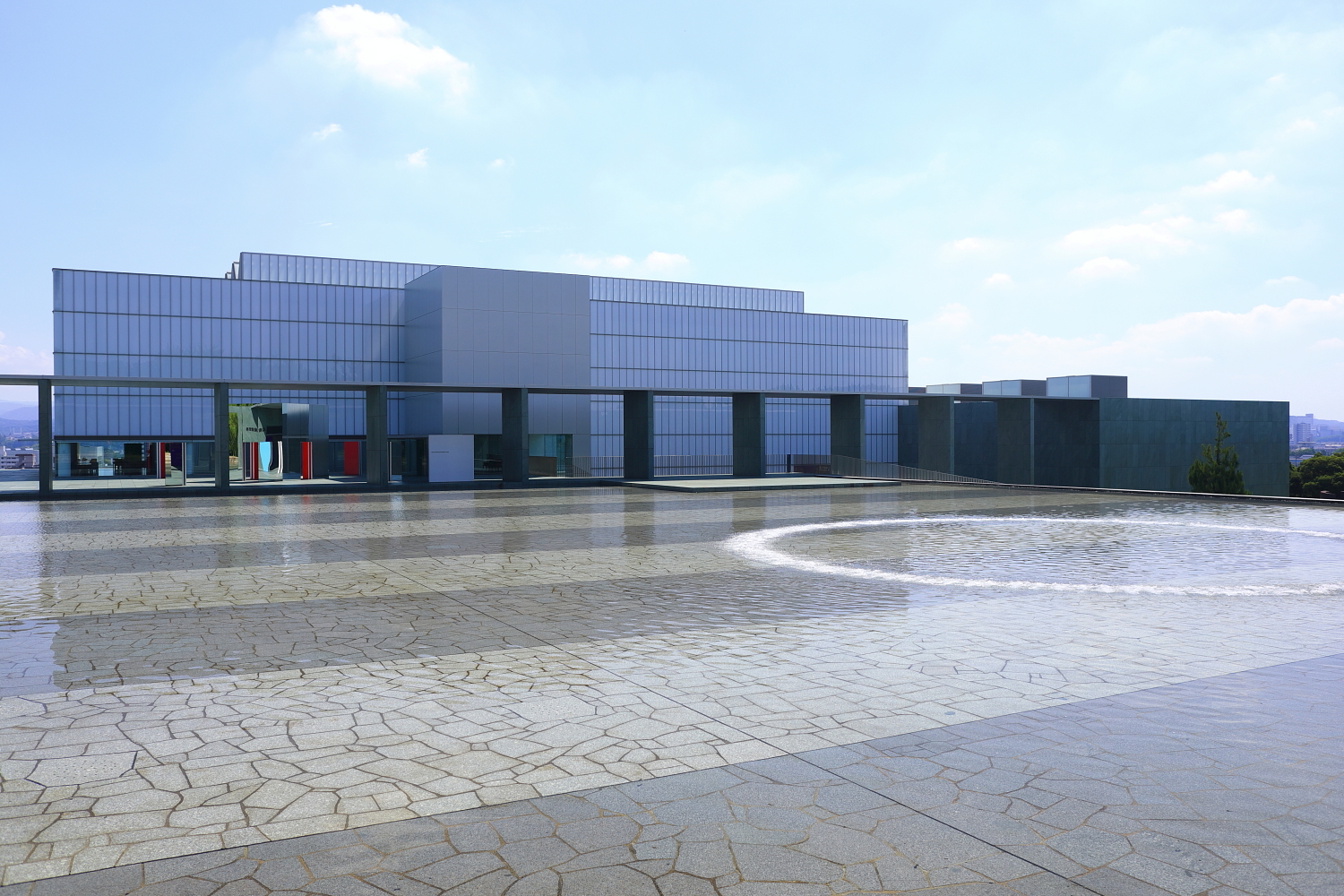
Toyota Municipal Museum of Art
Before Yoshio Taniguchi redesigned the Museum of Modern Art in New York -- the commission that would make him internationally famous -- he built a museum on a wooded hillside in Toyota City, Japan. The Toyota Municipal Museum of Art, which opened in 1995, cost $122 million, every yen of it paid by the city government. That a municipality known worldwide as the birthplace of the Toyota Motor Corporation would spend such a sum on an art collection spanning Klimt to Giacometti tells you something about civic ambition in postwar Japan. That Taniguchi's clean, light-filled galleries would later serve as a kind of audition for the most prestigious museum commission in the Western world tells you something about the building itself.
An Architect's Rehearsal
Yoshio Taniguchi was already Japan's preeminent museum architect when Toyota City tapped him for the project. His portfolio included the Nagano Prefectural Museum of History, the Marugame Genichiro-Inokuma Museum of Contemporary Art, and the Gallery of the Horyuji Treasures at the Tokyo National Museum -- buildings praised for their restrained elegance and meticulous attention to how light meets wall. For the Toyota museum, Taniguchi designed a structure that sits quietly on its hillside, its geometric volumes of glass, steel, and pale stone deferring to the landscape rather than competing with it. The American landscape architect Peter Walker shaped the surrounding grounds, centering them on a large reflective pond that mirrors the building and the sky. Standing by the entrance, visitors encounter two monumental sculptures: a simple white cube by Sol LeWitt and a massive work of rusted, curved steel plates by Richard Serra -- a pairing that announces the museum's ambition to bridge minimalism and material presence.
From Vienna to Tokyo
The collection inside matches the architecture's range. The museum's stated aim is to provide an overview of art after modernism, from both Japan and other countries, and the European holdings alone would be the envy of many larger institutions. Gustav Klimt and Egon Schiele represent the Vienna Secession. Rene Magritte and Max Ernst bring Surrealism. Jean Arp and Constantin Brancusi contribute sculpture that dissolves the boundary between abstraction and organic form. Salvador Dali and Alberto Giacometti round out a survey that moves from dream logic to existential thinness. The Japanese collection runs equally deep, with works by Shunso Hishida, whose soft-focus nihonga paintings revolutionized the form, and Taikan Yokoyama, his contemporary and collaborator in pushing Japanese painting beyond traditional boundaries. Kanzan Shimomura, Shiko Imamura, Ryusei Kishida, and Tsuguharu Fujita extend the collection through the turbulent decades of early twentieth-century Japanese modernism.
Castle Grounds to Gallery Grounds
The museum's hillside setting carries its own historical weight. The slopes below the galleries overlook the ruins of Koromo Castle, the Edo-period fortress whose donjon once commanded views of seven provinces. Where feudal lords surveyed their domain, visitors now wander Peter Walker's garden paths among outdoor sculptures, pausing at benches beside the reflecting pond. The transition from castle to museum happened gradually -- after the Meiji Restoration dismantled the feudal system, the hilltop served as a school, then a park, before the city decided this elevated ground deserved a cultural institution worthy of Toyota's economic stature. The location means the museum exists in quiet dialogue with centuries of local history, a modern temple of art resting on the foundations of older ambitions.
The City Behind the Name
Toyota City renamed itself in 1959, trading its old identity as the textile town of Koromo for the name of the company that had transformed its economy. The museum represents a deliberate effort to ensure the city's identity extends beyond the factory floor. At $122 million, it was a statement: wealth generated by precision engineering could support a collection that includes some of the most important European and Japanese modern art in the country. Public transport connects the museum to the city center via the Mikawa Line to Toyotashi Station, placing world-class art within easy reach of the engineers and assembly workers whose labor funded its construction. Taniguchi, who died in December 2024 at the age of 87, left behind a building that ages as gracefully as the art it houses -- a controlled geometry of light and space that makes the viewing of a Klimt or a Schiele feel like a private conversation rather than a public spectacle.
From the Air
Located at 35.08N, 137.15E on a hillside in central Toyota City, Aichi Prefecture, immediately adjacent to the ruins of Koromo Castle. The museum complex is identifiable from the air by its geometric rooflines and the large reflective pond in Peter Walker's landscape design. The wooded hilltop of the adjacent castle ruins provides visual contrast to the surrounding urban grid of Toyota City. Nearest airports: Chubu Centrair International Airport (RJGG) approximately 55km to the southwest, Nagoya Komaki Airport (RJNA) about 40km northwest. The Yahagi River runs to the west. The museum sits in a developed urban area; look for the green hillside park district amid the city blocks, with the reconstructed castle yagura tower nearby as an additional landmark.