Tredegar Iron Works
The decision that made Richmond the capital of the Confederacy was not entirely about politics. When Confederate leaders voted in May 1861 to move their seat of government from Montgomery, Alabama, a major factor was the industrial capacity sitting on the banks of the James River: the Tredegar Iron Works, the only foundry in the South capable of producing heavy ordnance. That single factory, sprawling along the Kanawha Canal, would go on to supply roughly half of all the artillery the Confederate States Army fired during the war. The foundry's story is one of ambition, innovation, exploitation, and reinvention, a story now told inside the very buildings where the cannons were cast.
Iron from Wales to Virginia
Tredegar Iron Works was chartered in 1837 when Francis Brown Deane Jr. and members of the Virginia Foundry Company opened a forge and rolling mill along the Kanawha Canal in Richmond. The operation took its name from the ironworks at Tredegar in Wales, and many of its early workers came from Wales, Ireland, Scotland, and Germany. In 1841, a 28-year-old West Point graduate and civil engineer named Joseph Reid Anderson took over management and transformed the operation. Under Anderson's direction, Tredegar moved beyond railroad spikes and small iron items to become a major producer of locomotives, cannons, and naval ordnance. Anderson acquired ownership in 1848 and was soon fulfilling contracts for the United States government. By 1860, Tredegar was the largest ironworks in the South and one of the most significant industrial operations in the entire country.
The Enslaved Workforce
Tredegar's growth came at a human cost that deepened over time. Beginning in 1847, the owners purchased enslaved workers to labor alongside the foundry's free workforce. The decision reduced costs while allowing the company to raise wages for white employees. Before the war, roughly ten percent of Tredegar's labor force was enslaved. As the conflict dragged on and white men were drafted into military service, that proportion climbed to nearly fifty percent. Enslaved workers operated alongside free laborers in one of the most dangerous industrial environments in the South, feeding furnaces, casting iron, and handling molten metal. The American Civil War Museum at Historic Tredegar now interprets this history directly, weaving together the Union, Confederate, and African American threads of the foundry's past.
Ironmaker to the Confederacy
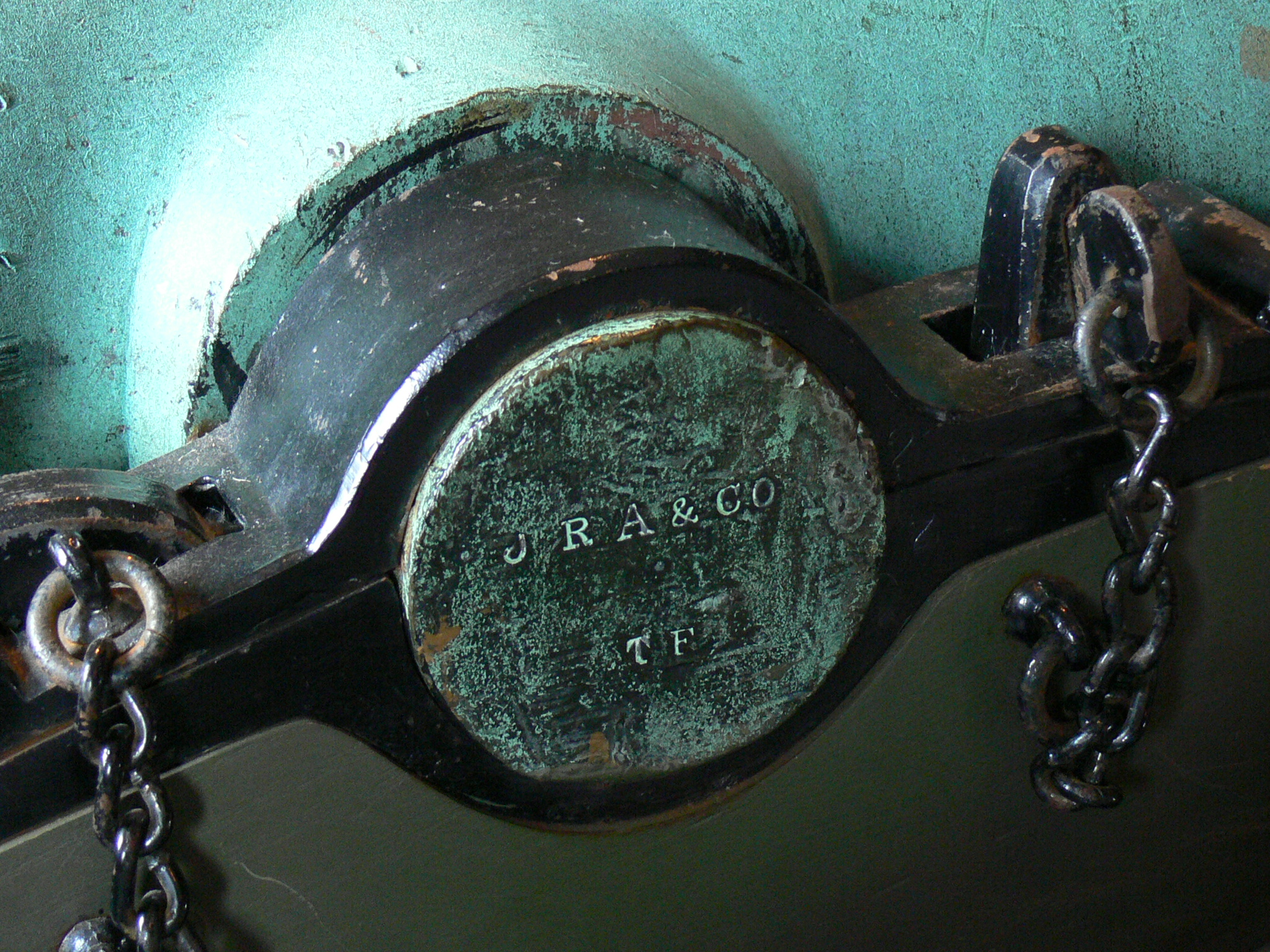
During the Civil War, Tredegar became the arsenal of the South. The foundry produced over 1,100 artillery pieces throughout the war, approximately half of all Confederate domestic cannon production. Its output included Brooke rifles, large rifled cannons designed for the Confederate Navy as an answer to the Union's Dahlgren guns. Tredegar also manufactured the iron plating for the CSS Virginia, the Confederacy's first ironclad warship, which fought in the historic Battle of Hampton Roads in March 1862. Beyond weapons, the foundry produced steam locomotives, railroad spikes, and other infrastructure essential to the Confederate war effort. By the war's peak, Tredegar employed 1,200 workers and had become the largest employer in Richmond. Anderson himself briefly served as a brigadier general before the Confederate government decided his management of the foundry was more valuable than his command of troops.
Survival and Reinvention
When Richmond fell in April 1865, Tredegar was among the few Civil War-era buildings to survive the burning of the city. Anderson had shrewdly secured company assets overseas before the collapse of Confederate currency, and he petitioned President Andrew Johnson for a pardon. He was back in business before the end of 1865, regaining full ownership by 1867 and incorporating with a stock of one million dollars. By 1873, Tredegar employed 1,200 workers again and was profitable, but the Panic of 1873 hit the company hard. Unable to finance a transition from iron to steel, Tredegar faded from national prominence. Anderson's descendants sold the land to the Albemarle Paper Company in 1957. Today the site overlooking the James River houses the American Civil War Museum at Historic Tredegar and the main visitor center for Richmond National Battlefield Park. A bronze statue of Abraham Lincoln and his son Tad, commemorating their walk through the burning city on April 4, 1865, sits on a bench inscribed with the words 'To Bind Up The Nation's Wounds.'
From the Air
Located at 37.536°N, 77.445°W on the north bank of the James River in downtown Richmond, Virginia. The Tredegar complex is visible from the air along the riverbank, west of the I-95 bridge crossing. The James River and the adjacent Kanawha Canal corridor provide strong visual reference points. Brown's Island is immediately adjacent. Nearest airports: Richmond International (KRIC) approximately 7 nm southeast; Chesterfield County (KFCI) approximately 9 nm southwest. Best viewed at 2,000-3,000 ft AGL.