Triangle Shirtwaist Factory
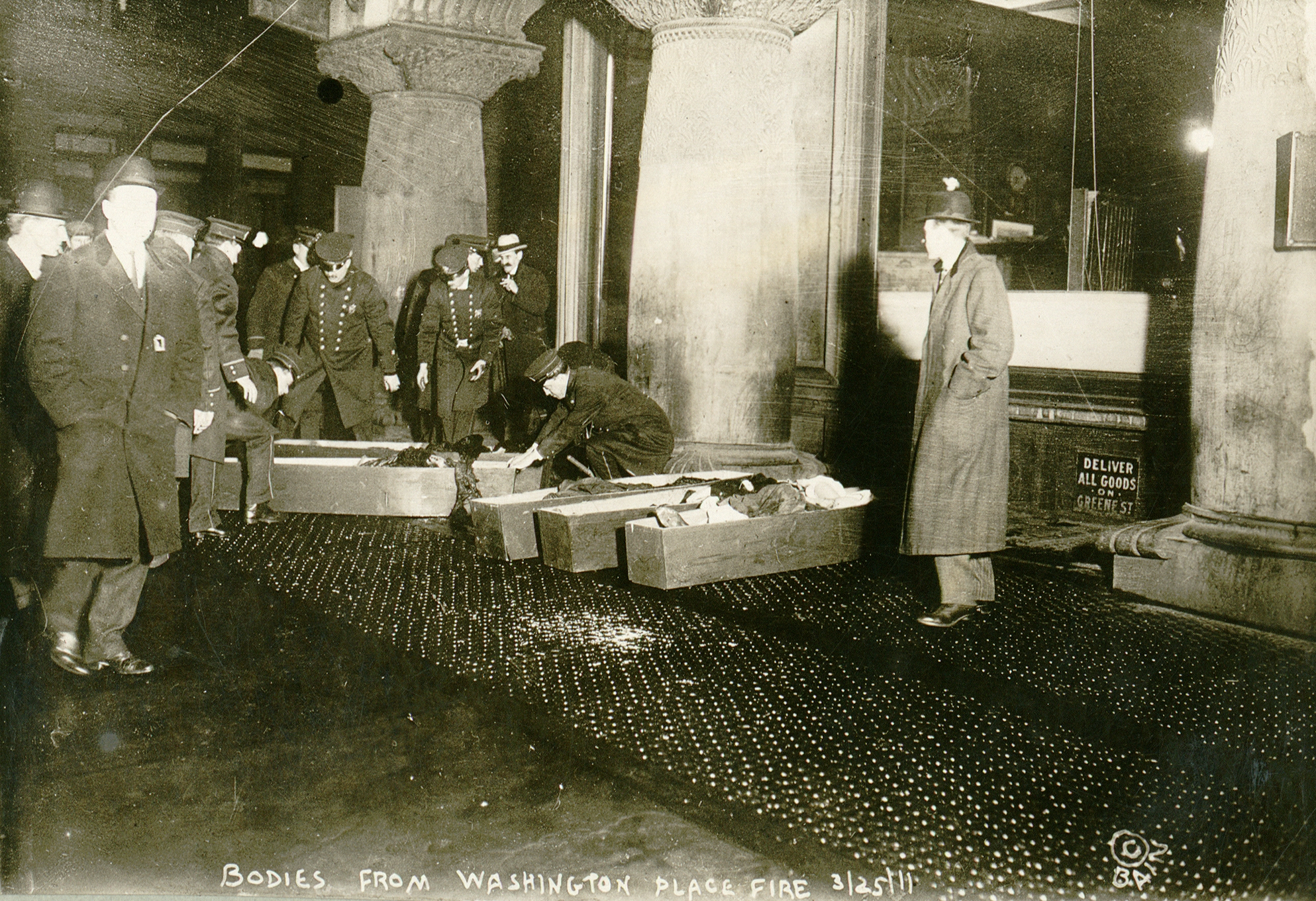
On March 25, 1911, near closing time on a Saturday afternoon, fire broke out on the eighth floor of the Asch Building in New York's Greenwich Village. Within minutes, 146 workers at the Triangle Shirtwaist Company were dead - some burned at their sewing machines, some crushed in stairwells, some killed when the fire escape collapsed, and some, their clothes aflame, leaping from the ninth-floor windows to the pavement below. They were mostly young women, immigrants from Italy and Eastern Europe, some as young as fourteen. The owners had locked the exit doors to prevent theft and unauthorized breaks. The fire escapes were inadequate. There were no sprinklers, no alarm, no escape plan. The fire lasted less than half an hour. The bodies lay on the sidewalk of Washington Place as crowds gathered in horror. The Triangle fire became a turning point in American labor history, galvanizing support for workplace safety regulations, fire codes, and union organizing that had been resisted for decades.
The Sweatshop
The Triangle Shirtwaist Company occupied the top three floors of the ten-story Asch Building at the corner of Washington Place and Greene Street. The company manufactured shirtwaists - the popular women's blouses of the era - employing about 500 workers, predominantly young immigrant women and girls. Working conditions were typical for the garment industry: long hours, low wages, no breaks except for thirty minutes at lunch. The workforce was packed into crowded rooms filled with fabric and paper patterns. Doors were locked from the outside to prevent workers from taking unauthorized breaks or stealing. In 1909, Triangle workers had participated in the 'Uprising of the 20,000,' a massive strike for better conditions. The strike won some concessions but Triangle's owners, Max Blanck and Isaac Harris, refused to recognize the union or improve safety conditions.
The Fire
The fire started around 4:40 PM, probably from a discarded cigarette or match in a bin of fabric scraps under a cutting table on the eighth floor. Fed by piles of fabric, paper patterns, and oil-soaked floors, flames spread with terrifying speed. Workers on the eighth floor mostly escaped via the freight elevators or the Washington Place stairway. The tenth floor, where the owners were located, received a telephone warning and escaped to the roof. But on the ninth floor, where about 260 workers were concentrated, the warning came too late. The Greene Street door was locked. The Washington Place stairwell was already filling with smoke. The fire escape collapsed under the weight of fleeing workers. The elevator operators made several heroic trips, saving over 100 people before the heat made further runs impossible. Those who couldn't escape had two choices: burn or jump.
The Falling
Crowds gathered on Washington Place watched in horror as young women appeared at the ninth-floor windows, their hair and clothing on fire. They began to jump. Fire nets were spread but tore under the impact. Bodies struck the pavement every few seconds. One newspaper reported that a young man helped three young women climb onto the window ledge, kissed each one goodbye, and then stepped off himself. William Shepherd, a United Press reporter who witnessed the scene, later wrote: 'I learned a new sound that day - a sound more horrible than description can picture. It was the thud of a speeding, living body on a stone sidewalk.' When it was over, 146 people were dead: 123 women and 23 men. The youngest were fourteen years old. The oldest was forty-three.
The Aftermath
The owners, Blanck and Harris, were tried for manslaughter. Their lawyers argued successfully that the prosecutors had not proven the owners knew the doors were locked. Both were acquitted. When they later paid settlements to the victims' families, the insurance payout exceeded the settlements by $60,000 - they profited from the fire. But the public outrage transformed politics. Frances Perkins, who had witnessed the fire, would become Franklin Roosevelt's Secretary of Labor and architect of the New Deal. A Factory Investigating Commission, formed in response to the fire, enacted dozens of new safety laws. Fire drills became mandatory. Sprinklers were required. Exit doors had to open outward and remain unlocked. The International Ladies' Garment Workers' Union grew powerful. The Triangle fire, in its horrifying way, created the workplace safety standards that protect workers today.
Visiting the Site
The Asch Building still stands at the corner of Washington Place and Greene Street, now called the Brown Building and owned by New York University. A plaque marks the site. Each year on March 25, descendants of victims and labor activists gather to read the names of the dead and lower a ladder from a ninth-floor window - a ladder that reaches only to the sixth floor, symbolizing how short the fire ladders were in 1911. The building's exterior appears much as it did, though the interior has been completely renovated. The nearby Shirtwaist Memorial, a steel ribbon wrapping around the corner, was installed in 2023. The Greenwich Village streets where bodies fell are now lined with NYU buildings, shops, and restaurants. Walking the neighborhood today, it's hard to imagine the horror that occurred here - which is precisely why the markers and memorials exist. The Triangle fire should not be forgotten; it should inform how we think about work, safety, and the cost of indifference to human life.
From the Air
Located at 40.73°N, 73.99°W in the Greenwich Village neighborhood of Manhattan, New York. From altitude, the site is within the dense urban grid of Lower Manhattan, near Washington Square Park. The Brown Building (former Asch Building) is not visually distinctive but occupies the corner of Washington Place and Greene Street. LaGuardia Airport (LGA) is 8 miles northeast; JFK is 15 miles southeast.