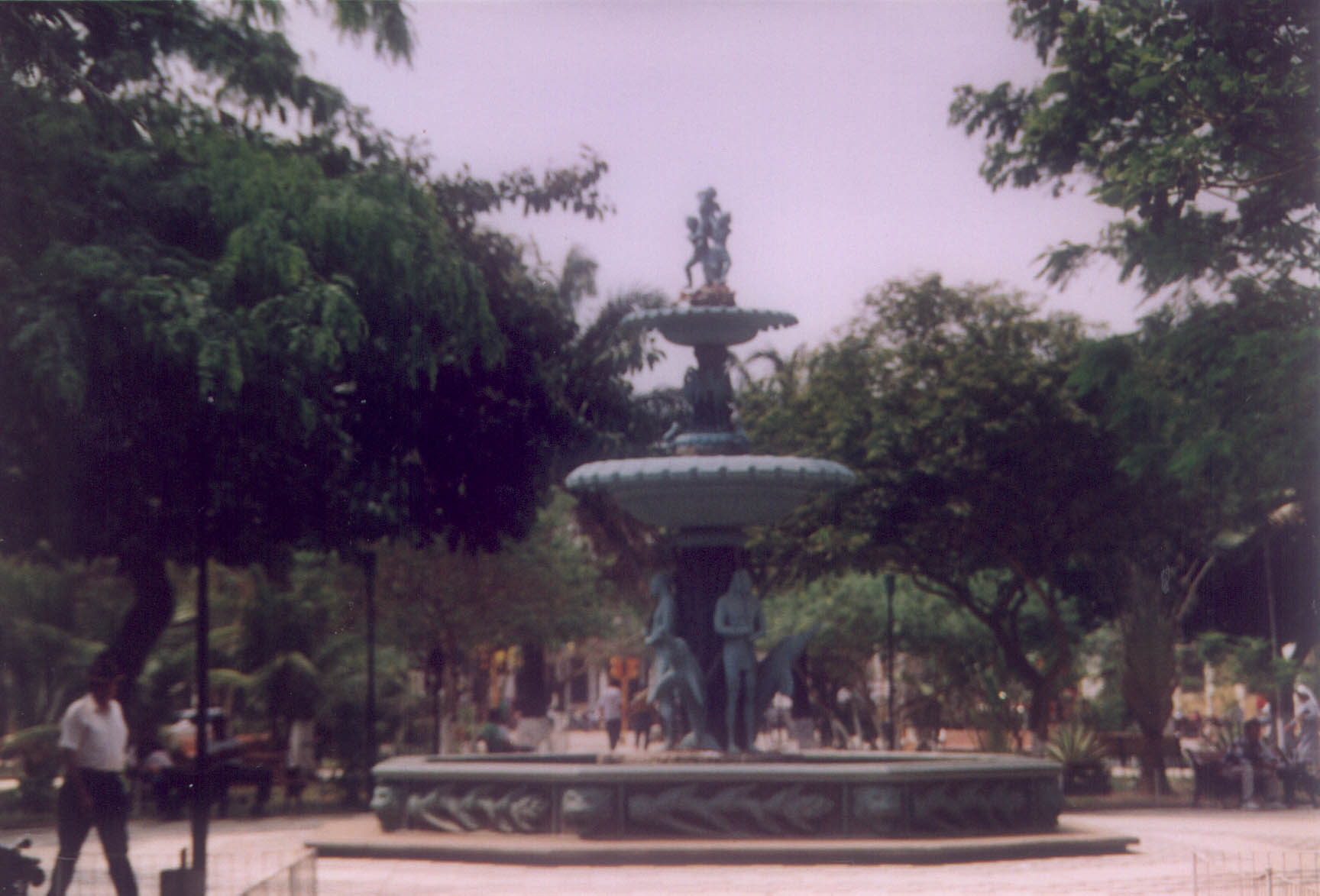
Trinidad, Beni
Bolivia has a navy. It has no ocean, but it has a navy, and one of its flotillas is based in Trinidad — a city of 130,000 people on the Llanos de Moxos, where the Amazon basin begins to flatten into the vast alluvial plains of Beni Department. The Bolivian Navy patrols the rivers here, the Mamoré and its tributaries, waterways that eventually feed into the Amazon itself. It is the kind of detail that captures everything odd and compelling about Trinidad: a landlocked naval base in a Jesuit mission town, surrounded by lagoons, flooded half the year, and home to a museum where a full-sized pink river dolphin floats preserved in formaldehyde.
Father Barace's Flood-Prone Experiment
Trinidad was founded in 1686 by Father Cipriano Barace, a Jesuit priest working to establish mission communities among the indigenous Moxo people of the lowlands. The original settlement sat on the Mamoré River, but flooding and disease made the location untenable. In 1769, the entire town relocated nine miles to its current site — a move that improved matters somewhat but did not solve the fundamental problem. Trinidad receives more annual rainfall than any other departmental capital in Bolivia, over 2,000 millimeters, compared to roughly 600 in La Paz. The monsoon climate divides the year sharply: from December to May, torrential rains turn the surrounding plains into shallow lakes, and the city's most distinctive architectural feature — open drainage ditches surrounding every block of buildings — becomes essential infrastructure rather than curiosity.
Baroque Music in the Lowlands
Trinidad was one of the first five Jesuit mission towns established in what is now Bolivia, and the mission heritage runs deeper here than the cathedral facade suggests. The original mission-style church was demolished and rebuilt in 1923, but many of the religious relics, paintings, and statues from the Jesuit era survive inside. The city participates in Bolivia's International Baroque Music Festival, held every two years, an event that connects Trinidad to the broader network of former Jesuit missions across the Chiquitania and Moxos regions. During festival years, baroque compositions — some recovered from archives in the mission towns themselves — are performed in the churches where they were first heard centuries ago. The tradition links back to Jesuit missionaries who taught European music to indigenous communities as a tool of conversion, creating a musical culture that outlasted the order's expulsion from Spanish territories in 1767.
Dolphins, Piranhas, and Macaws
Trinidad's Museo Ictícola, the Fish Fauna Museum housed on the UAB University campus, is the third largest of its kind in South America. Its collection includes over 400 specimens of fish species from the region's lakes and lagoons, from tiny species to piranhas, but the centerpiece is impossible to miss: a preserved pink river dolphin, full-sized, floating in its tank. The Kenneth Lee Ethno-Archeological Museum offers a different window into the region, displaying pottery, textiles, and tools from the Moxos culture that shaped this landscape long before the Jesuits arrived. Outside the city, the surrounding countryside holds something rarer still. The blue-throated macaw, one of the most endangered parrot species on Earth, survives in the grasslands and palm islands around Trinidad. Locally arranged expeditions take ornithologists into the habitat, though sightings require patience and luck.
The Camba Capital
Trinidad speaks Camba Spanish, the regional dialect of Bolivia's eastern lowlands, a linguistic marker that separates the city from the highland culture of La Paz and Sucre. Trinitarío, a Moxo dialect, remains the primary indigenous language, though its speakers are increasingly outnumbered. The city is built around a central plaza dominated by its cathedral, a layout inherited from its Jesuit origins and common across Bolivian cities, but the resemblance to highland towns ends there. Trinidad is hot, humid, forested, and connected to the world primarily by river and air. Teniente Jorge Henrich Arauz Airport serves the city, and the Mamoré River provides a liquid highway to communities deeper in the Amazon basin. In recent years, the cattle industry has driven a modest economic boom, making Trinidad an important center for Bolivia's bovine sector and pushing development north from Santa Cruz de la Sierra into the lowland frontier.
From the Air
Trinidad is located at approximately 14.83°S, 64.90°W on the Llanos de Moxos in Bolivia's Beni Department. Teniente Jorge Henrich Arauz Airport (SLTR) serves the city. From 3,000–5,000 feet AGL, the city is visible as a grid surrounded by rivers, lagoons, and flat wetland extending in every direction. The Mamoré River lies to the west. During the wet season (December–May), extensive flooding transforms the surrounding landscape into a patchwork of water and green. Tropical monsoon climate with high humidity year-round; expect low visibility during rain events.