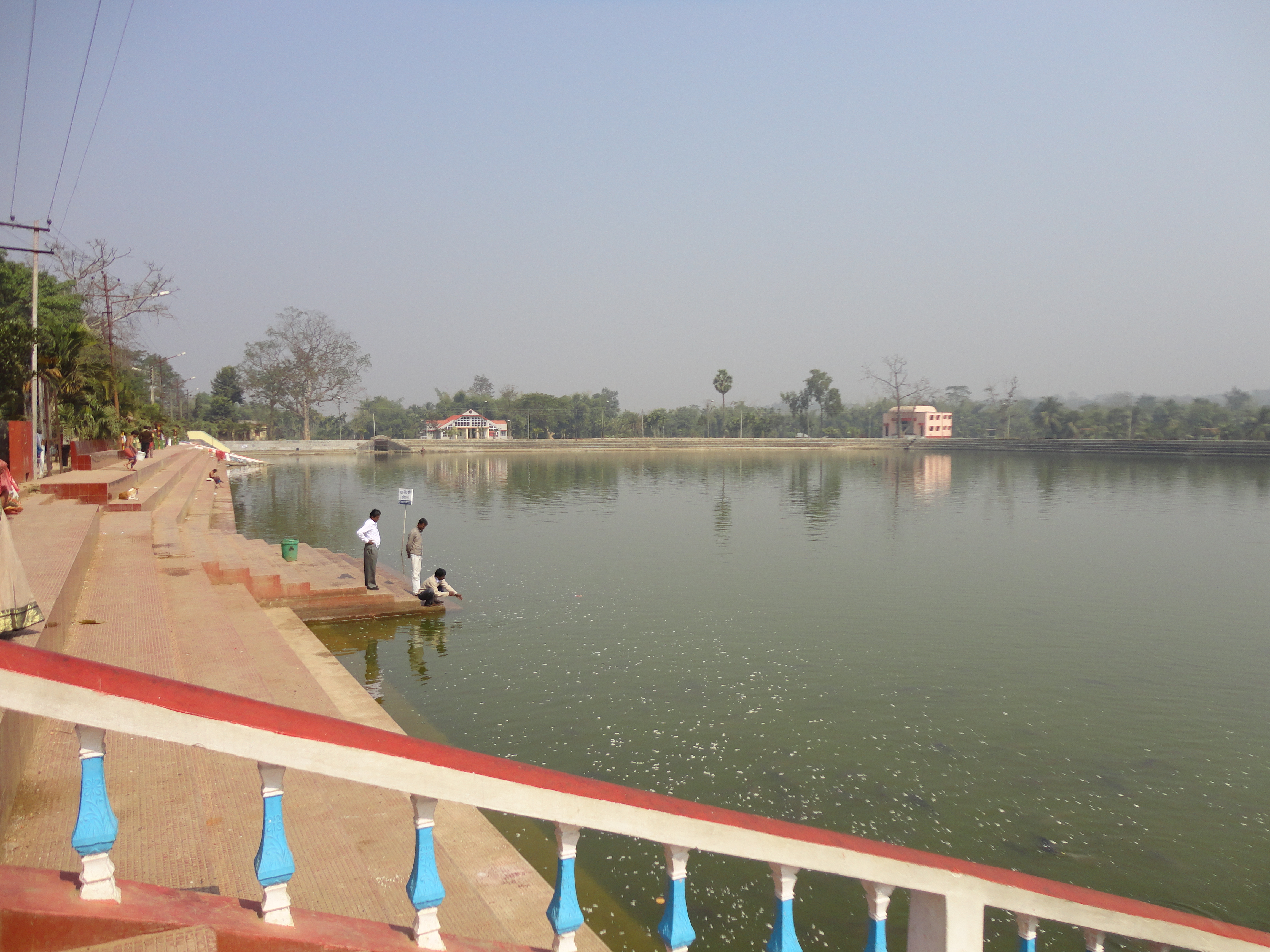
Tripura Sundari Temple
The hillock rises gently from the green lowlands of southern Tripura, and its shape -- rounded, slightly domed, tapering at the edges -- looks unmistakably like the shell of a tortoise. Hindu cosmology calls this form Kurmaprishthaakriti, the most auspicious possible foundation for a temple to Shakti. On this turtle-backed mound, sometime around 1501 CE, King Dhanya Manikya built a shrine to the Goddess Tripura Sundari after she appeared to him in a dream. The temple proved so central to the region's identity that the entire state eventually took its name from the goddess worshipped within it.
A Dream on the Hilltop
The story of the temple's founding belongs to the realm where history and devotion merge. King Dhanya Manikya, ruling in the closing years of the 15th century from his capital at Udaipur, dreamed that the Goddess Tripura Sundari instructed him to establish her worship on a hilltop near his palace. When he investigated, he discovered the hillock already held a temple dedicated to Lord Vishnu. The king hesitated -- how could a Vaishnava shrine become a seat of Shakti? The vision returned the following night, and Dhanya Manikya understood: Vishnu and Shakti were different expressions of the same supreme reality, Brahman. The temple that arose in 1501 CE became a symbol of theological reconciliation, a place where two Hindu traditions -- Vaishnava and Shakta -- found common ground rather than competition.
Twin Goddesses in Black Stone
Inside the sanctum sanctorum stand two black stone idols, similar in form but strikingly different in scale. The larger, five feet tall, is the Goddess Tripura Sundari herself. The smaller, a two-foot figure known affectionately as Chhoto-Ma -- "Little Mother" -- is an idol of Goddess Chandi. Tradition holds that the kings of Tripura carried Chhoto-Ma into battle and on hunting expeditions, a portable guardian who traveled where the larger idol could not. The main shrine is a compact cubical structure measuring 24 square feet at its base and rising 75 feet, built in the Bengali Ek-ratna style with a three-tier roof crowned by a finial. It is architecture at the scale of devotion rather than spectacle -- intimate, concentrated, intense.
Sacred Geography
The temple is one of the 51 Shakti Peethas, sites scattered across South Asia where, according to Hindu mythology, parts of the goddess Sati's body fell to Earth after her self-immolation at Daksha's fire sacrifice. At this site, tradition says, a piece of her right foot including the big toe came to rest. The tortoise-shaped hillock adds another layer of sacred geometry: Kurma, the tortoise, is an avatar of Vishnu, linking the site back to the Vaishnava worship that preceded the Shakti temple. This convergence of mythologies makes the site unusually layered even by the standards of Indian pilgrimage. After the Kamakhya Temple in Assam, Tripura Sundari draws more pilgrims than any other temple in northeast India. During the annual Diwali mela, more than 200,000 devotees arrive to worship.
Turtles in the Sacred Lake
East of the temple lies Kalyan Sagar, a 6.4-acre lake whose still waters reflect the surrounding hills. The lake is home to a population of bostami turtles -- black softshell turtles considered extinct in the wild, surviving here because devotees have protected them for centuries. The name "bostami" derives from the Bengali word for Vaishnavite monks, connecting the turtles to the site's earlier identity as a Vishnu temple and to the tortoise avatar Kurma. Visitors buy puffed rice and biscuits from lakeside stalls to feed the turtles, a ritual that has sustained the colony for generations. Conservation challenges persist: cemented embankments installed in recent years disrupted the turtles' nesting habitat, and plastic pollution has accumulated on the lake bed despite a ban on polythene bags dating to 1998. Increasing awareness has helped revive the population, but the turtles' survival remains a measure of whether human devotion can translate into genuine ecological stewardship.
Five Centuries and Counting
Tripura Sundari Temple crossed its 500th year in 2001, an anniversary that deepened its significance as a living monument rather than a historical curiosity. Red hibiscus flowers and peda sweets are offered daily as prasadam. Stalls lining the road to the temple sell baskets of offerings to pilgrims who come by train and road from Agartala, 55 kilometers to the north. Animal sacrifices, practiced here for centuries, were briefly banned in October 2019 before being resumed 57 days later. The tension between tradition and reform plays out at the temple as it does across India's religious landscape -- not abstractly, but in decisions about what happens at a specific altar on a specific hillock shaped like a tortoise, in a state that owes its very name to the goddess who dwells within.
From the Air
Located at 23.509N, 91.498E near Udaipur in southern Tripura. The temple sits on a distinctive rounded hillock with Kalyan Sagar lake visible to the east. Best viewed below 2,000 feet. Nearest airport: Maharaja Bir Bikram Airport (VEAT) at Agartala, approximately 55 km to the north. Terrain is low hills and river plains. Visibility is best October-March; heavy monsoon rains June-September.