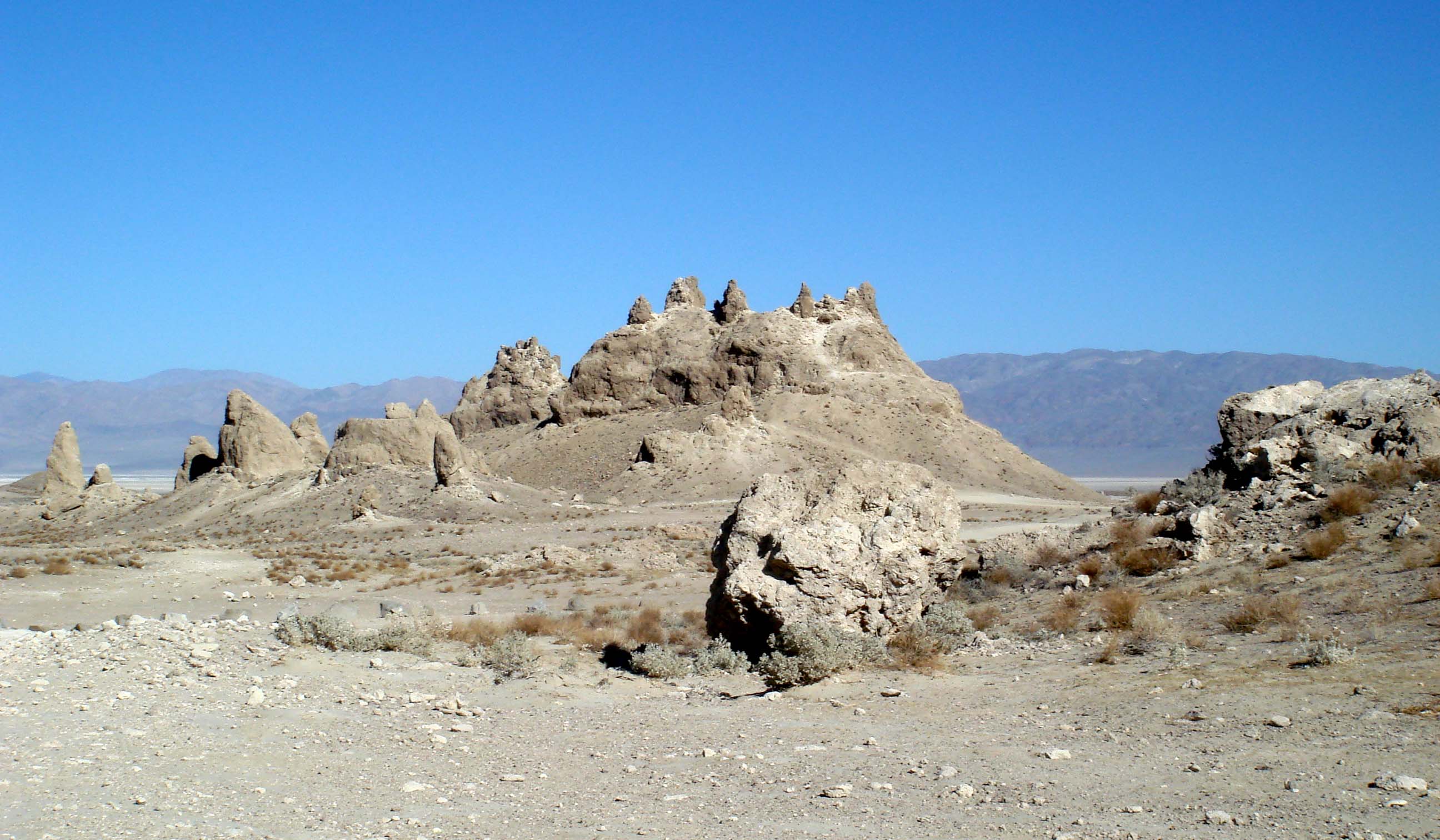
The Trona Pinnacles: California's Most Alien Landscape
An hour from Death Valley, in a landscape that makes the desert feel crowded, 500 stone towers rise from a dry lakebed like the spires of a drowned civilization. The Trona Pinnacles are tufa formations - calcium carbonate deposited around underwater springs when Searles Lake covered this basin during the last ice age. The lake dried up 10,000 years ago; the pinnacles remained, standing in clusters and rows that suggest architecture without architects. They've appeared in *Planet of the Apes*, *Star Trek*, *Battlestar Galactica*, and dozens of other productions needing alien landscapes without leaving California. The pinnacles require no set dressing. They already look like another planet. We just happen to be able to drive there.
The Formation
The Trona Pinnacles formed underwater. Searles Lake, fed by the Owens River system during wetter ice age conditions, covered this basin to a depth of 640 feet. Springs on the lake bottom released calcium-rich water that reacted with the alkaline lake water, precipitating calcium carbonate (tufa) around the spring outlets. The towers grew slowly - inches per century - building from the lakebed upward. When the climate warmed and the lake evaporated, the pinnacles were left standing in dry air, no longer growing, waiting for cameras to discover them. The largest are 140 feet tall; most are 40-80 feet. There are over 500 in the main area.
The Shapes
Tufa formations are organic, almost biological in appearance. They don't form straight lines or predictable curves; they grow in bulbous, irregular shapes dictated by water flow and chemistry. The Trona Pinnacles cluster in groups that suggest forests, cities, or organisms frozen mid-growth. Some are tall and needle-like; others are broad and buttressed. Wind and time have weathered them into shapes that resist description - not quite anything you've seen, but suggesting everything you've imagined. The formations are fragile; climbing is prohibited and discouraged. People have broken pinnacles; they don't grow back.
The Films
Hollywood discovered the Trona Pinnacles early and hasn't stopped using them. *Lost in Space* (1965) used them as an alien planet. *Planet of the Apes* (1968) filmed the Forbidden Zone here. *Star Trek V: The Final Frontier* set Sha Ka Ree scenes here. *Battlestar Galactica* (both versions), *Buffy the Vampire Slayer*, and *Teen Wolf* all used the location. When a production needs otherworldly landscapes on a California budget, the pinnacles are a first call. The Bureau of Land Management manages film permits; multiple productions can shoot simultaneously. The pinnacles play themselves, always alien, always strange.
The Setting
The Trona Pinnacles sit in the western Mojave Desert, surrounded by a landscape almost as strange as they are. Searles Lake - the dry lakebed they rise from - is mined for minerals; the nearby town of Trona is a company town built on chemical extraction. The basin is isolated, hot, and unforgiving. Nights are dark enough for spectacular stargazing. Dawn and dusk bring warm light that makes the pinnacles glow. Midday brings brutal sun and no shade. The desert doesn't care about visitors; it's as indifferent as the pinnacles themselves. Bring water. Bring more water. Respect the environment that doesn't respect you.
Visiting the Trona Pinnacles
The Trona Pinnacles are located south of Highway 178, between Trona and Ridgecrest, California. Access is via a 5-mile dirt road (BLM Road 143) suitable for passenger cars in dry weather. The site is free and open year-round; it's managed by the Bureau of Land Management. There are no facilities - bring water, shade, and supplies. Camping is permitted (primitive only). The best photography light is early morning and late afternoon. Summer temperatures exceed 110°F; spring and fall are more comfortable. Death Valley is 50 miles northeast; Ridgecrest is 20 miles south. The pinnacles are protected; don't climb, carve, or damage them. They took 10,000 years to create and can't be replaced.
From the Air
Located at 35.62°N, 117.37°W on the Searles Lake dry lakebed in the western Mojave Desert. From altitude, the Trona Pinnacles appear as irregular clusters of vertical shapes on the flat, pale lakebed - they cast shadows in low-angle light that reveal their extent. The dry lakebed is white with mineral salts; the pinnacles are darker against it. The town of Trona is visible to the north, its chemical plant operations evident. Death Valley lies to the northeast across the Panamint Range. The terrain is stark: desert basin, dry lake, mountains - and 500 tufa towers that shouldn't exist anywhere, let alone here.