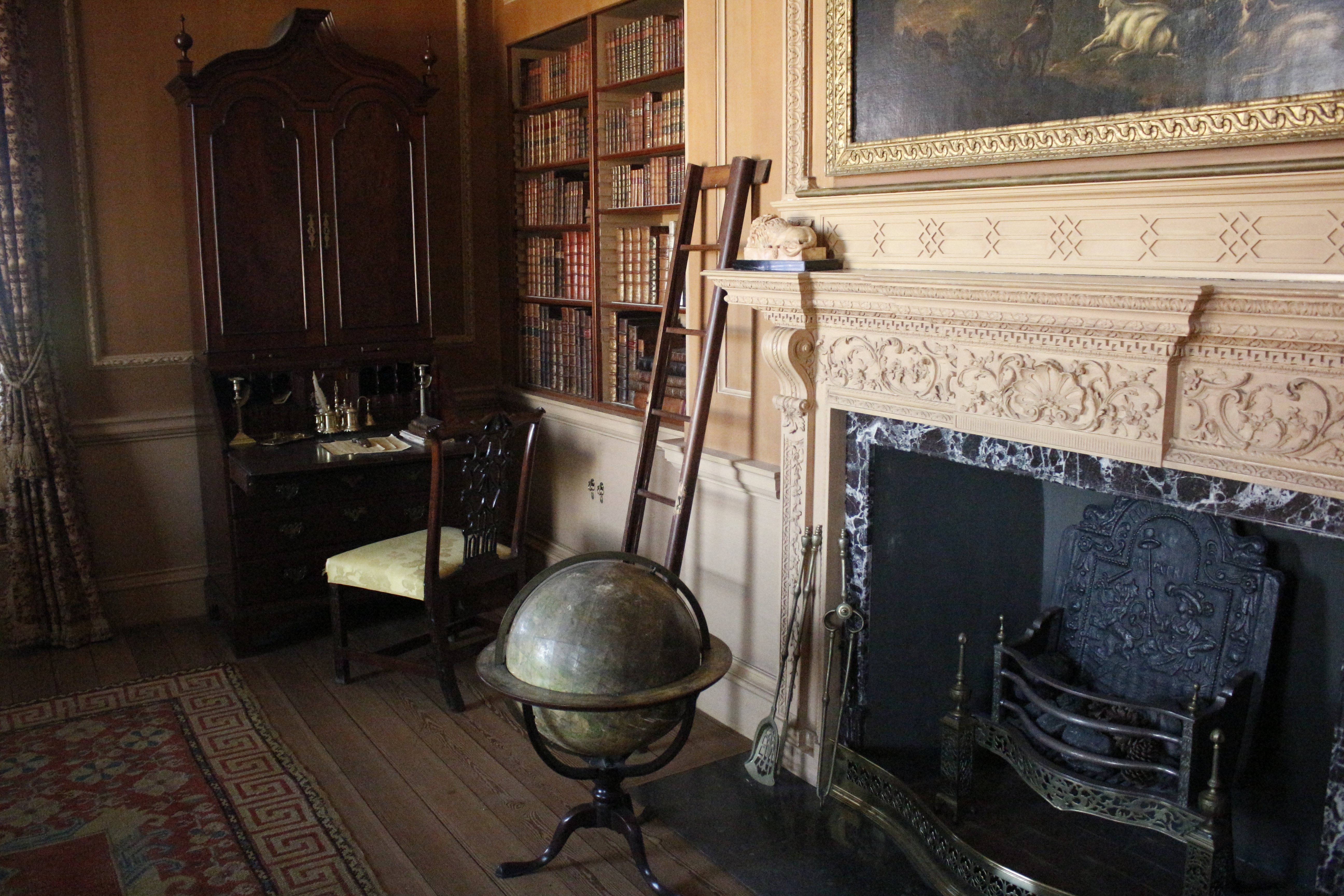
Tryon Palace
In 1991, researchers digging through the archives of the Academia Nacional de la Historia in Venezuela found something unexpected: a garden plan for a palace in North Carolina. The drawing had traveled there in 1783 in the luggage of Francisco de Miranda, a Venezuelan revolutionary who had admired the grounds during a visit to New Bern. Two centuries later, the plan revealed that Tryon Palace -- the colonial governor's mansion, the young state's first capitol, and eventually a ruin consumed by fire -- had been designed with gardens influenced not by the expected English tradition but by French masters, one of whom had trained with the designer of Versailles.
A Governor's Ambition in the Colonies
William Tryon arrived in North Carolina as lieutenant governor and quickly recognized what the colony lacked: a proper seat of government. After assuming the governorship in 1765, he enlisted architect John Hawks to design a structure worthy of British colonial authority. In December 1766, the North Carolina legislature authorized five thousand pounds for what they called an "Edifice." Hawks delivered a two-story brick building that served as both the governor's residence and his administrative offices, completed in 1770. Tryon became the first governor to reside in New Bern when he moved in that year. The palace stood as the most impressive government building in colonial North Carolina -- a visible symbol of Crown authority on the edge of the American frontier. Tryon governed from its halls until 1771, when he departed for New York.
Revolution, Capitol, and Ashes
The palace's role shifted dramatically with the tides of revolution. In 1775, provincial militia seized the building from its royal occupants, and it passed from British hands forever. After the Treaty of Paris ended the Revolutionary War in 1783, the palace found a second life as the seat of North Carolina's new state legislature. For nearly a decade, lawmakers gathered in the halls that had once housed the king's representative. But in 1792, the capital moved to Raleigh, and the palace lost its political purpose. Neglect followed relocation. On a winter night in 1798, fire swept through the building and reduced it to ruins. The grounds were carved into lots and sold to private owners. For a century and a half, the palace that had served both a colonial governor and an independent republic existed only in documents and memory.
Resurrection on the Original Ground
The reconstruction effort of the 1950s aimed for fidelity over approximation. Using John Hawks's original architectural plans and period documentation, builders erected the new palace on the exact footprint of the old, opening it to the public as a house museum in 1959. The Stable Offices -- the only original structure to survive the centuries -- still stands on the grounds. Surrounding the main building, a complex of historic structures tells the story of New Bern itself: the George W. Dixon House, built in the early 1830s for a wealthy merchant tailor and former mayor; the Robert Hay House, purchased in 1816 by a Scottish immigrant and wainwright; the John Wright Stanly House, an outstanding example of Georgian architecture whose residents included prominent figures of the Revolution and the Civil War; and the New Bern Academy, the first school in North Carolina established by legal mandate in 1766, rebuilt between 1806 and 1809 after its own fire in 1795.
Three Centuries in a Garden
The palace grounds contain gardens spanning three centuries of horticultural practice. Governor Tryon himself had little interest in plants, but the two maps French-born draftsman Claude J. Sauthier drew of New Bern in 1769 reveal two different garden layouts, and the Miranda plan discovered in Venezuela suggests a third -- all with strong French influence. Sauthier, born in France in 1736, had written a treatise on public architecture and garden planning in 1763 reflecting the ideas of French master gardeners, one of whom trained under the landscape architect of Versailles. None of these historic plans has ever been implemented. The current gardens were designed by Morley Williams, who had helped restore the grounds at Mount Vernon and Stratford Hall before turning to the palace project. His Colonial Revival designs include an eighteenth-century Wilderness Garden of native plants and Victorian-era displays. Since 2010, the gardens have expanded to include riparian plantings native to coastal North Carolina's river edges, creating habitat for local wildlife along the Trent River.
History Center on Reclaimed Ground
In October 2010, Tryon Palace opened the North Carolina History Center on six acres of former industrial land along the Trent River -- a site once classified as a Superfund property and a major contaminant of the Neuse River basin. The remediation transformed polluted ground into a green-designed campus with constructed wetlands that filter stormwater from fifty acres of the New Bern Historic District, a permeable parking surface, and recycled building materials targeting LEED Silver certification. Inside, the Pepsi Family Center sends visitors through a virtual time machine to 1835 Craven County, while the Regional History Museum explores how this stretch of coastal North Carolina connected to state, national, and international events. A two-hundred-seat performing arts hall and a waterfront cafe complete the campus. The palace grounds have also drawn Hollywood: three episodes of the Fox series Sleepy Hollow were filmed here, and the Outlander television series features scenes set at Tryon Palace.
From the Air
Tryon Palace is located at 35.106N, 77.044W in downtown New Bern, North Carolina, at the confluence of the Trent and Neuse rivers. The palace grounds and gardens are visible from 2,000-3,000 feet as a green expanse along the Trent River waterfront at the eastern edge of the historic district. Coastal Carolina Regional Airport (EWN/KEWN) is approximately 20 miles to the southeast. The distinctive T-shaped intersection of the Trent and Neuse rivers serves as a reliable landmark. New Bern's grid street pattern, dating to its colonial founding, is clearly visible from low altitude.