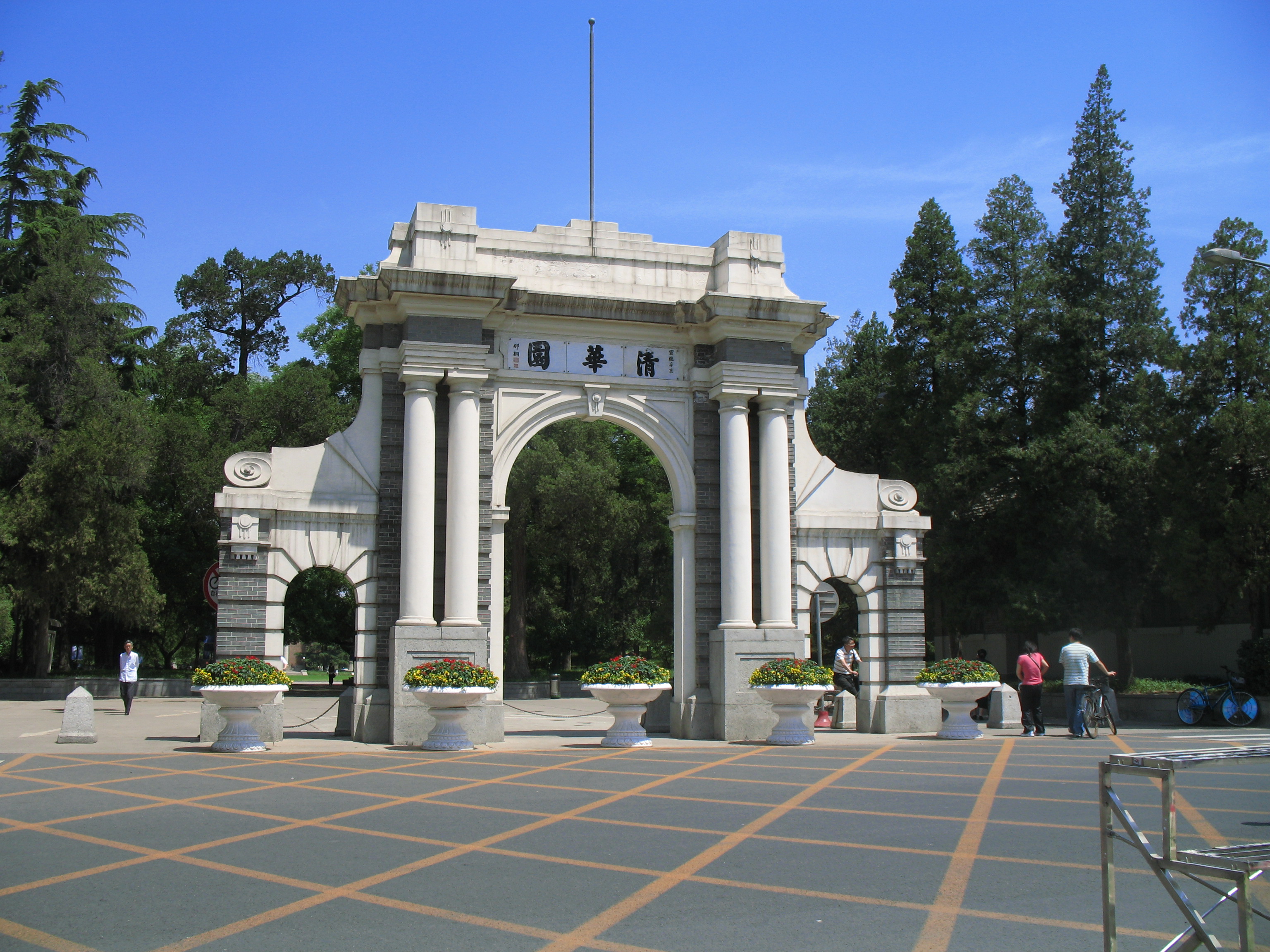
Tsinghua University
Tsinghua University exists because of a debt paid twice. After the Boxer Rebellion of 1900, the United States collected a massive indemnity from the Qing government, then returned a portion of the excess funds with the stipulation that they be used to educate Chinese students -- initially to study in America, and later to build a preparatory school on the grounds of an abandoned Qing imperial garden in northwest Beijing. That school, established in 1911, became Tsinghua University. The irony of China's most prestigious science and engineering institution growing from the soil of foreign indemnity and imperial gardens is not lost on anyone who walks the campus today, where Qing-era gardens sit alongside some of the most advanced research facilities in Asia.
Gardens and Laboratories
The campus occupies the site of former imperial gardens of the Qing dynasty, and fragments of that older landscape survive within the modern university grounds. The Qing dynasty garden -- among the oldest elements of the campus -- remains a meditative space amid the bustle of 21 schools and 59 departments. A traditional Chinese water garden with its pavilions and reflecting pools sits perhaps a ten-minute walk from nanotechnology laboratories and nuclear science centers. The juxtaposition is not accidental: Tsinghua has always drawn strength from the tension between preservation and transformation. The university's 21 schools span science, engineering, humanities, law, medicine, history, philosophy, economics, management, education, and art, but its reputation rests most heavily on engineering and the natural sciences, where it consistently ranks among the world's best.
From Preparatory School to World Power
Tsinghua's early decades were shaped by its unusual relationship with the United States. The Boxer Indemnity Scholarship Program sent Chinese students to American universities, and the preparatory school on the Tsinghua grounds served as their launching pad. This created a distinctly Western-oriented academic culture that persisted even as the institution evolved into a full university. During the war years, Tsinghua joined Peking University and Nankai University to form the National Southwestern Associated University in Kunming, Yunnan -- a wartime merger that preserved Chinese higher education during the Japanese occupation. After 1949, the university was reorganized as a polytechnic institution focused on engineering, shedding its liberal arts programs to other universities. That narrowing, paradoxically, sharpened its identity. By the time reforms began restoring its broader academic scope in the 1980s and 1990s, Tsinghua had already established itself as the country's undisputed leader in technical education.
The Factory of Leaders
If Peking University is China's intellectual conscience, Tsinghua is its engine room. The university has produced an extraordinary number of political leaders, scientists, and engineers -- including multiple recent heads of state. Its membership in the C9 League, China's equivalent of the Ivy League, and its inclusion in Project 985 and the Double First-Class Construction program reflect its status at the apex of the country's higher education system. But what sets Tsinghua apart is the sheer concentration of technical talent flowing from its campus into government, industry, and research. The university's alumni network extends through virtually every major Chinese technology company, government ministry, and research institute. In a country that has explicitly tied its national development strategy to science and technology, Tsinghua is the institution that most directly turns that strategy into human capital.
An Imperial Garden in the Information Age
Today's Tsinghua campus sprawls across Haidian District, its boundaries pressing against those of Peking University to the south and the tech corridors of Zhongguancun to the east. The old campus retains its garden character, with mature trees shading paths between traditional-style buildings. The new campus pushes outward with modern research complexes, dormitories, and sports facilities. Between the two, students bicycle along tree-lined roads that have changed surprisingly little in layout since the university's early decades. The campus functions as a small city unto itself, with its own hospitals, shops, and transit connections. What began as a quiet preparatory school in an abandoned imperial garden now educates over 50,000 students, its research output rivaling that of the world's leading universities.
From the Air
Coordinates: 40.000N, 116.326E. Located in Haidian District, northwest Beijing, adjacent to Peking University. The expansive campus with its mix of green spaces, traditional gardens, and modern buildings is visible from the air as a large institutional complex between Beijing's Fourth and Fifth Ring Roads. Nearest major airport is Beijing Capital International (ZBAA/PEK), about 25 km northeast.