Tsubaki Grand Shrine
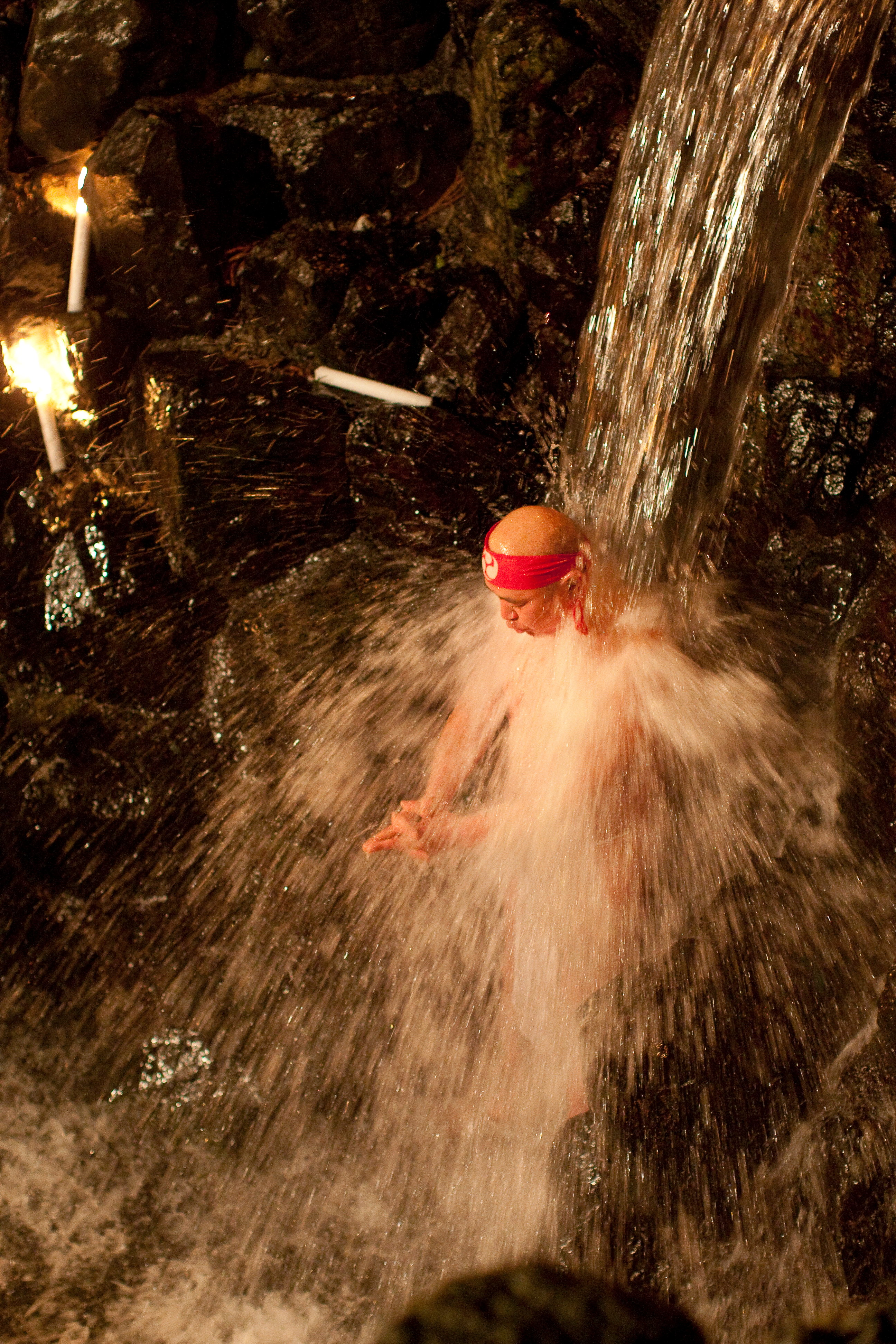
Behind the main hall, a waterfall crashes into a stone basin where practitioners of misogi -- ritual purification under cold running water -- stand in the cascade and chant. Nearby, the sharp crack of wooden swords echoes from a martial arts hall. A teahouse donated by the founder of Panasonic sits among the cedars. Tsubaki Grand Shrine, tucked into the forested hills of Suzuka in Mie Prefecture, is not a museum piece preserved behind ropes. It is a working center of Shinto practice where ancient ritual, martial discipline, and corporate patronage coexist in a single compound. The shrine claims a founding date of 3 BCE and a chief priestly line extending 97 generations -- numbers that place it among Japan's most venerable sacred sites, even as a rival shrine just across the city disputes whether Tsubaki truly holds the title it claims.
The Kami at the Crossroads
The principal deity enshrined at Tsubaki is Sarutahiko Okami, leader of the kunitsukami -- the earthly gods who inhabited Japan before the heavenly deities descended. In Shinto mythology, Sarutahiko stood at the crossroads where heaven and earth met, guiding the grandson of the sun goddess Amaterasu down to the mortal realm. That role as a guide and guardian made him the patron of martial arts, particularly aikido, whose practitioners revere him as a model of correct action. His wife, Ame-no-Uzume, is the kami of dawn, mirth, revelry, and the performing arts -- the goddess who famously lured Amaterasu out of a cave by dancing so outrageously that the other gods burst into laughter. Together they represent a balance of discipline and joy that permeates the shrine's character.
Contested Antiquity
According to shrine legend, Tsubaki Grand Shrine was founded in 3 BCE by order of Princess Yamato during the reign of Emperor Suinin, on the site believed to be the grave of Sarutahiko himself. No documentary evidence supports this origin story, but the shrine first appears in verifiable records in a 748 entry in the archives of Daian-ji temple in Nara. By the early Heian period, it was listed as a major shrine in the Engishiki -- the tenth-century compendium of court rituals and shrine registers that remains one of Shinto's foundational documents. Tsubaki was regarded as the ichinomiya, or first-ranked shrine, of Ise Province from this time. That claim is contested by Tsubaki Jinja, a different shrine also located in Suzuka, which insists it is the one recorded in the Engishiki. The dispute has never been definitively resolved.
Mountain Ascetics and Modern Priests
Tsubaki's history extends beyond mainstream Shinto. According to shrine tradition, a descendant of Sarutahiko named Gyoman Daimyojin founded Shugendo -- the syncretic practice combining Shinto, Buddhism, and mountain asceticism -- and the shrine served as a Shugendo center during the Heian and Kamakura periods. The current chief priest claims to be the 97th generation descendant of Gyoman Daimyojin, a lineage that, if accurate, would span roughly two thousand years. During the Meiji era, when the government imposed a rigid ranking system on Shinto shrines, Tsubaki was classified as a County shrine in 1871 and later promoted to Prefectural shrine in 1927. In 1935, it was designated the head shrine for approximately 2,000 sanctuaries across Japan dedicated to Sarutahiko, though only a fraction maintain any actual connection to the Suzuka shrine.
Swords, Tea, and Falling Water
The shrine compound reflects Tsubaki's role as a living practice ground rather than a historical exhibit. Because Sarutahiko is revered in aikido, the Tsubaki Kaikan martial arts hall hosts training sessions. An archery range serves practitioners of kyudo, the meditative discipline of Japanese bowmanship. The teahouse Reisho-an was a gift from Matsushita Konosuke, the industrialist who founded Panasonic -- his personal sub-shrine also stands within the grounds. But the most visceral experience is at Kinryu Myojin no Taki, the sacred waterfall behind the main hall where visitors practice misogi. The shrine's influence has also crossed the Pacific: the Tsubaki Grand Shrine of America, a branch shrine, carries the tradition into the Western Hemisphere. The main shrine is accessible by a 45-minute bus ride from Kasado Station on the JR Central Kansai Main Line.
From the Air
Tsubaki Grand Shrine sits at 34.9644N, 136.4517E in the Yamamoto neighborhood of Suzuka, Mie Prefecture, nestled in forested hills northwest of the Suzuka city center. From the air, look for the dense tree cover in the foothills of the Suzuka Mountains with shrine clearings and traditional rooflines visible among the canopy. The Suzuka Circuit racing venue to the southeast is a prominent landmark. Nearest major airport: Chubu Centrair International Airport (RJGG, approximately 45 nm east). Recommended viewing altitude: 2,000-4,000 feet AGL.