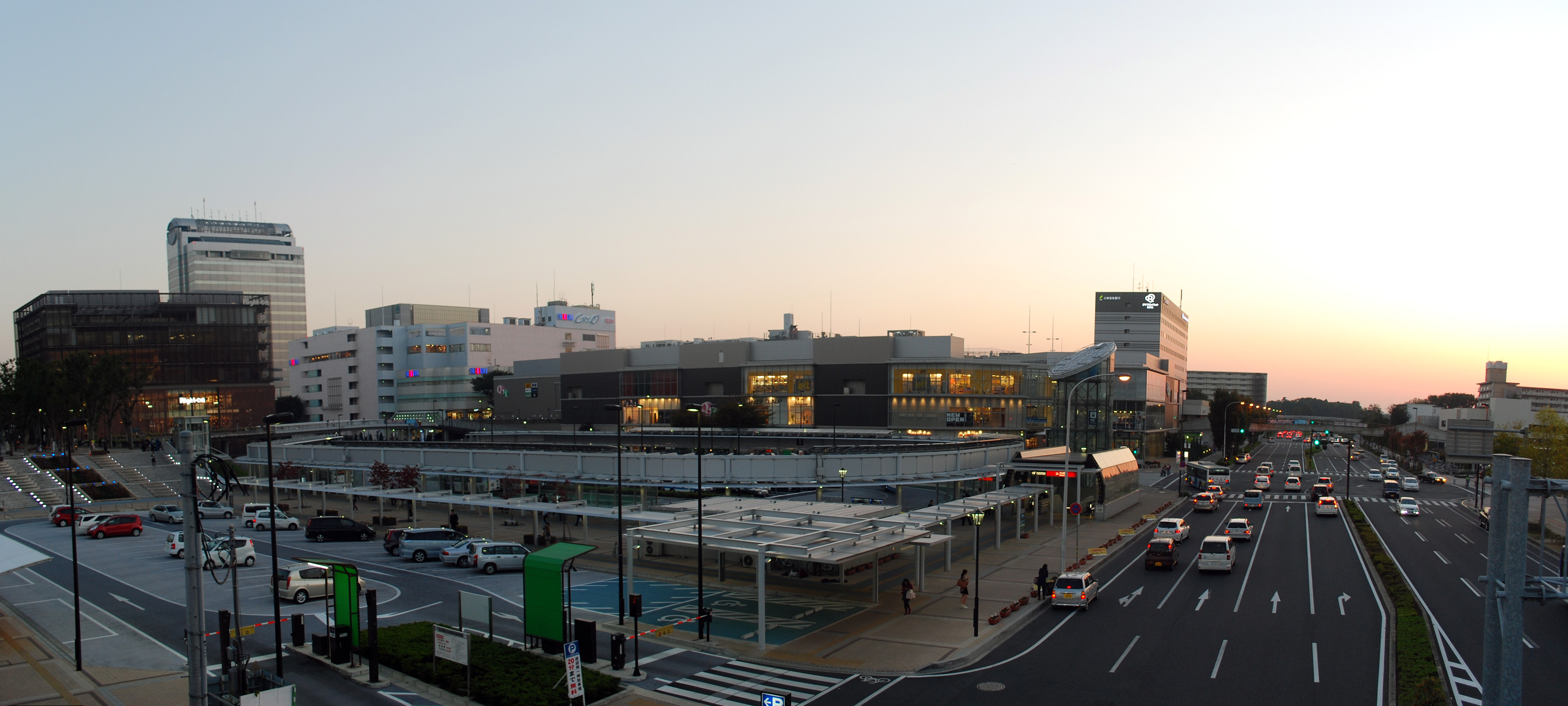
Tsukuba
Nearly half of Japan's public research and development budget gets spent in a single city that did not exist before 1987. Tsukuba sits on the Kanto Plain about 60 kilometers northeast of Tokyo, and from the air it looks like someone dropped a perfectly planned grid of laboratories, universities, and tidy housing blocks onto a patchwork of rice paddies. That is essentially what happened. In the 1960s, the Japanese government decided to relieve Tokyo's overcrowding by building a science city from scratch, and over the next two decades, they relocated 46 national research laboratories, founded a new university, and attracted researchers from 133 countries to a place where Mount Tsukuba -- sacred since the Heian period -- still watches over particle accelerators and superconductor labs.
Built by Bureaucrats, Lit by Genius
The idea belonged to Ichiro Kono, a former minister of construction, and Kuniomi Umezawa, a vice minister of science and technology. Beginning in the 1960s, they envisioned a planned research community that would rival anything in the West. Construction of the University of Tsukuba and its ring of 46 government laboratories began in the 1970s, and Tsukuba Science City became operational in the 1980s. The city itself was formally created on November 30, 1987, when the town of Yatabe merged with neighboring Oho, Toyosato, and the village of Sakura. The town of Tsukuba joined on January 1, 1988, and Kukizaki followed in 2002. By 2000, the city's 60 national research institutes and two national universities had been organized into five zones -- higher education, construction, physical science, biological research, and public facilities -- surrounded by more than 240 private research labs.
The Expo That Put It on the Map
In 1985, Tsukuba Science City hosted the International Science and Technology Exposition -- Expo '85 -- a world's fair dedicated to the theme "Dwellings and Surroundings: Science and Technology for Man at Home." The fair drew around 20 million visitors and featured the Technocosmos, an 85-meter Ferris wheel that was the tallest in the world at the time. Forty-eight countries participated. The expo served its purpose: it put Tsukuba on the global map as a place of serious science, not just a government construction project on former farmland. Leo Esaki, a Nobel Prize-winning physicist who had worked at IBM, later became president of the University of Tsukuba in 1992 and brought a corporate sensibility to academic-industry partnerships. In 1994, he launched the Tsukuba Advanced Research Alliance, forging collaborations between the university, foreign researchers, national labs, and corporate laboratories.
Breakthroughs in the Rice Fields
The science produced in Tsukuba has been quietly extraordinary. Researchers here identified the molecular structure of superconducting materials, developed organic optical films that change electrical conductivity in response to light, and created extreme low-pressure vacuum chambers pushing the boundaries of experimental physics. The High Energy Accelerator Research Organization, known as KEK, conducts particle physics experiments that contribute to humanity's understanding of fundamental forces. The National Institute for Materials Science explores next-generation alloys and nanomaterials. Hideki Shirakawa, who shared the 2000 Nobel Prize in Chemistry for discovering conductive polymers, conducted his groundbreaking work at the University of Tsukuba. And yet the city still has the largest area of paddy fields in Ibaraki Prefecture -- a reminder that Tsukuba's identity is layered, ancient agriculture and cutting-edge physics growing side by side.
Sacred Peak, Stubborn City
Mount Tsukuba rises 877 meters at the city's northern edge, its twin peaks -- Nyotai and Nantai -- visible from the research corridors below. The mountain has drawn pilgrims since at least the Heian period, more than a thousand years ago, and a cable car and ropeway still carry visitors to the summit. During the Edo period, the area was administered by a junior branch of the Hosokawa clan at Yatabe Domain. The contrast between the mountain's spiritual weight and the city's technocratic purpose gives Tsukuba a character unlike any other science hub in the world. It is a city that was struck by Japan's most powerful recorded tornado in May 2012 -- an F-3 that killed one person, injured 45, and left 20,000 without power -- and rebuilt without missing a research cycle. Tsukuba endures.
From the Air
Located at 36.083N, 140.076E on the Kanto Plain, approximately 60 km northeast of central Tokyo. From altitude, the planned grid layout of Tsukuba Science City is clearly visible against surrounding agricultural land. Mount Tsukuba (877m) with its distinctive twin peaks (Nyotai-san and Nantai-san) is the dominant terrain feature to the north. The Tsukuba Express rail line provides a visual guide running southwest toward Tokyo. Nearest airports: Ibaraki Airport / Hyakuri Air Base (RJAH) approximately 30nm northeast, Narita International (RJAA) approximately 25nm south, Tokyo Haneda (RJTT) approximately 40nm southwest. The University of Tsukuba campus and KEK accelerator complex are identifiable as large institutional footprints within the city grid.