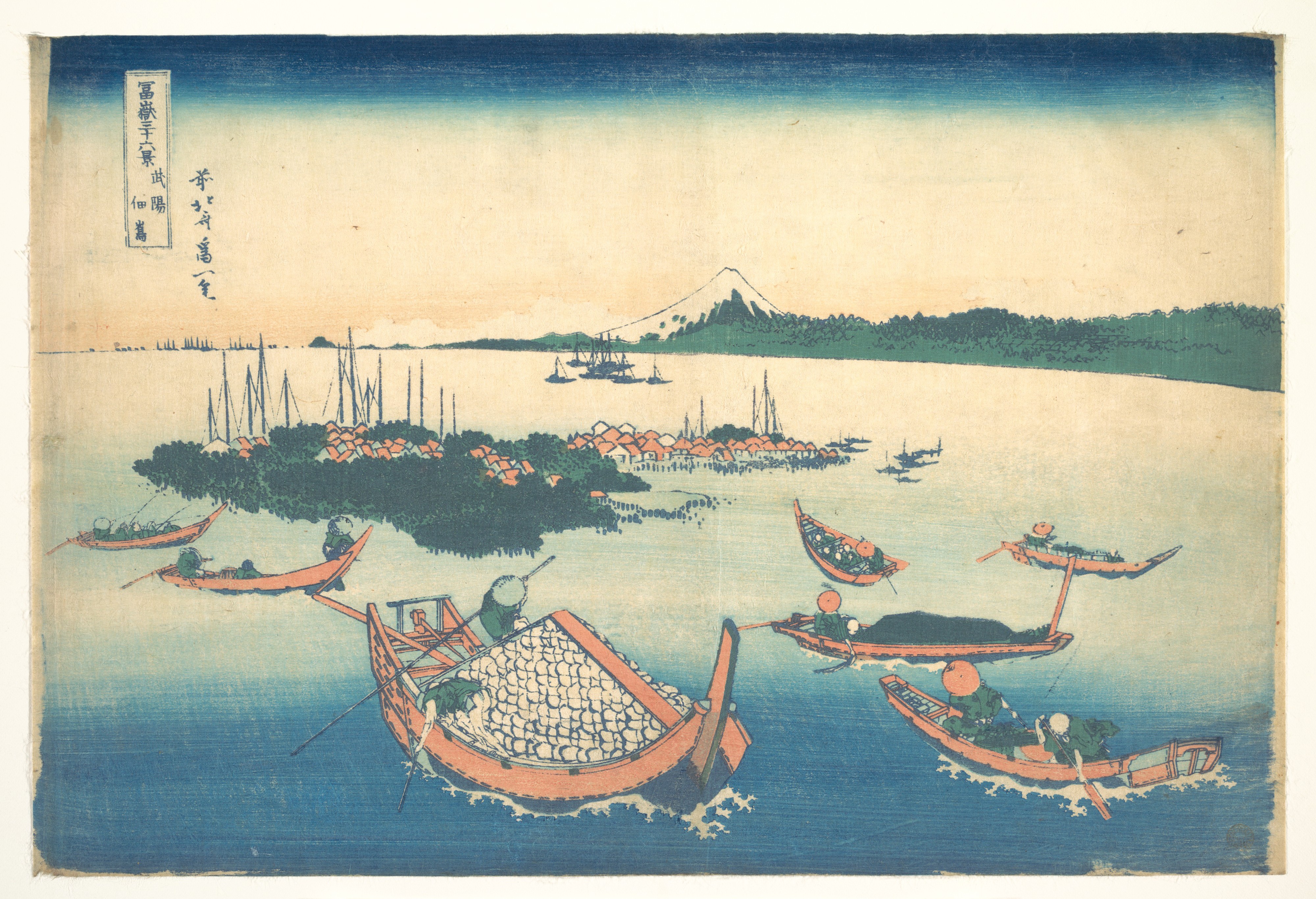
Tsukudajima
Somewhere between the glass towers of Tsukishima and the busy wharves of Tsukiji, a scrap of old Edo refuses to disappear. Tsukudajima -- barely a few city blocks of weathered wooden houses, narrow lanes, and a shrine that still smells of incense and salt water -- has sat at the mouth of the Sumida River since the early 1600s. The island exists because a shogun needed a favor, and the fishermen who granted it were rewarded with a patch of tidal mud that would become one of Tokyo's most enduring neighborhoods. Four centuries later, their descendants' creation, tsukudani -- small fish and seaweed simmered dark in soy sauce and sugar -- remains a staple of Japanese pantries nationwide.
A Shogun's Debt
The story begins in 1582 with the Honnoji Incident, the assassination of warlord Oda Nobunaga in Kyoto. His ally Tokugawa Ieyasu found himself stranded in hostile territory and desperately needed to reach his home province. Fishermen from the village of Tsukuda in Osaka's Nishi-Yodogawa provided boats and provisions, including generous quantities of their preserved fish -- food that would not spoil on the journey. Ieyasu survived. When he later consolidated power and established his shogunate in Edo in 1603, he remembered the debt. He invited the Tsukuda fishermen east and granted them ownership of a small, grassy island rising from the tidal flats of the Sumida River's mouth. The fishermen named it Tsukudajima after their Osaka hometown, and a community of roughly 80 houses with over 160 fishermen took root in Tokyo Bay.
The Taste That Traveled
The fishermen brought more than their nets. They carried the recipe for tsukudani, a preservation technique ideally suited to an era without refrigeration. Small fish, clams, kelp, and other ingredients were simmered slowly in a concentrated mixture of soy sauce, sugar, and mirin until they turned glossy and deeply savory. The result could last for weeks, making it perfect for soldiers, travelers, and anyone needing compact, shelf-stable nutrition. Tsukudani became so identified with its island of origin that the dish still carries the name today. The original shops on the island continued the tradition for generations, and even now, a handful of small producers on Tsukudajima sell tsukudani prepared by methods that have barely changed since the Edo period.
Gods from Osaka
In 1646, the transplanted fishermen built Sumiyoshi Shrine on the island, modeling it after the Taminoshima Sumiyoshi Shrine they had left behind in Osaka. They dedicated it to the Sumiyoshi Sanjin -- the three guardian deities of the sea -- along with Empress Jingu and, fittingly, Tokugawa Ieyasu himself. The shrine became the spiritual heart of the community, and its festival has been celebrated since the Edo period. During the Honmatsuri, held every three years, mikoshi -- portable shrines -- are carried through the narrow streets and ceremonially dipped into the waters of the bay, a ritual plea for the protection of the island's fishermen. More than 370 years after its founding, the shrine still anchors the neighborhood.
Old Wood, New Glass
Stand on the Tsukuda Bridge and look south, and the contrast is almost comic. Tsukudajima's low wooden houses and winding alleys sit directly beside the soaring residential towers of Tsukishima, a district built on reclaimed land in the late nineteenth century. The Sumida River slides past on the west; Tokyo Bay stretches east. Bridges -- the white Chuo Ohashi, the blue Eitai-bashi -- frame the skyline above. Yet at street level, Tsukudajima feels like a village. Laundry hangs from balconies. The lanes are too tight for cars. Tsukudajima Elementary School, serving the neighborhood's children since the Meiji era, stands a short walk from the shrine. It is one of the smallest, most stubbornly old-fashioned corners of central Tokyo, a place where the smell of simmering soy sauce can still drift through an open window.
From the Air
Tsukudajima sits at approximately 35.668N, 139.783E, at the confluence of the Sumida River and Tokyo Bay in Chuo Ward. From the air, it is identifiable as the small, low-rise cluster immediately south of the Tsukuda Bridge, surrounded by the gleaming towers of Tsukishima to the south and Tsukiji to the west. The nearest major airport is Tokyo Haneda (RJTT), about 12 km south. Narita International (RJAA) is roughly 60 km east. Best viewed at 1,500-2,000 feet for contrast between old and new Tokyo. The Sumida River's S-curves and the network of bridges provide excellent visual navigation references.