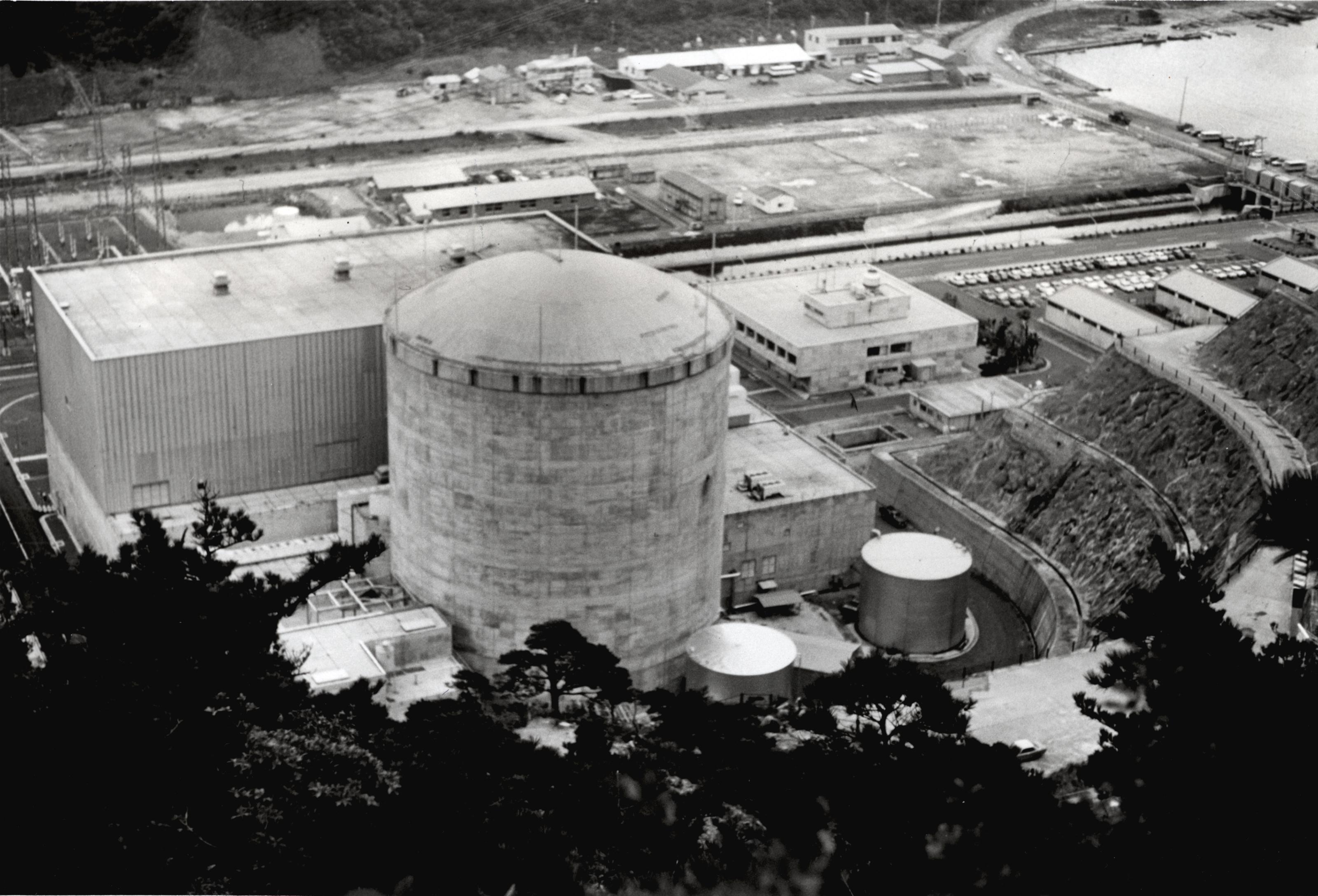
Tsuruga Nuclear Power Plant: The Reactor Built on a Fault Line
The fault line known as D-1 runs directly beneath Reactor No. 2 at the Tsuruga Nuclear Power Plant. In December 2012, a team of experts led by NRA Commissioner Kunihiko Shimazaki examined the crushed rock zones under the facility and concluded that D-1 could move in conjunction with the Urasoko fault, an active seismic feature located just 250 meters from the reactor buildings. Japan Atomic Power Company, the plant's operator, spent the next twelve years trying to prove otherwise -- presenting counter-analyses, requesting additional hearings, and at one point altering seismic data in its presentations. On 28 August 2024, the Nuclear Regulation Authority issued its final ruling: Reactor No. 2 cannot be switched back on. The plant sits in the city of Tsuruga, Fukui Prefecture, on a site it shares with the decommissioned prototype Fugen Nuclear Power Plant. Ninety-four percent of the site is green space. Beneath that green surface, the earth is fractured.
First Light, First Cover-Up
Tsuruga Unit 1 began commercial operation on 14 March 1970, a boiling water reactor producing 357 megawatts. It was among Japan's earliest commercial nuclear reactors. Eleven years later, in March 1981, drainage from Unit 1 caused a release of radioactivity. The incident itself was troubling enough, but what followed set a pattern that would define the plant's history: a forty-day cover-up concealed a spill of 16 tons of radioactive primary cooling water. The cover-up was only revealed in April. Tsuruga Unit 2 -- a larger pressurized water reactor producing 1,160 megawatts -- came online on 17 February 1987. Plans were drawn for two additional reactors, Units 3 and 4, both advanced pressurized water reactors designed to produce 1,538 megawatts each. A tunnel was completed linking the tip of the peninsula with the existing reactor sites. But the March 2011 earthquake changed everything, and as of 2024, construction of Units 3 and 4 has never begun.
The Urasoko Fault Reveals Itself
On 5 March 2012, seismic researchers delivered findings that shook the foundations of the entire Fukui nuclear corridor. The Urasoko fault, which runs beneath and near the Tsuruga site, had been estimated by the Earthquake Research Committee at roughly 25 kilometers long, capable of producing a magnitude 7.2 earthquake. But Yuichi Sugiyama's team at the National Institute of Advanced Industrial Science and Technology found that multiple faults within 2 to 3 kilometers of the Urasoko fault were highly likely to activate simultaneously, extending the effective fault length to 35 kilometers. Computer simulations showed the combined fault system at 39 kilometers, capable of producing five meters of displacement. The implications reached beyond Tsuruga -- NISA ordered reassessments at the nearby Mihama Nuclear Power Plant and the Monju fast-breeder reactor. Even more damaging was a revelation on 21 March 2012: sonic survey data collected in 2005 had been ignored by Japan Atomic Power Company, and the data was kept secret from a NISA expert team in 2008.
D-1: A Fault with a Name
In November 2012, the NRA dispatched an investigative team to examine the faults beneath the Tsuruga site. On 1 December, Commissioner Kunihiko Shimazaki and four other experts walked the site, examining geological layers at multiple points. Their conclusion, presented on 10 December 2012, was direct: the fault zone of crushed rock called D-1, located beneath the No. 2 reactor, could move in conjunction with the Urasoko fault. Shimazaki told the meeting that D-1 appeared to have 'moved as an active fault in the past, together with the movement of the Urazoko fault.' A draft report on 28 January 2013 reaffirmed the finding. By geological standards, a fault is considered 'active' if it has caused an earthquake within the last 120,000 to 130,000 years. Evidence showed the Urasoko fault had been active as recently as 4,500 years ago. An NRA official, Tetsuo Nayuki, was fired after it was discovered he had leaked a draft of the assessment report to Japan Atomic Power Company a week before its public release.
A Decade of Denial
Japan Atomic Power Company fought the findings at every step. On 8 March 2013, the company presented its own geological analysis arguing that D-1 was not active. The NRA panel was unconvinced. On 19 April, the NRA inspection team told JAPC it would not accept the company's refutation because its arguments were 'unclear.' On 15 May 2013, the experts presented their final report: the No. 2 reactor was located right above an active fault, and the expected costs of decommissioning could lead to the company's bankruptcy. The reactor had operated for only about 26 years of its designed 40-year lifespan. Unable to sell electricity from any of its reactors, Japan Atomic Power survived only on basic fees from its major stockholders. In February 2020, the company was accused of altering data about the fault. In August 2021, NRA Chairman Toyoshi Fuketa called the company's explanation that changes to seismic data presentation were unintentional 'preposterous,' and the NRA halted the Unit 2 safety review over data tampering.
The Final Ruling
On 28 August 2024, the Nuclear Regulation Authority delivered the verdict that had been building for twelve years: Reactor No. 2 at Tsuruga cannot be restarted due to the risks posed by the active seismic fault beneath it. Unit 1, meanwhile, had already been marked for decommissioning when JAPC announced in March 2015 that the aging boiling water reactor would be retired. The Tsuruga Nuclear Power Plant now stands as a cautionary monument on its peninsula -- a facility where operators hid cooling water spills for forty days, concealed seismic survey data for years, and altered fault line presentations in regulatory filings. The green space that covers 94 percent of the site masks the broken geology below. Lake Biwa, Japan's largest freshwater lake and a drinking water source for millions, lies downstream of the Tsuruga corridor. Citizens from Otsu, at the lake's shore, had filed the first lawsuit seeking to block reactor restarts back in November 2011. Their argument was simple: the plant was built on a fault. It took thirteen years for the regulators to agree.
From the Air
Located at 35.75°N, 136.02°E on a peninsula extending into the Sea of Japan from the city of Tsuruga, Fukui Prefecture. The nuclear complex is identifiable from altitude by the reactor buildings and associated infrastructure on the cleared coastal headland. The decommissioned Fugen reactor shares the site. Best viewed at 3,000-5,000 feet AGL. Komatsu Airport (RJNK) lies approximately 75 km northeast. The Mihama Nuclear Power Plant and the former Monju reactor site are visible along the same coastline to the west, forming the dense nuclear corridor known informally as 'Nuclear Alley.' Lake Biwa, Japan's largest lake, sits roughly 50 km to the southeast.